

Phthalocyanine Blue
PB15
Alternate Names
Monestial Blue
Phthalo Blue Red Shade
Phthalo Blue Green Shade
Monastral Blue
Phthalo Blue (Red
crystalizing)
Pigment Description
Phthalo Blue is like liquid sapphire that could be administered through a medicine dropper. This is the essence of blue in a bottle, and there is something about it that also lends itself to a chemical age.
It is one of the essential colors for a modern high chroma palette— a saturated transparent cyan or middle blue. When high chroma is wished for, it is a Godsend, and it is one of the only routes to a true bright cyan. However for lower chroma blues, it can be a challenge to use.
We call this entry "Phthalo Blue Unspecified" because often there is an additional number to the pigment code which tells a person which sub-variety of Phthalo Blue is being used. Sometimes paints are just labeled PB15.
The most common sub-varieties of Phthalo Blue found in artist paints are Phthalo Blue Red Shade, PB15:1 or PB15:2, and Phthalo Blue Green Shade, PB15:3. There are a few more version of Phthalo Blue, such as PB15:4 and PB15:6 but they are not as commonly found in paints.
An intense, concentrated blue
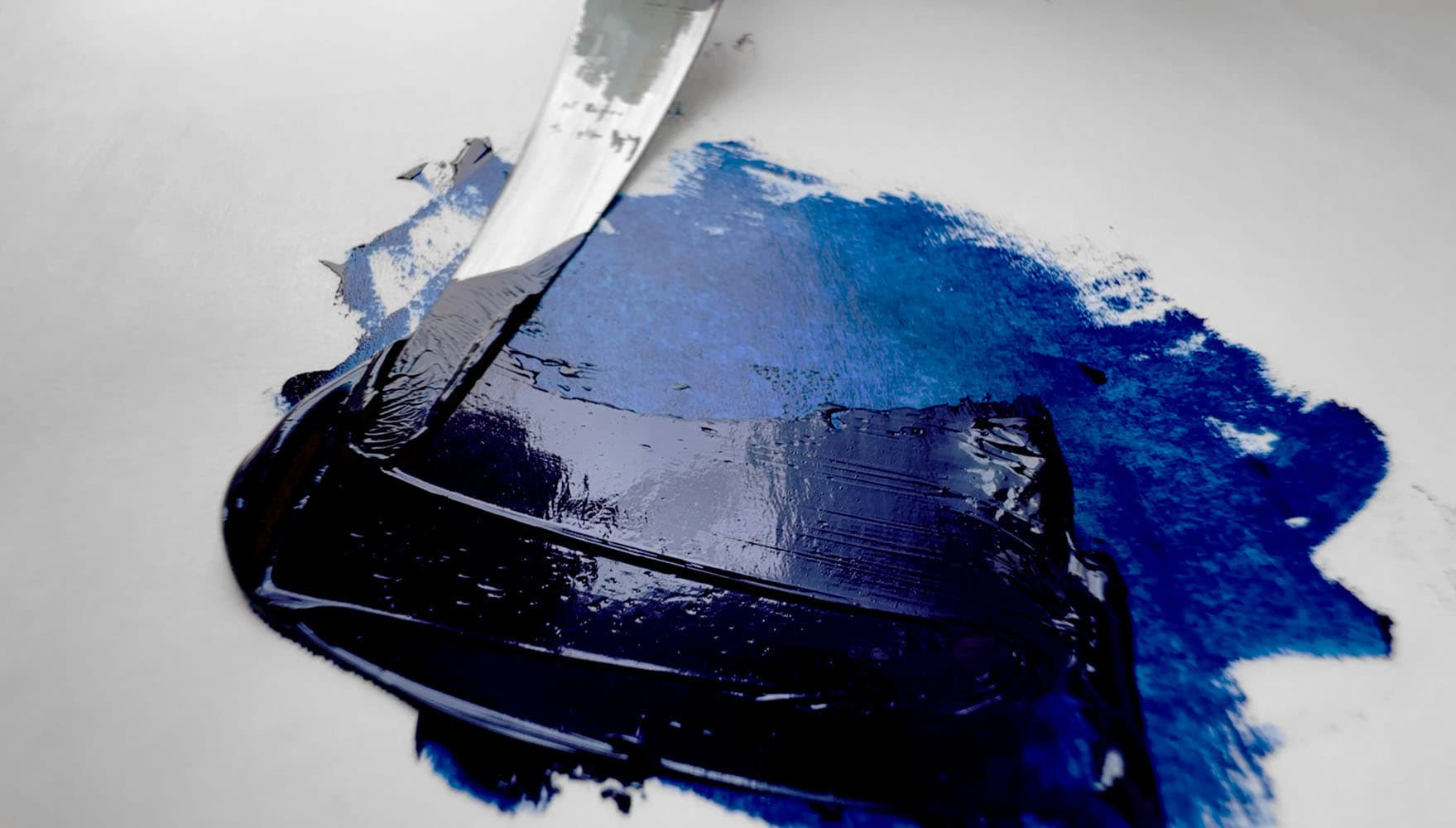
Old Holland Blue Lake, PB15:1
Chromatic in Tints
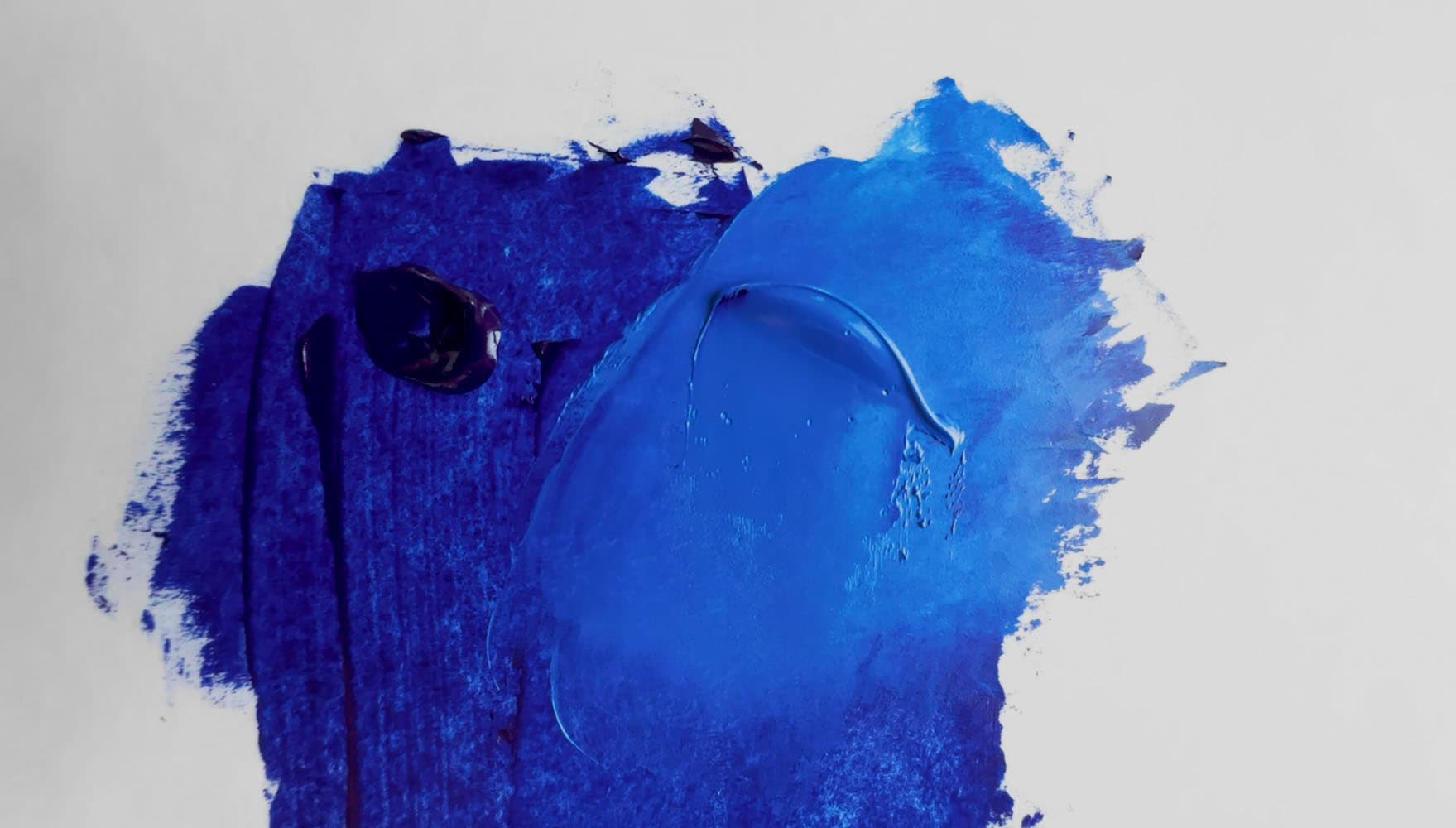
Vasari Phthalo Blue
Phthalo Blue can be tricky to handle in painting because a little bit goes a very long way. It also has a way of making its presence known in a mixture, so some painters prefer Cerulean PB35 or Cobalt PB28 for naturalistic subjects. However, Phthalo Blue makes some of the highest chroma middle blues and cyans, and there is no replacement for this incredibly bright blue.
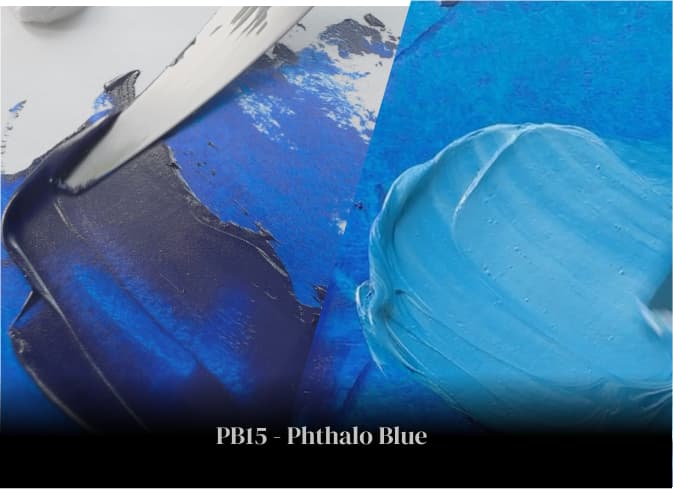
Phthalo Blue compared with Ultramarine
Many brands offer more than one version of Phthalo Blue
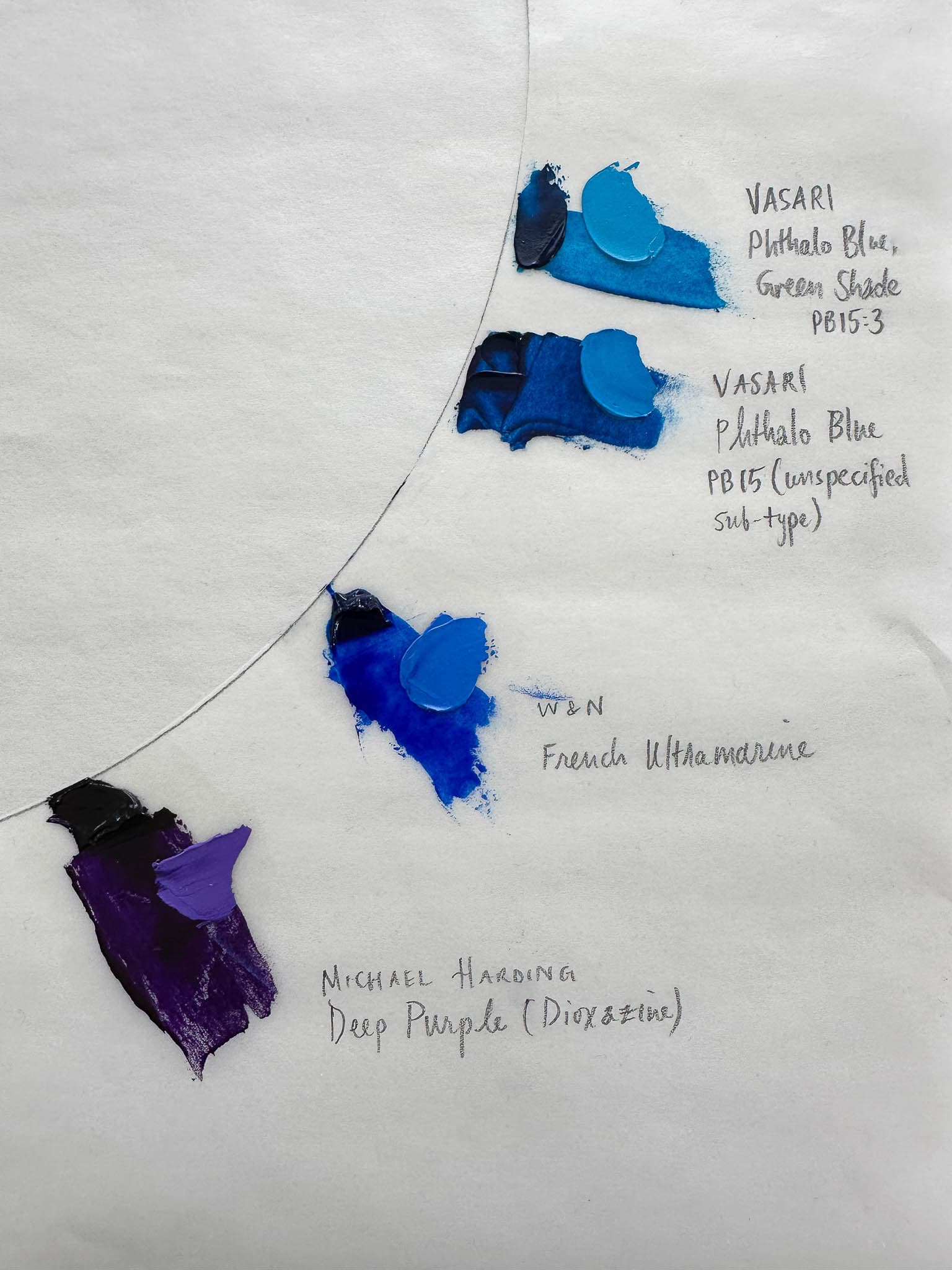
The two versions of Phthalo Blue are often called Green Shade and Red Shade. Phthalo Blue Red Shade is closer to Ultramarine
While there are a handful of sub-types, Phthalo Blues comes in two main varieties, Phthalo Blue Green Shade and Phthalo Blue Red Shade. The Red Shade is a tiny bit more likely to mix toward a middle blue that leans toward indigo where the Green Shade leans more toward cyan. We have an in-depth article as well as a comparison of several different Phthalo Blues in oil.
Vasari Phthalo Blue
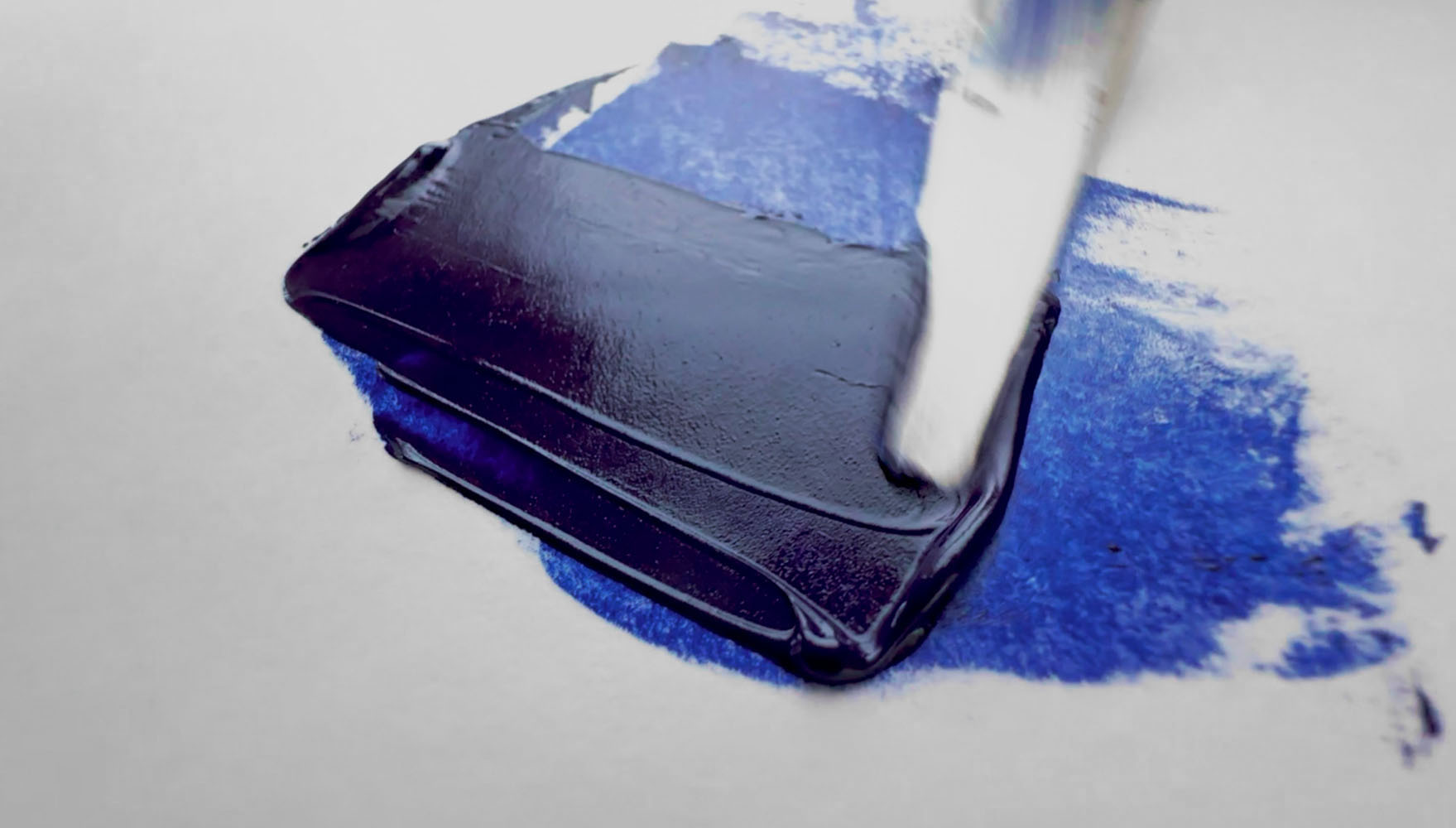
Vasari makes multiple versions of Phthalo Blue. One of them is labeled just PB15.
One Phthalo Version is Closer to Cyan
Vasari Phthalo Blue Green Shade
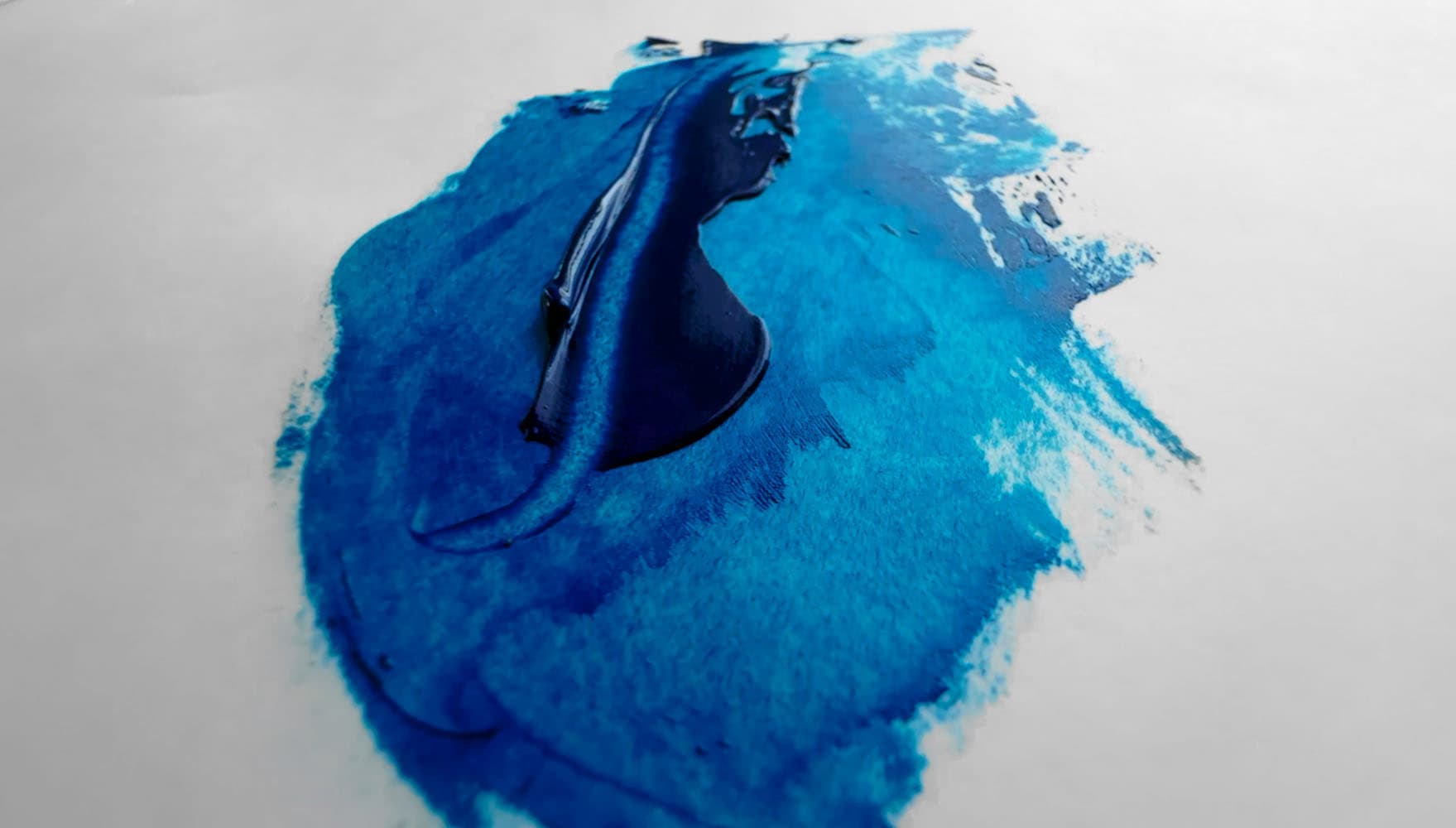
Vasari Phthalo Blue Green Shade, PB15:3
In terms of health and safety, phthalo blue contains copper. Please see the Artist's Guide to Health and Safety for information about the hazards associated with copper pigments. The author's most recent updated writing can be found through her site. Phthalo Blue sometimes contains impurities depending on the way it is manufactured and may contain dioxins and PCBs.
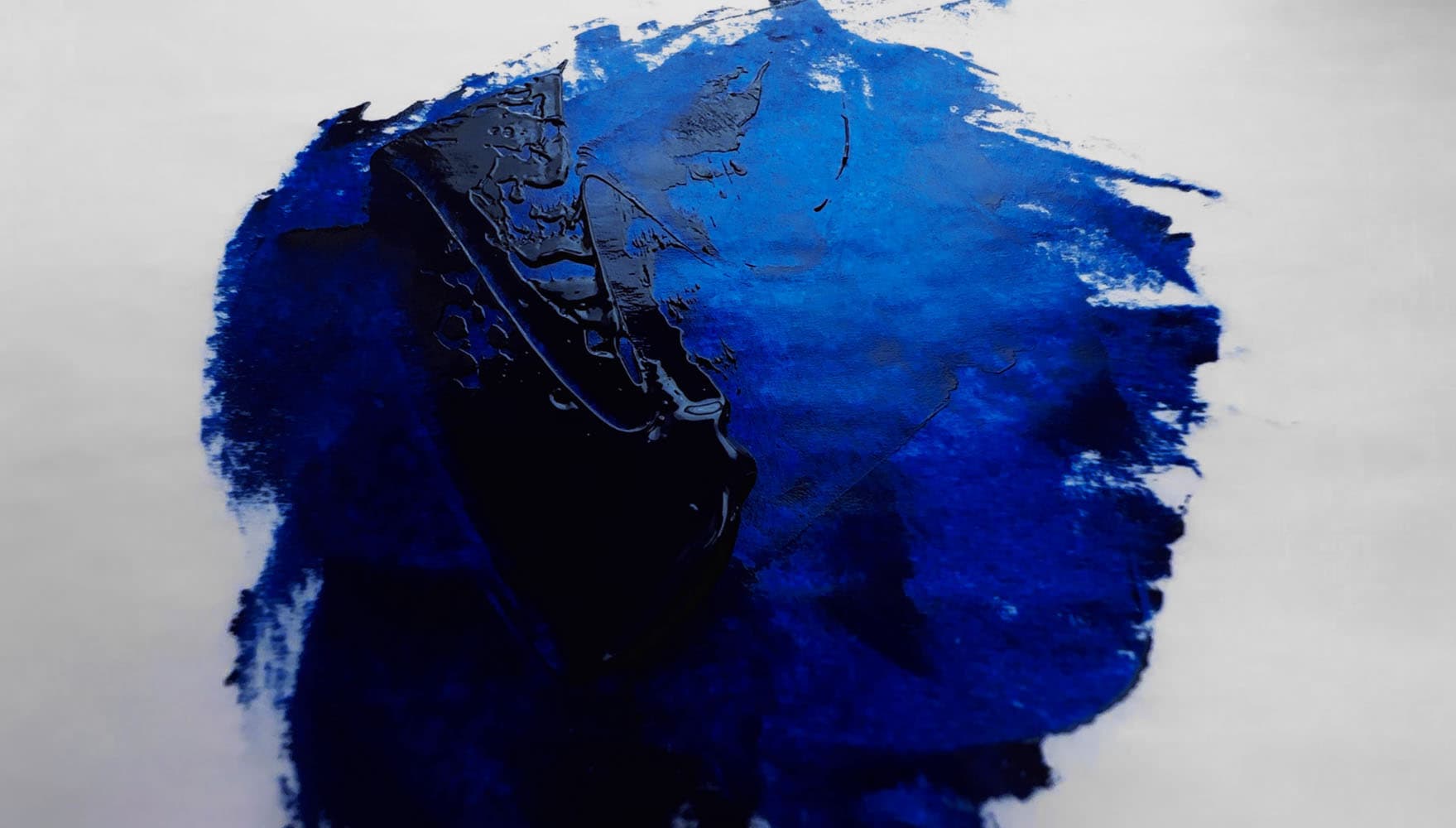
Michael Harding Phthalocyanine Blue Lake, PB15:3
Phthalo Blue requires a moderate amount of oil. Opinion is divided on its drying time with some saying medium to slow and others listing it as fast. It seems to frequently contain additives, stabilizers, and extenders. While phthalos are thought to be less toxic than other some paints, avoid tubes made before 1982 (or even we have heard as late as 1986) as they may be contaminated with impurities such as PCBs. Handle all artist colors with care.
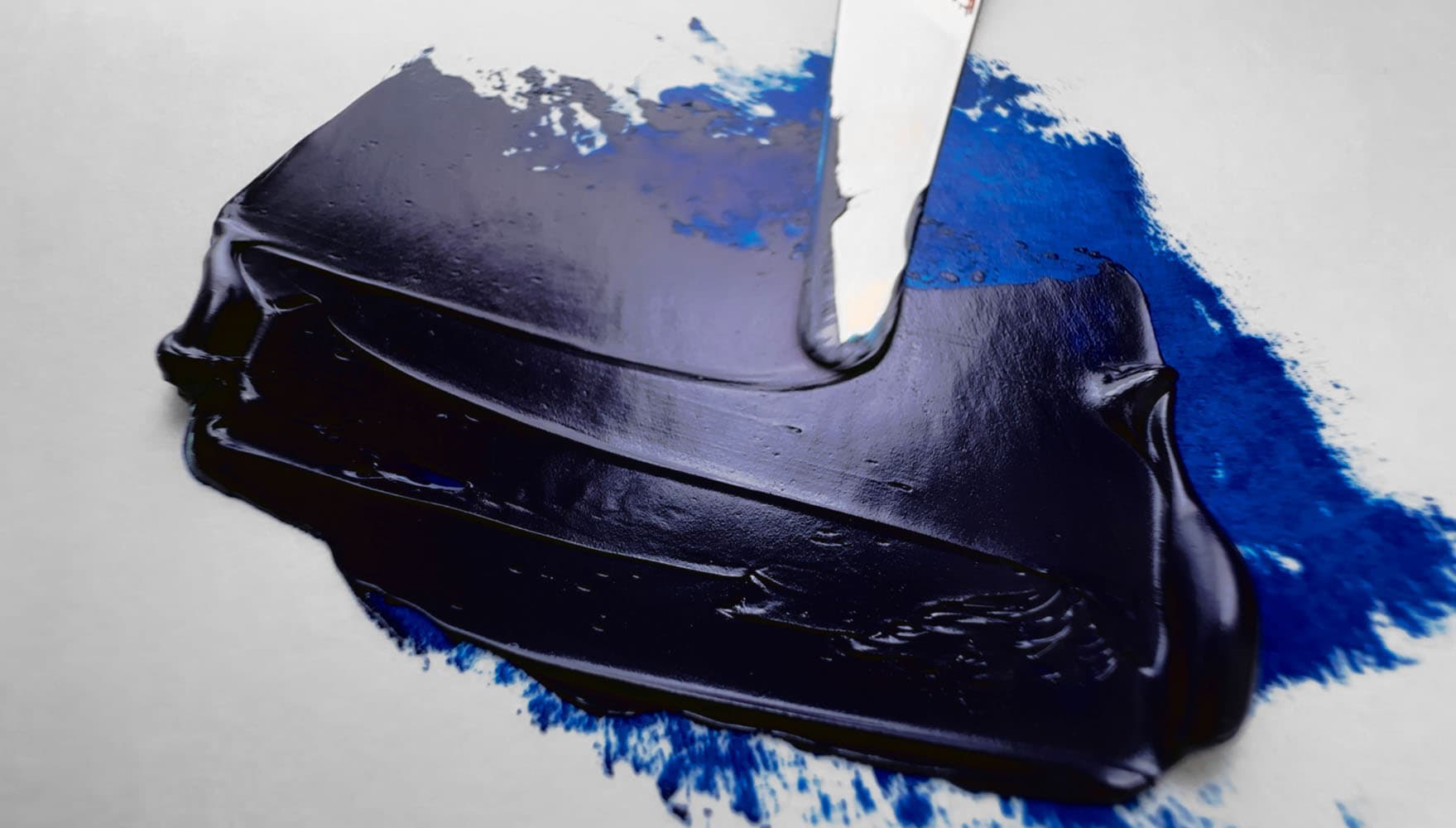
Old Holland Scheveningen Blue Deep, PB15:2
Resources
PB15 pigment data from David G. Myers, The Color of Art Pigment Database, Artiscreation.com,
Spurgeon, Tad. Living Craft: A Painter's Process. Mt. Airy, Philadelphia, PA: Zoetrope, 2018. Newer version available here: https://www.thomaskitts.com/page/36804/tad-spurgeons-living-craft,
Information about PB15 from Bruce MacEvoy, Handprint Guide to Watercolors, General information about this class of pigments from Handprint,
Elliott, Virgil. Traditional Oil Painting. Echo Point Books & Media, LLC, 2019. https://amzn.to/4nwIdzq,
CAMEO Materials Database: Conservation & Art Materials Encyclopedia Online, Museum of Fine Arts Boston. (Accessed June 2025). Phthalocyanine Blue https://cameo.mfa.org/wiki/Phthalocyanine_blue. Museum of Fine Arts Boston,
Mayer, Ralph. The Artist's Handbook of Materials and Techniques, 5th ed. New York, NY, Penguin Group, 1991. https://amzn.to/44OzBN9
Read an in-depth article
Stats
Lightfastness
Excellent in oil and acrylic, may be less LF in watercolor. May depend on pigment supplier
Excellent, but may have slightly less lightfastness in watercolor
Transparency
Transparent
Toxicity
Previously thought to be in the category of Lower Concern, but may contain contaminants
Tubes made before 1982 or even 1986 may contain PCBs or dioxins. Current phthalos may also contain toxic contaminants depending on country of manufacture or other variables. Treat all pigments and paints with studio safety protocols. Please see the Artist's Guide to Health and Safety for information about the hazards associated with copper pigments. The author's most recent updated writing can be found through her site.
Tinting
Extremely strong
Dry Time
6-18 days. Many varieties dry in less than 5 days and are likely to contain driers.
Oil Content
Medium
Sources vary, but as a pigment it has a medium amount by volume. Some sources say when it is made into a paint, its oil by volume is high
Particle Size
Very Fine
Chemical Name
Copper Phthalocyanine
C₃₂H₁₆N₈Cu
DISCLAIMER: Please note that we are not experts in health and safety and we are not toxicologists, please consult the proper experts. We are not liable for any issues that may arise from the use of our website or its contents. The information contained in this site is provided without warranty or guarantee of any kind. We do not necessarily endorse any other website that are linked from our site. For any important pigment specs, please reference the manufacturer details. If you discover errors or omissions, please reach out through our contact form. Thank you.
