

Top Pigment
Phthalocyanine Blue Red Shade
PB15:1
Alternate Names
Primary Blue
Phthalo Blue Red Shade
Phthalo Blue RS
Phthalo Blue (R
NC)
Pigment Description
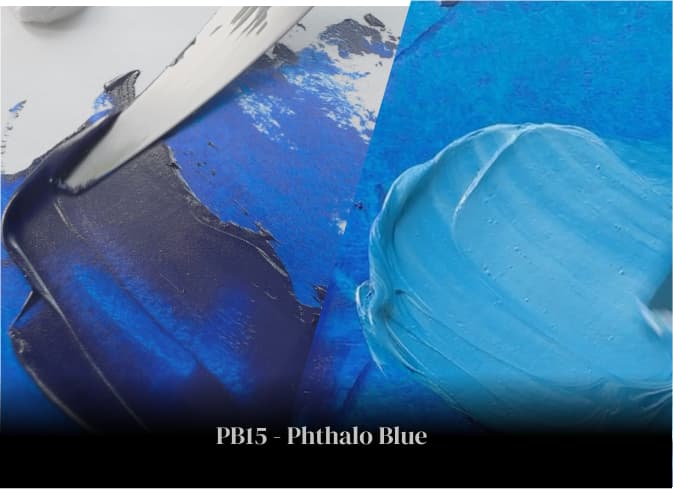
Phthalo Blue is a super-powered blue. This powerful color usually comes out of the tube almost black, but it creates brilliant bright ceruleans when thinned to a glaze, and is also used to create gorgeous blue tints. Phthalo Blue comes in several sub-varieties, but the two main categories are red shade and green shade, which connote a subtle difference in the leaning of the blue. The varieties can also be identified using the number after the colon in the pigment code.
Phthalo Blue, pigment code PB15, has several variants, and PB15:1 is one of the most popular. The domain of Phthalo Blue is roughly grouped in Phthalo Blue Red Shade and Phthalo Blue Green Shade, which is closer to cyan. PB15:1 is a Phthalo Blue Red Shade.
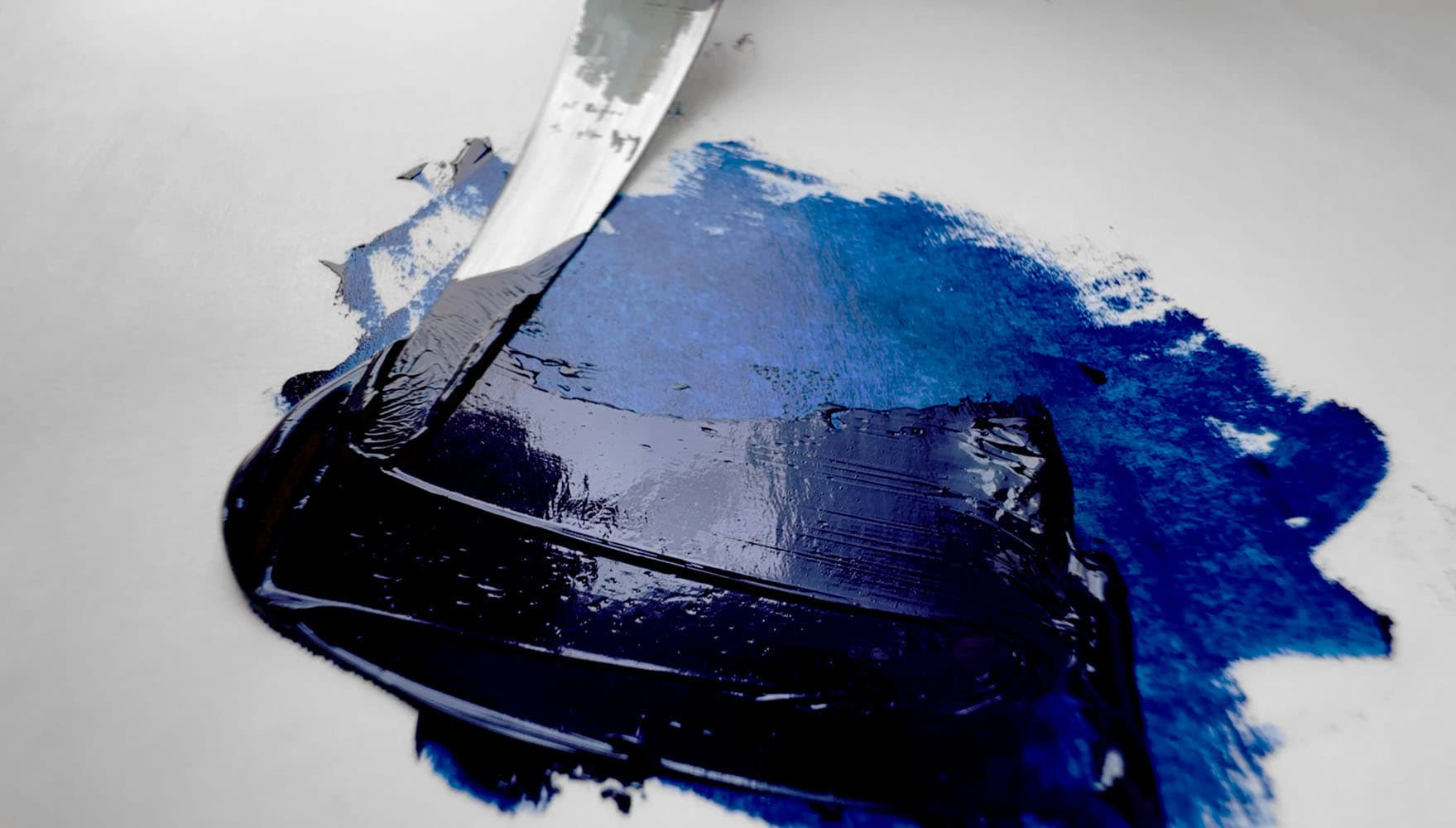
Old Holland Blue Lake, PB15:1
Phthalo Blue Red Shade has a couple of associated variations, and PB15:2 is one of the most popular versions of Red Shade. The naming is confusing, but Phthalo Blue Red Shade refers to a middle blue as opposed to cyan. The other Phthalo Blue Red Shade pigment is PB15:2.
Other versions of Phthalo Blue to check out are Phthalo Blue Green Shade, PB15:3, PB15:4 and PB15:6.
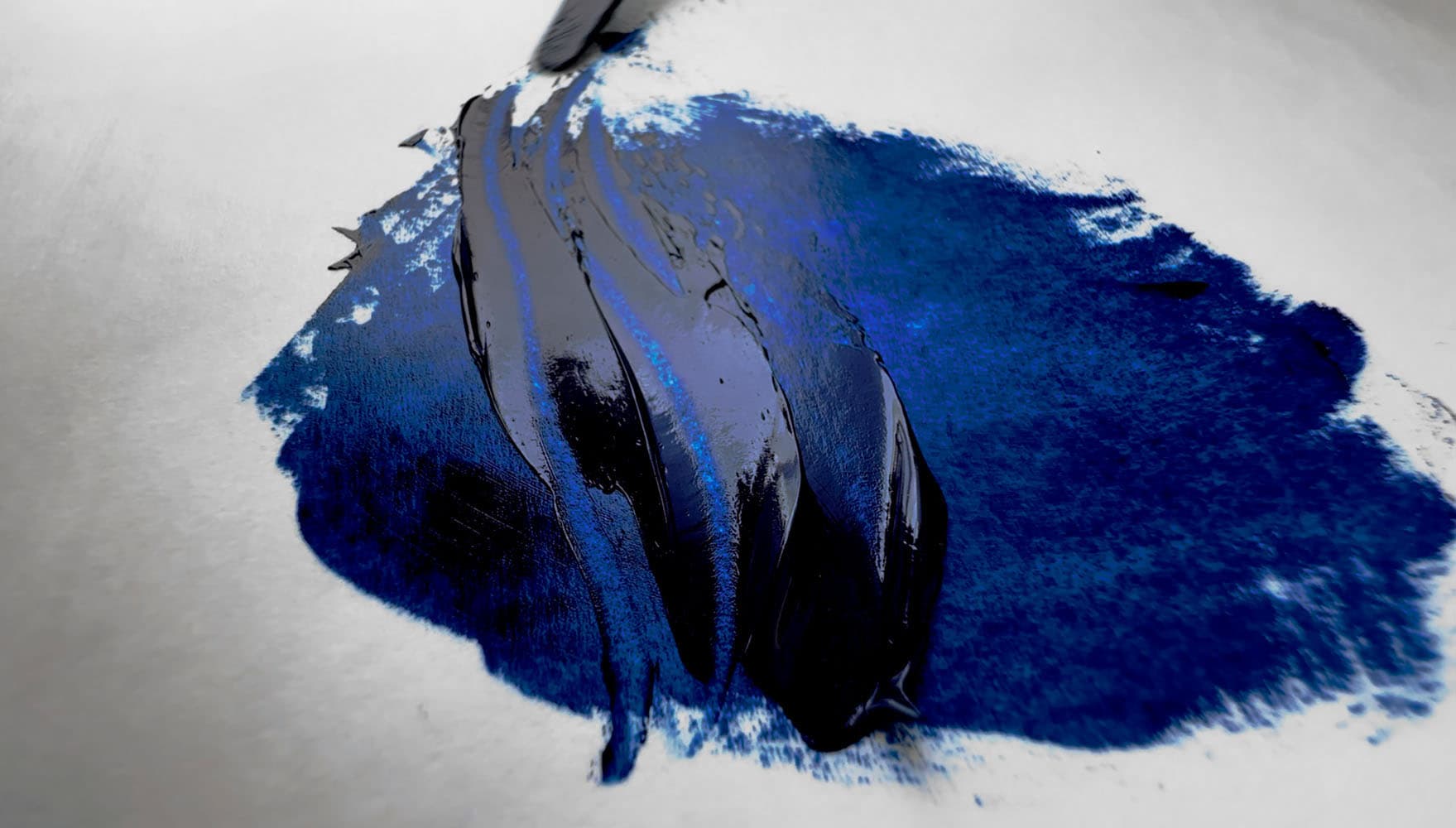
Phthalo Blue PB15:1 may be the most common variety of phthalo and is one of the "Red Shade" types (RS for short). This convention among blue pigments of a "red shade" and a "green shade" can be confusing. The red shade tends to lean more indigo and the green shade creates better cyans. In the case of Phthalo Blue, the Red Shade is often a lovely middle blue.
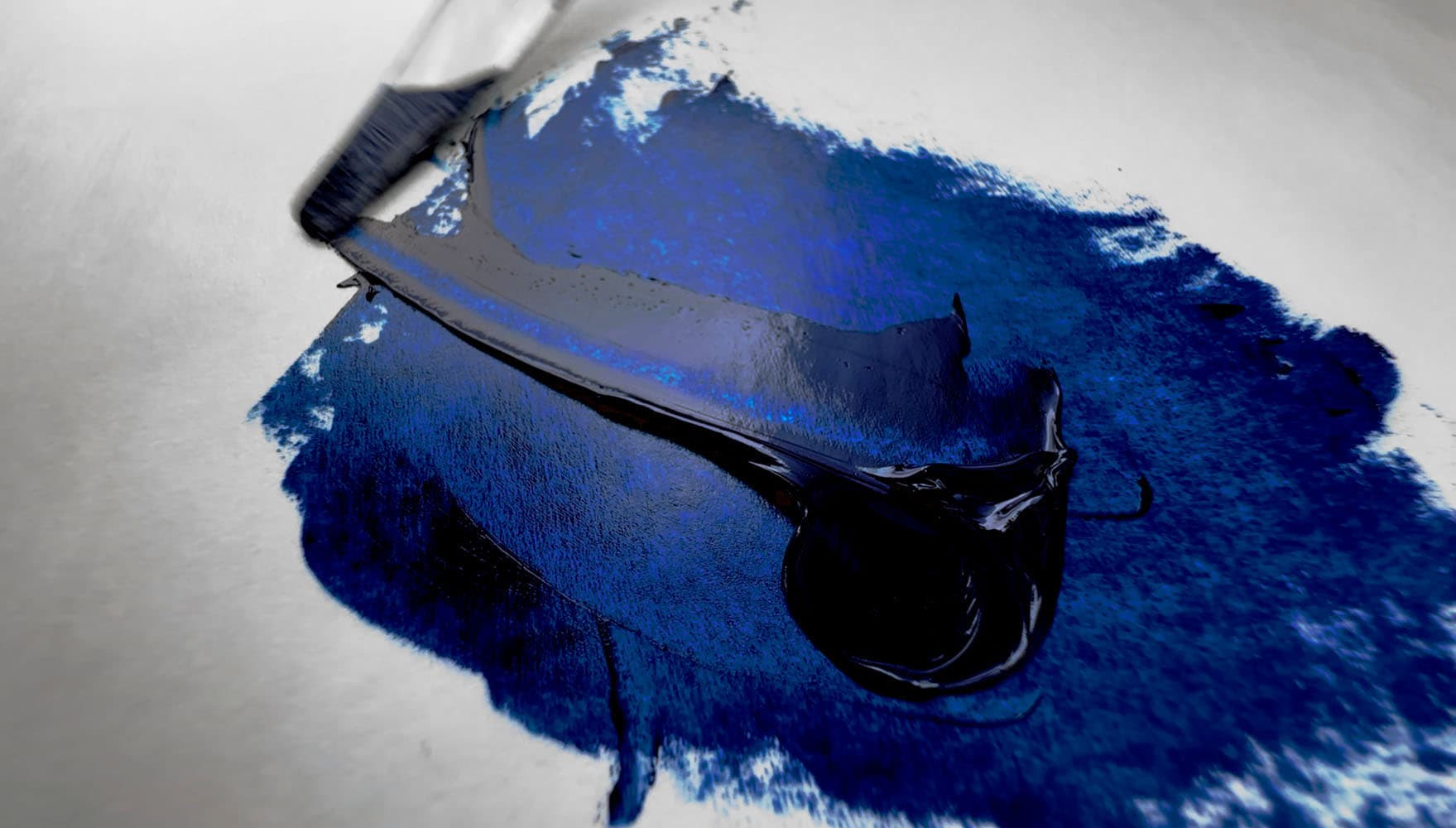
Old Holland Blue Lake PB15:1
Most phthalos are very intensely tinting pigments that can overpower other colors, so a little goes a long way. A dot in a mixture can make a difference.
While generally it is not considered to be a concern for toxicity, we have read that it may be contaminated with very toxic impurities depending on the country of manufacture. These can include dioxins and PCBs. Older tubes should be avoided for this reason. For more, see Monona Rossol’s work on artist safety.
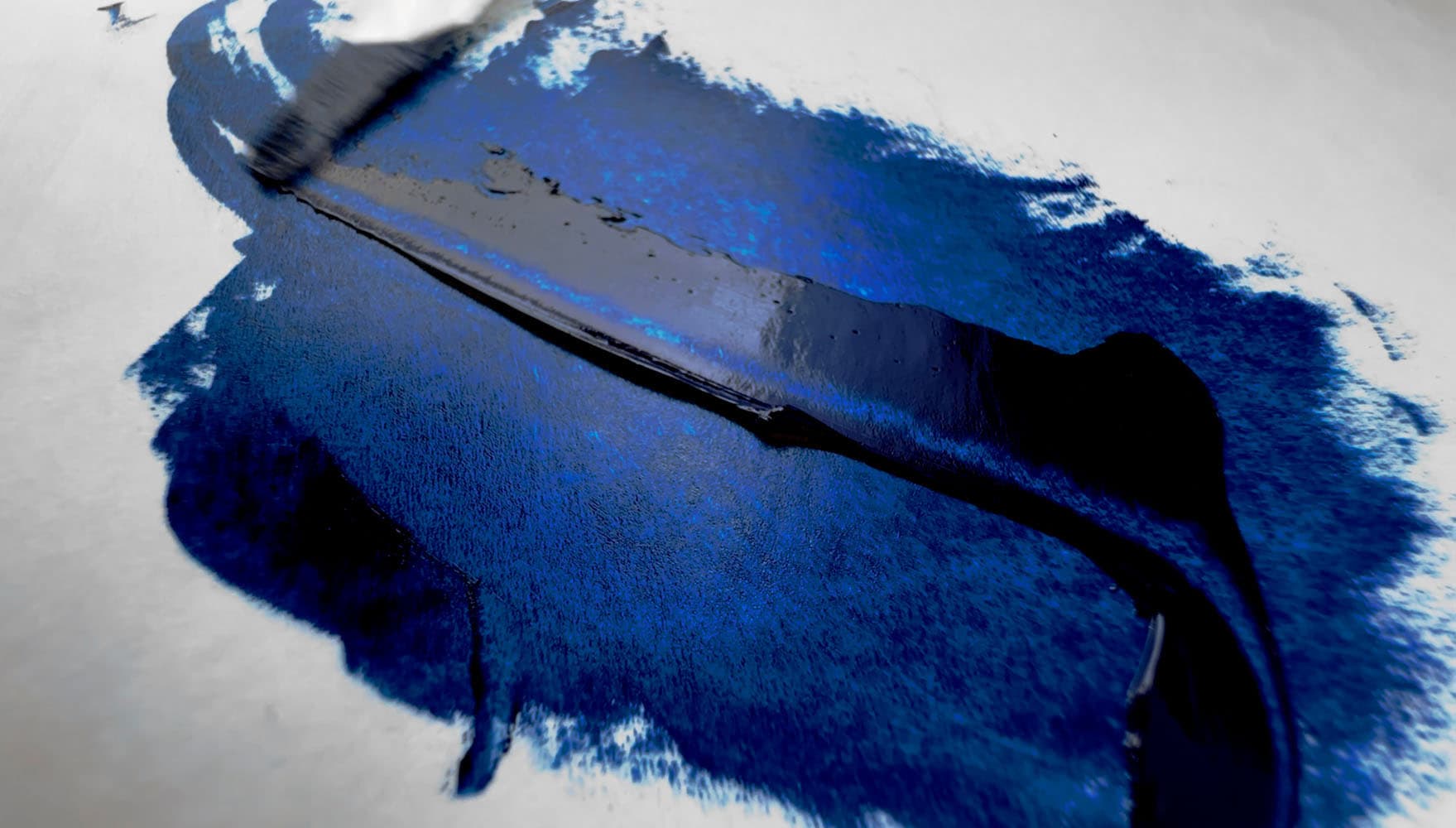
Old Holland Blue Lake, PB15:1
Subscribe for More Articles From the Great Book of Color
If you'd like to receive the latest Paint List news and articles in your inbox, subscribe to the newsletter here
Thanks for reading and Happy Painting!
Resources
PB15:1 pigment data from David G. Myers, The Color of Art Pigment Database, Artiscreation.com
Information about PB15:1 from Bruce MacEvoy, Handprint Guide to Watercolors, General information about this class of pigments from Handprint
Elliott, Virgil. Traditional Oil Painting. Echo Point Books & Media, LLC, 2019. https://amzn.to/4nwIdzq
CAMEO Materials Database: Conservation & Art Materials Encyclopedia Online, Museum of Fine Arts Boston. (Accessed June 2025). Phthalocyanine Blue https://cameo.mfa.org/wiki/Phthalocyanine_blue. Museum of Fine Arts Boston
Rossol, Monona. The Artist's Complete Health and Safety Guide. New York, NY : Allworth Press, 2001. The book is rather dated, updated information is available from her website
Ambrose, Trevor (2023, September 24). ASTM Lightfastness Testing for Oil Paints https://justpaint.org/astm-lightfastness-testing-for-oil-paints/. Just Paint, Golden Artist Colors.
Mayer, Ralph. The Artist's Handbook of Materials and Techniques, 5th ed., New York, NY, Penguin Group, 1991. https://amzn.to/44OzBN9
Read an in-depth article
Stats
Lightfastness
Excellent. May vary in watercolor
This color tends to perform very well in oils and acrylics. However lightfastness seems to drop in watercolors. There are a few notes of it darkening, see Artiscreation. Handprint has more information about its lightfastness in various brands of watercolor. Golden’s Lightfastness Testing listed results for a different variant of Phthalo, PB15:3, but may be of interest to cross-reference.
Transparency
Transparent
This is a highly transparent color. The masstone can be deceptive as it easily creates some of the brightest blues.
Toxicity
Previously thought to be in the category of Lower Concern, but may contain contaminants
Tubes made before 1982 or even 1986 may contain PCBs or dioxins. Current phthalos may also contain toxic contaminants depending on country of manufacture or other variables. Treat all pigments and paints with studio safety protocols. Please see the Artist's Guide to Health and Safety for information about the hazards associated with copper pigments. The author's most recent updated writing can be found through her site.
Tinting
Extremely strong
One of the most powerful tinters. This color is one where it is almost always sold with extenders just to make the paint more usable.
Dry Time
The natural Dry time is likely slow or very slow. (Other phthalos are listed at around 6-18 days). Many varieties dry in about 2 days and are likely to contain driers.
Tends to dry slowly so paint formulation may contain driers.
Particle Size
Very Fine
Chemical Name
Copper Phthalocyanine
C₃₂H₁₆CuN₈
DISCLAIMER: Please note that we are not experts in health and safety and we are not toxicologists, please consult the proper experts. We are not liable for any issues that may arise from the use of our website or its contents. The information contained in this site is provided without warranty or guarantee of any kind. We do not necessarily endorse any other website that are linked from our site. For any important pigment specs, please reference the manufacturer details. If you discover errors or omissions, please reach out through our contact form. Thank you.
