

Top Pigment
Phthalocyanine Green Blue Shade
PG7
Alternate Name
Phthalo Green BS
Pigment Description
One of the power pigments of the palette, this is a deep, transparent, high-chroma green that shows up in a staggering number of convenience blends from leaf greens to mints to green earths. This green is like some kind of mythical emerald that when broken into a million pieces creates an emerald rainbow of colors. It takes some work to divide it into all its may forms in mixes as it tends to be quite potent. Phthalo Green Blue Shade. We have an article on Phthalo Green Blue Shade over in the articles section.
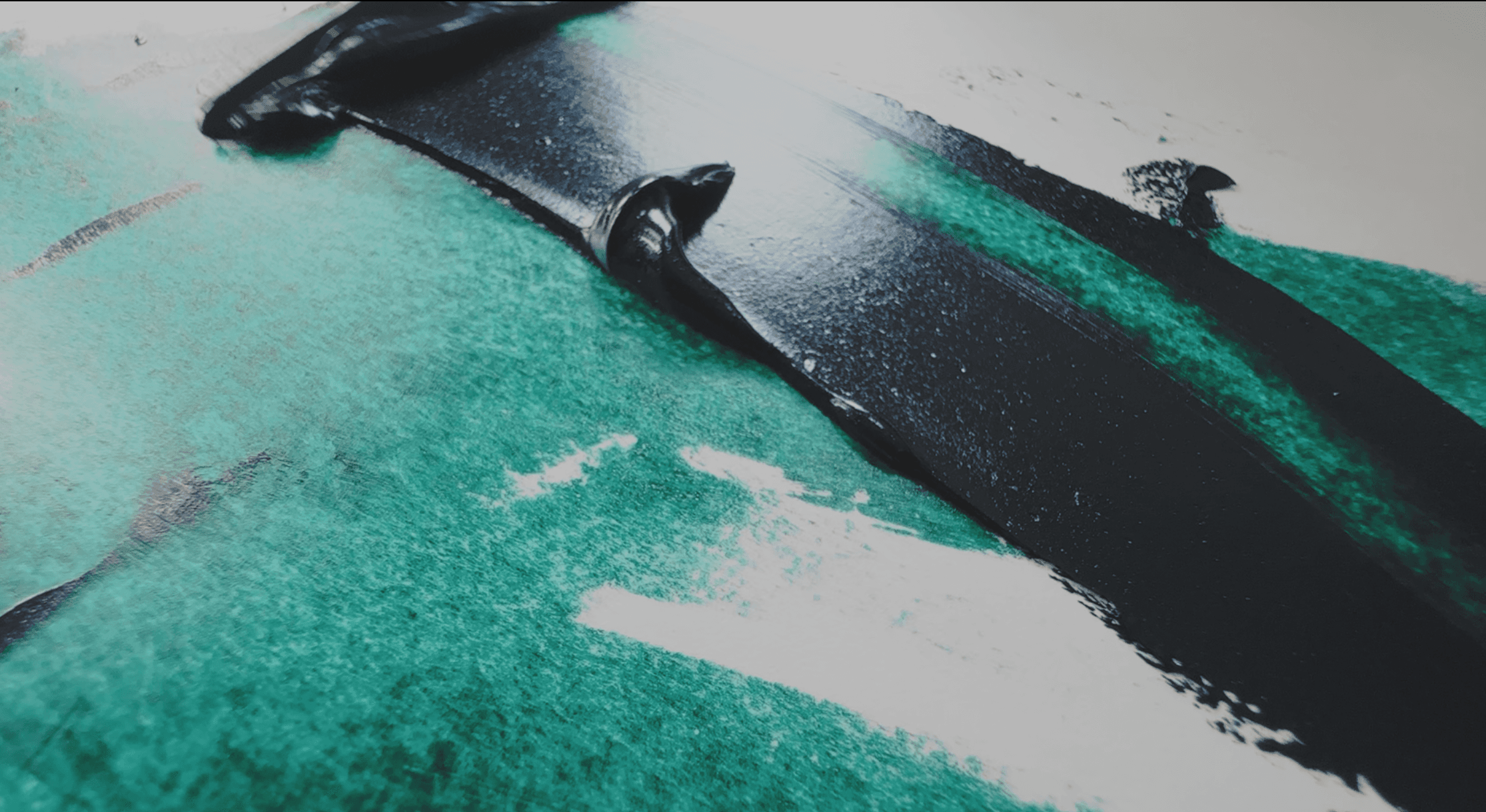
Phthalo Green, PG7 by Williamsburg
Phthalo Green also has a special role in teals and can help to mix approximations for some of the more expensive mineral-based colors. It tends to be dark, almost black in masstone, but reveals high chroma in tints and glazes. We have a deep dive on Phthalo Green as well as a comparison of PG7 paints in oils. Phthalo Green Blue Shade leans a bit more toward blue-green than its cousin, Phthalo Green Yellow Shade, PG36.
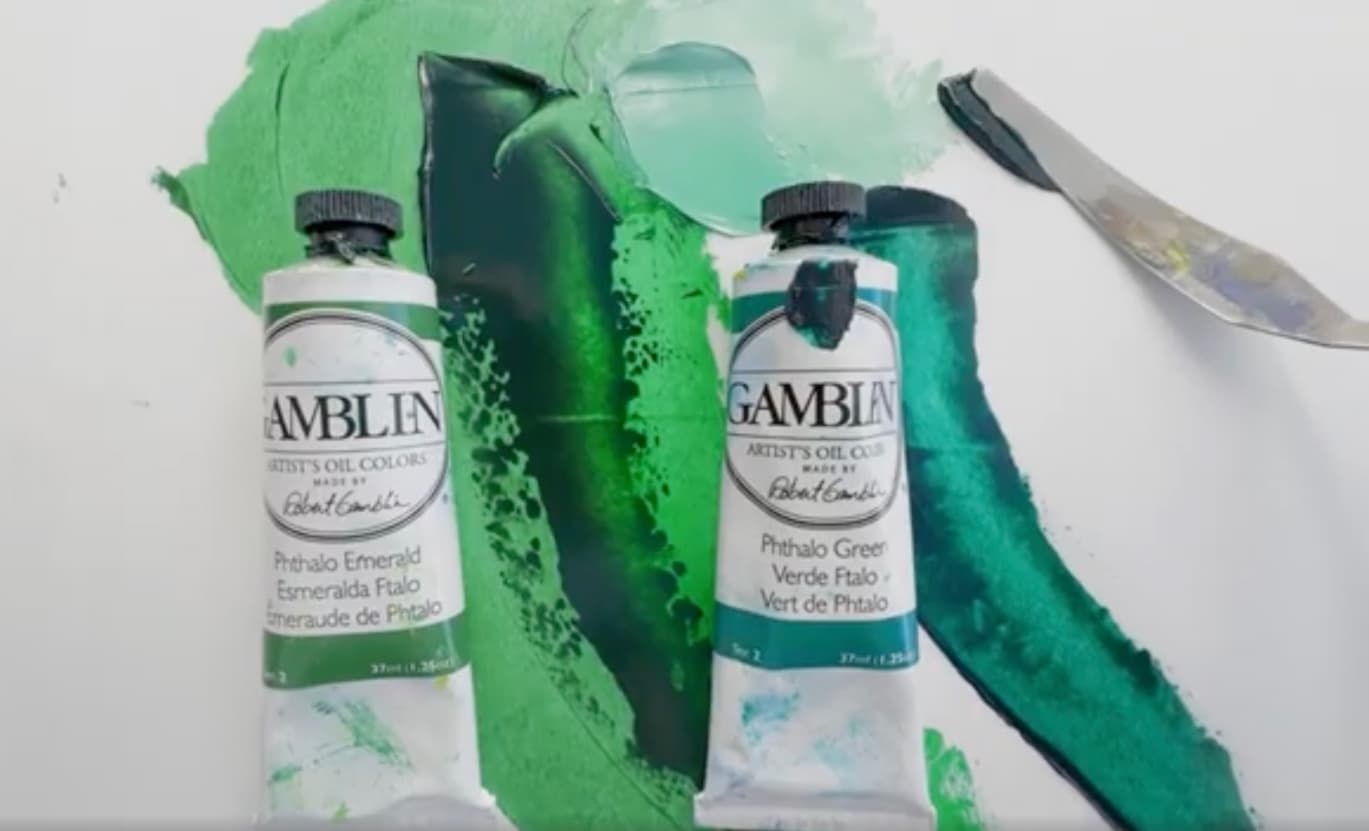
Phthalo Green Yellow Shade and Phthalo Green Blue Shade by Gamblin
We found that Phthalo Green Blue Shade is frequently added to convenience greens of all kinds-- which makes it possible to mix your own convenience colors on the palette.

Popular as a single-pigment color as well as an ingredient in convenience mixes. Many paints contain Phthalo Green Blue Shade, PG7. From mints, to true greens, to sap greens to teals, PG7 is one of the most common pigments found in color blends
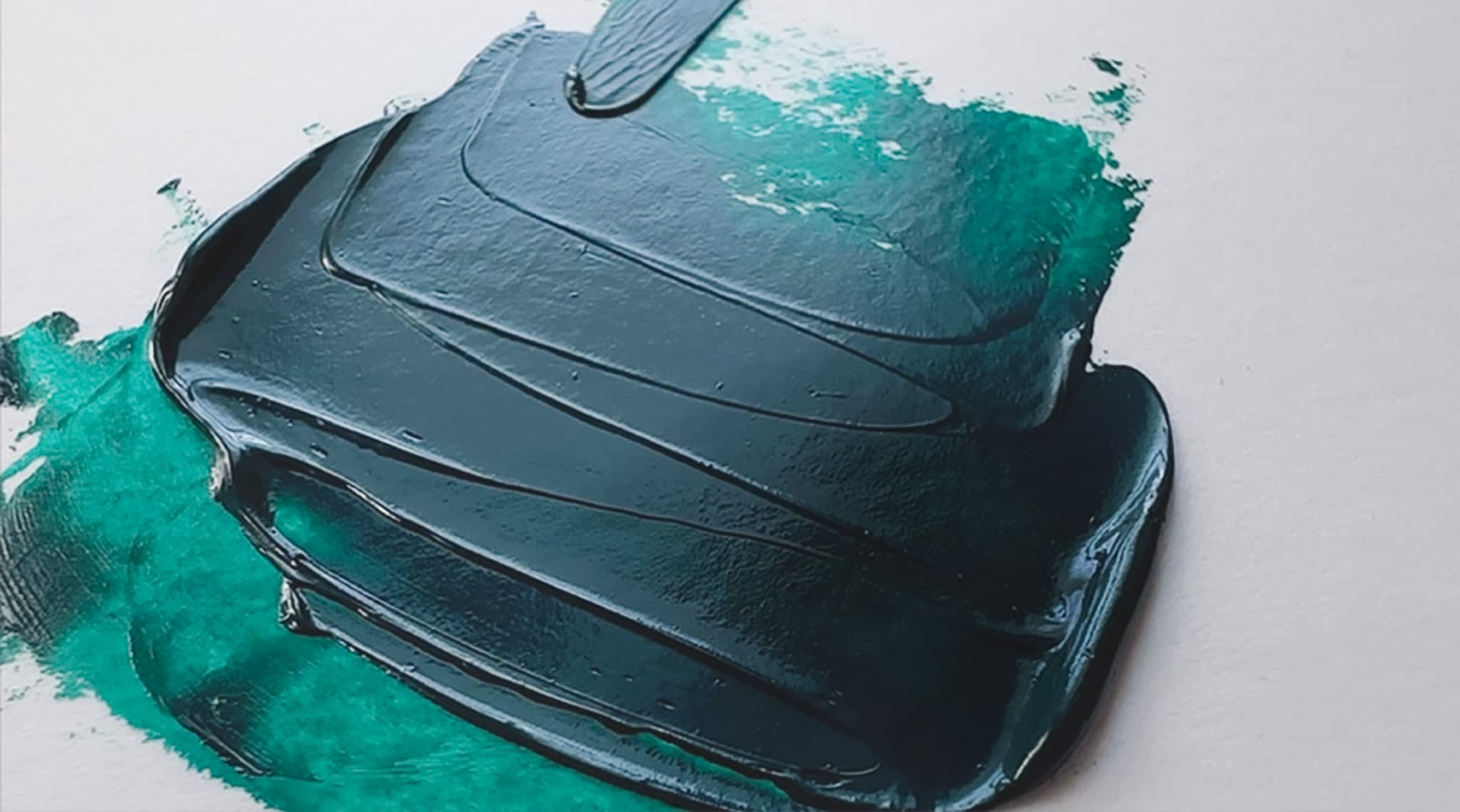
Williamsburg Phthalo Green, PG7
Phthalo Green only requires a moderate amount of oil, however it seems to frequently be found with modifiers, additives, stabilizers, and extenders to reign it its intensity.
Resources
PG7 pigment data from David G. Myers, The Color of Art Pigment Database, Artiscreation.com,
Spurgeon, Tad. Living Craft: A Painter's Process. Mt. Airy, Philadelphia, PA: Zoetrope, 2018. Newer version available here: https://www.thomaskitts.com/page/36804/tad-spurgeons-living-craft,
Information about PG7 from Bruce MacEvoy, Handprint Guide to Watercolors, General information about this class of pigments from Handprint,
Rossol, Monona. The Artist's Complete Health and Safety Guide. New York, NY : Allworth Press, 2001. The book is rather dated, updated information is available from her website.
Read an in-depth article
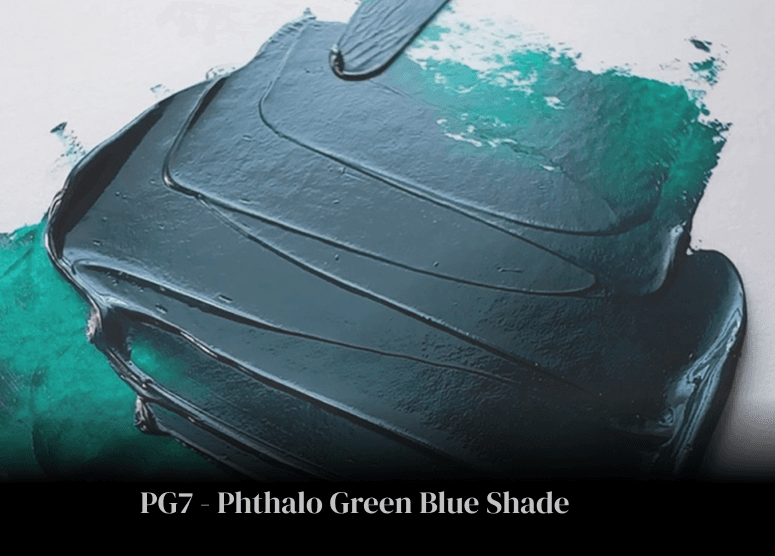
Stats
Lightfastness
Excellent, refer to notes on mixing whites in oils
In general this pigment gets solid highest marks on the BWS (all 8’s) however new research sheds light on its behavior in different mixing white. In Golden’s lightfastness testing, there were some interesting lightfastness variances depending on mixing white. Golden found that this pigment did not perform well in Flake white in linseed oil, however this may be somewhat brand dependent. In most mixing whites, it had excellent performance, though it did slide to an ASTM II in Flake white in Safflower as well as pure zinc white. Lightfastness was excellent (ASTM I) in Titanium White in linseed oil and safflower oil, Lithopone in safflower oil, and a few others.
Transparency
Transparent
In oil we have seen single-pigment paints range from opaque to transparent depending on the formulation, but the pigment is transparent.
Toxicity
Previously thought to be in the category of Low Concern but may contain toxic contaminants
May be contaminated with PCBs and toxic contaminants. Tubes before 1982 or even 1986 may have PCBs, and current phthalos may also contain contaminants depending on country of manufacture or other variables. Monona Rossol’s datasheets have more information. Her book, the Artist's Guide to Health and Safety, contains information about the hazards of working with pigments that contain copper. Treat all pigments and paints with studio safety protocols.
Tinting
Very High
Dry Time
Slow
Dry times may be as long as 6-18 days. However, many oil paints list dry times of less than 5 days, with some as abrupt as 1-2. If a fast dry time is listed, the paint probably contains driers
Oil Content
Medium / Moderate
Varies. Some say moderately low by volume. Some versions when made into a paint are listed as having a high amount of oil. This may also have to do with extenders, which might have different oil requirements. Somewhat lean seems to be the consensus for the pigment. By weight, Artiscreation lists a wide range of approximately 22-62g/100g of oil, but your pigment may have different measurements.
Particle Size
Very Fine
Chemical Name
Polyclorinated Copper Phthalocyanine, or chlorinated copper
DISCLAIMER: Please note that we are not experts in health and safety and we are not toxicologists, please consult the proper experts. We are not liable for any issues that may arise from the use of our website or its contents. The information contained in this site is provided without warranty or guarantee of any kind. We do not necessarily endorse any other website that are linked from our site. For any important pigment specs, please reference the manufacturer details. If you discover errors or omissions, please reach out through our contact form. Thank you.
