

Lapis Lazuli (Genuine Historical Pigment)
PB29 Lapis
Alternate Names
Natural Ultramarine Blue
Lazurite
Pigment Description
Genuine Lapis Lazuli shares the same pigment code as Synthetic Ultramarine Blue. However, the two colors behave extremely differently in practice.
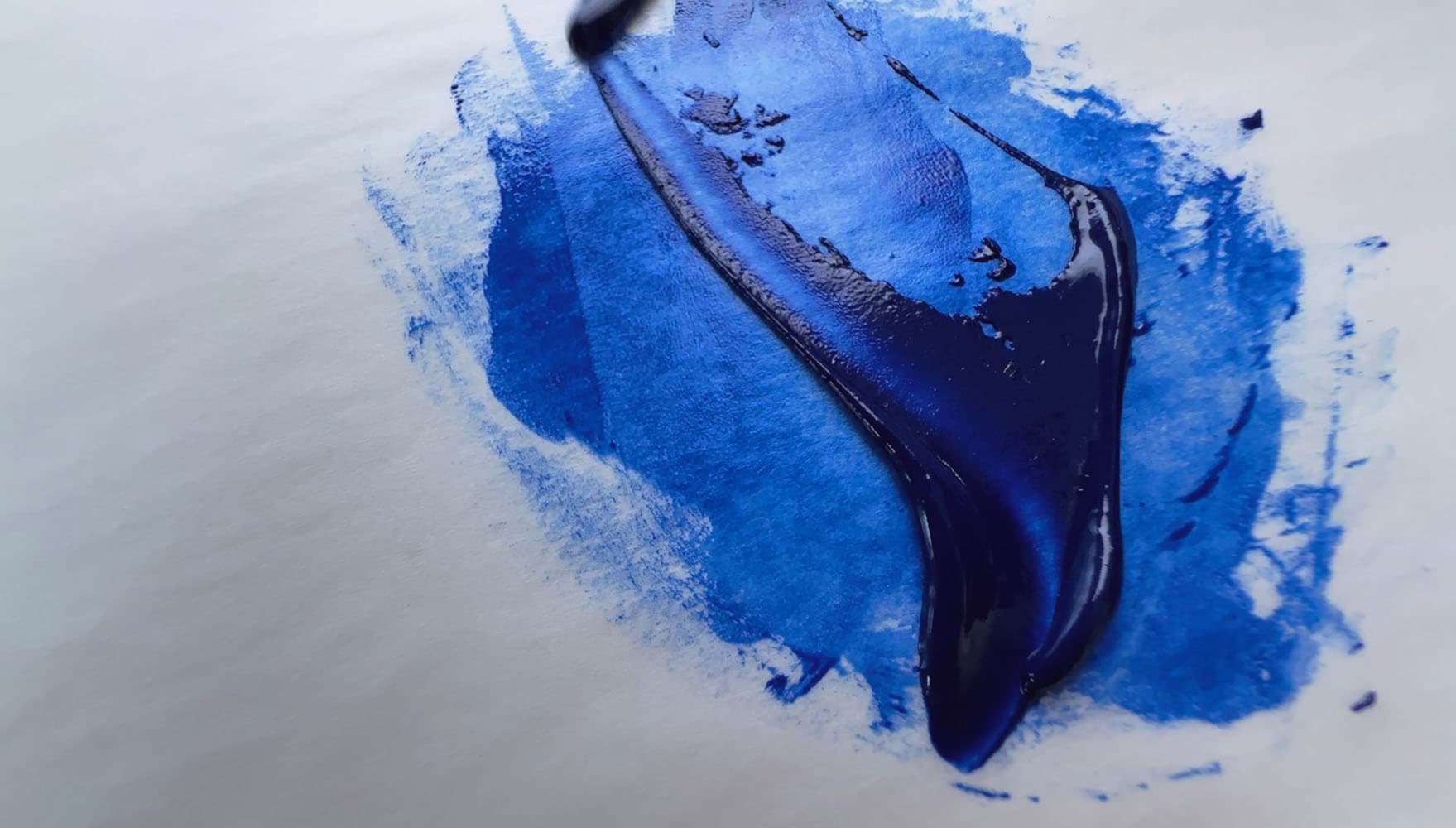
Rublev Genuine Lapis Lazuli in oil paint
Genuine Lapis has a blue-grey note to it in all but the highest grades, and also reveals yellowing in oils more than we've noticed from regular ultramarine.
Lapis may acutally shine better in mediums other than oil paint. However if you want to try it, genuine lapis oil paint is offered by Rublev and Michael Harding.
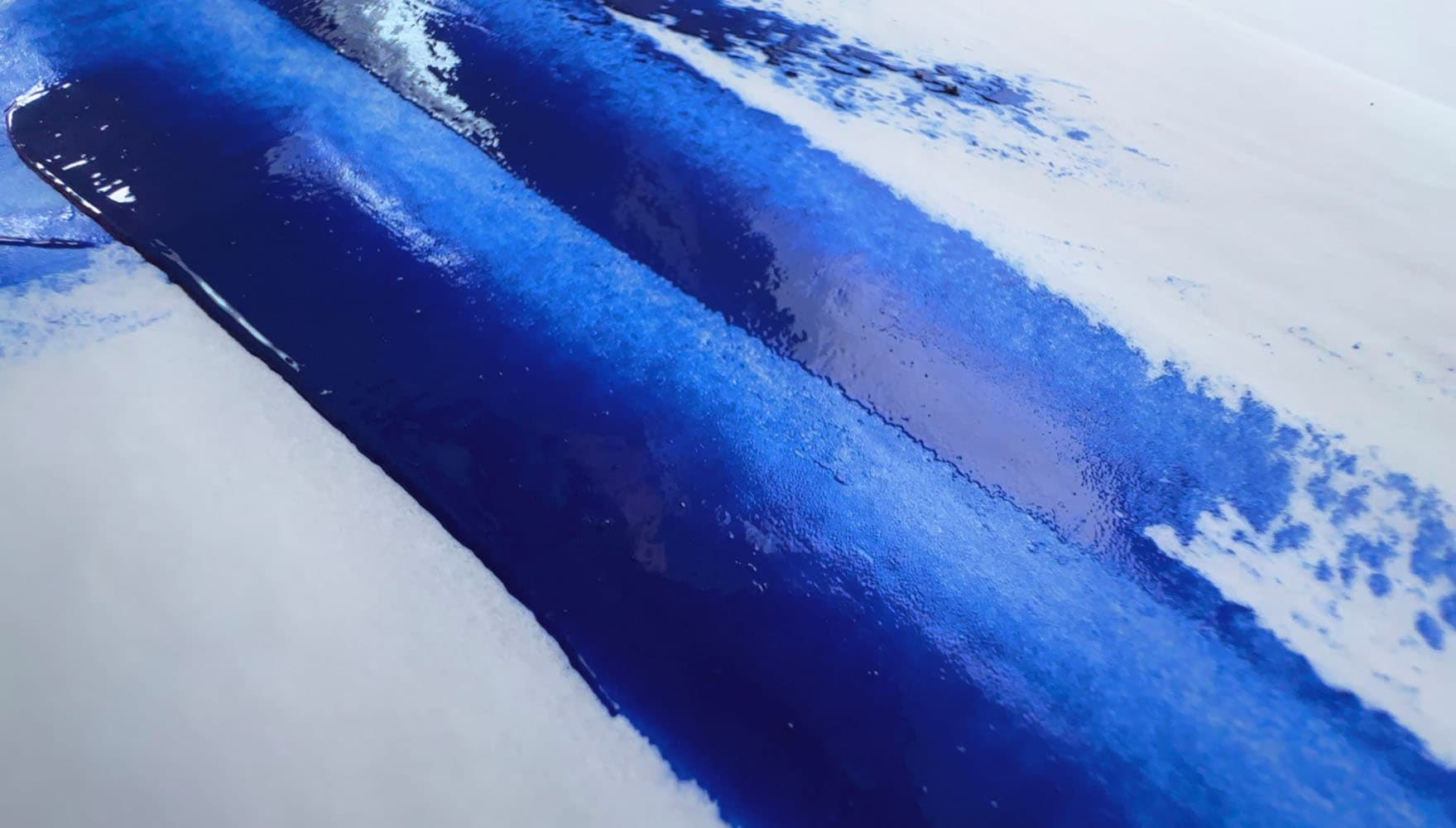
Natural Lapis Lazuli lends itself to glazing
In terms of health and safety, Monona Rossol mentions limits for respirable dust called PNOS limits. Please see her work for more information. Also like every pigment, handle this color with care and do not ingest it (that should go without saying, but sometimes it needs to be mentioned). We are not health and safety experts so please do your own research.
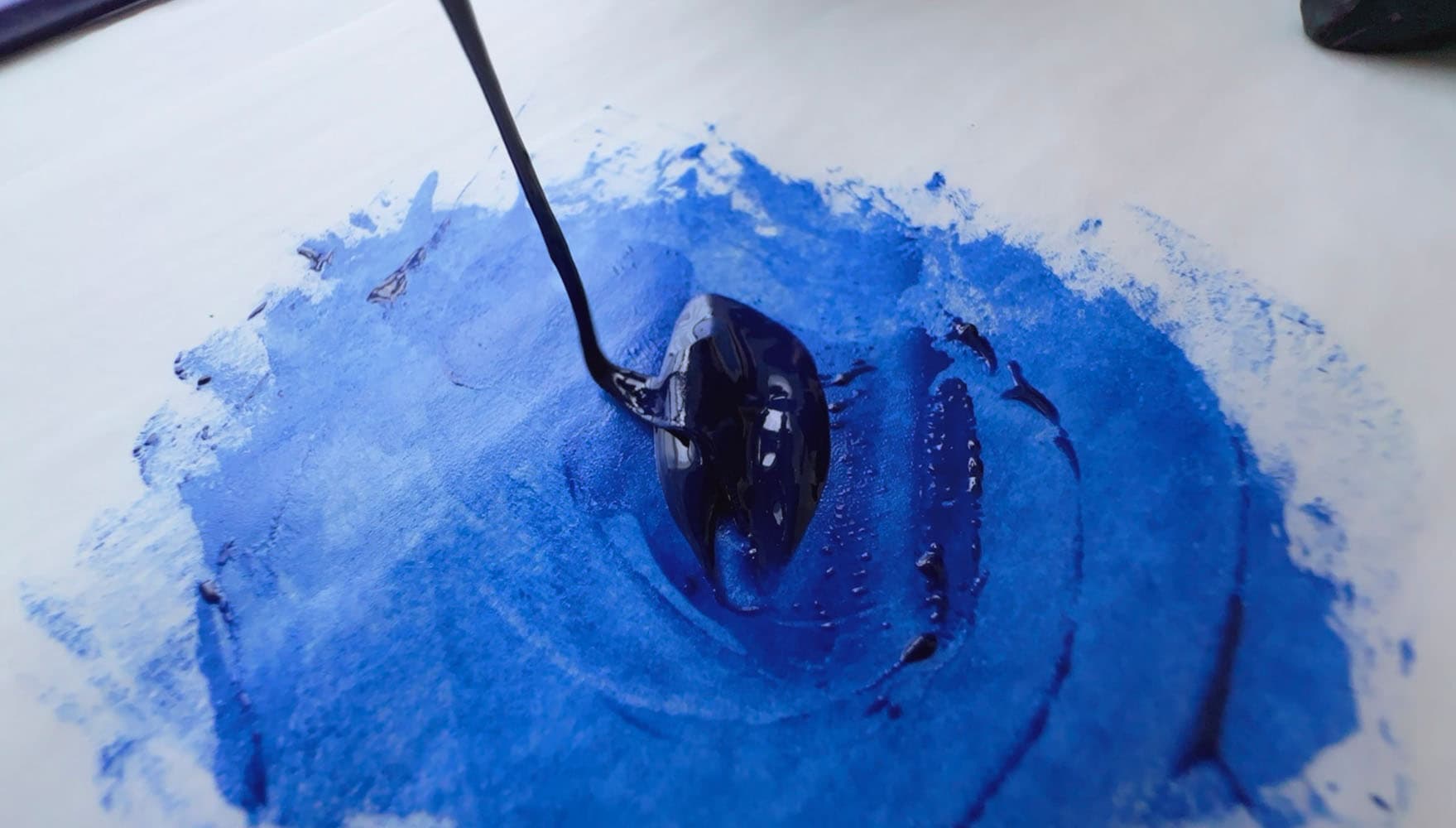
Rublev Lapis is extremely long in paint behavior (the long string pulled up by the palette knife)
Virgil Elliot's work on Traditional Oil Painting mentions that this color is moderate for how much oil it requires to be made into an oil paint. Some categorize ultramarine as slow drying, while others feel it's closer to the medium side of slow.
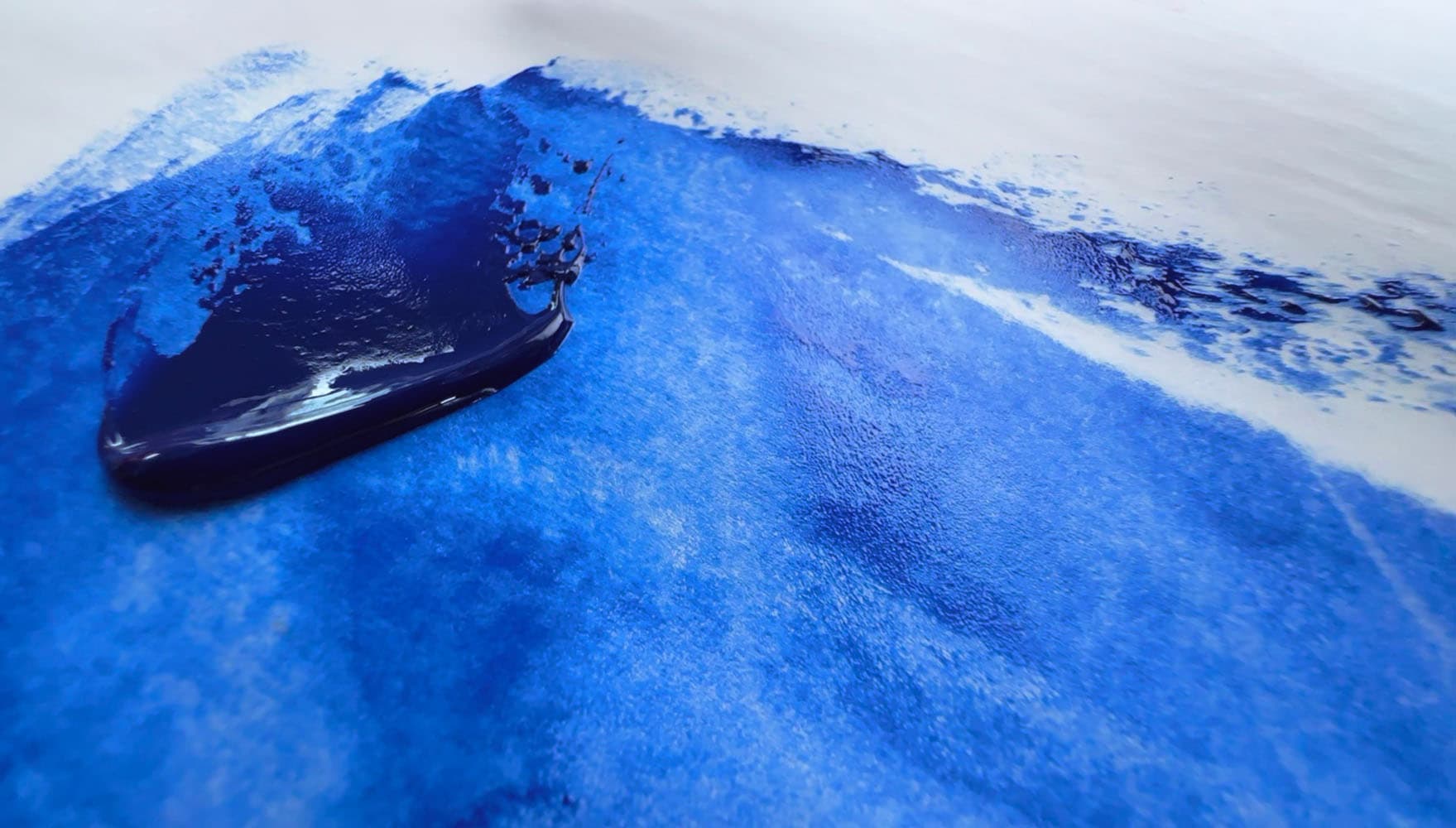
The natural mineral that lends the blueness is called Lazurite, and the naturally occurring impurities such as calcite (which is clear) and pyrite (which looks like gold) give it some of its complexity and charm. We've also heard it said that pyrite may also contribute to its yellowing, but we have not tested this ourselves.
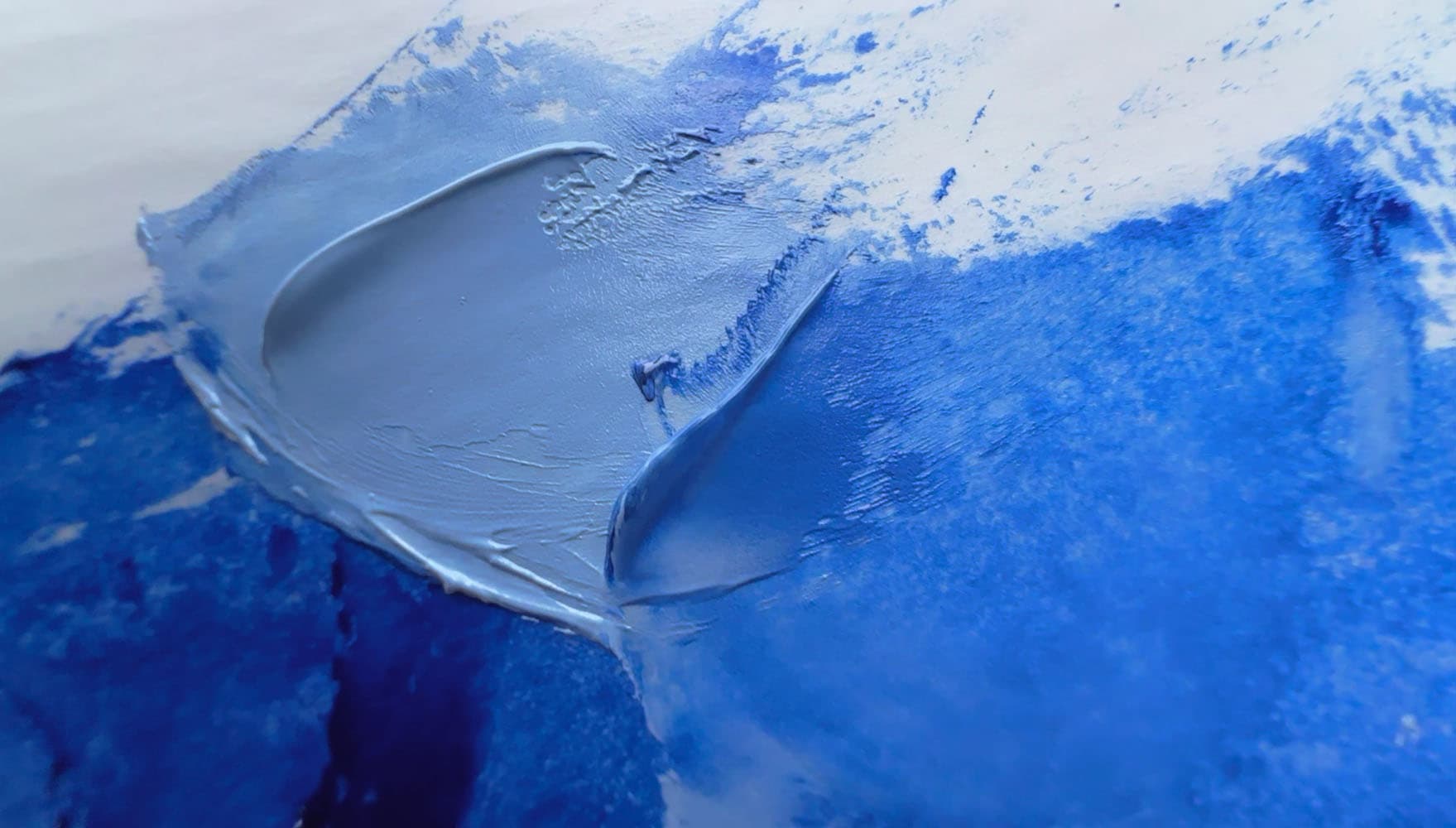
In tints, Lapis is taken out quickly with Titanium White, but holds its own better in Lead White
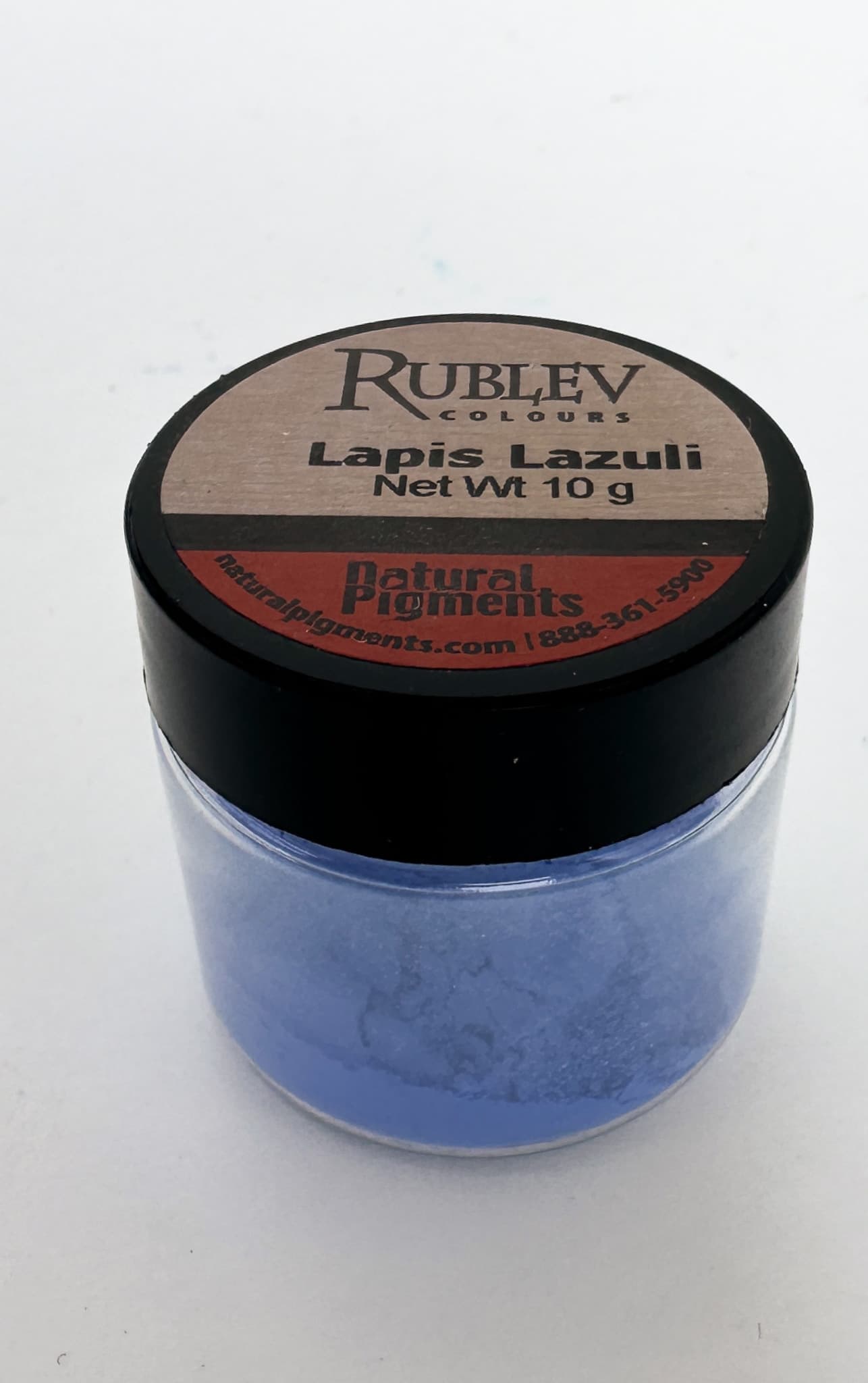
Genuine Lapis Lazuli Pigment from Rublev Colours / Natural Pigments
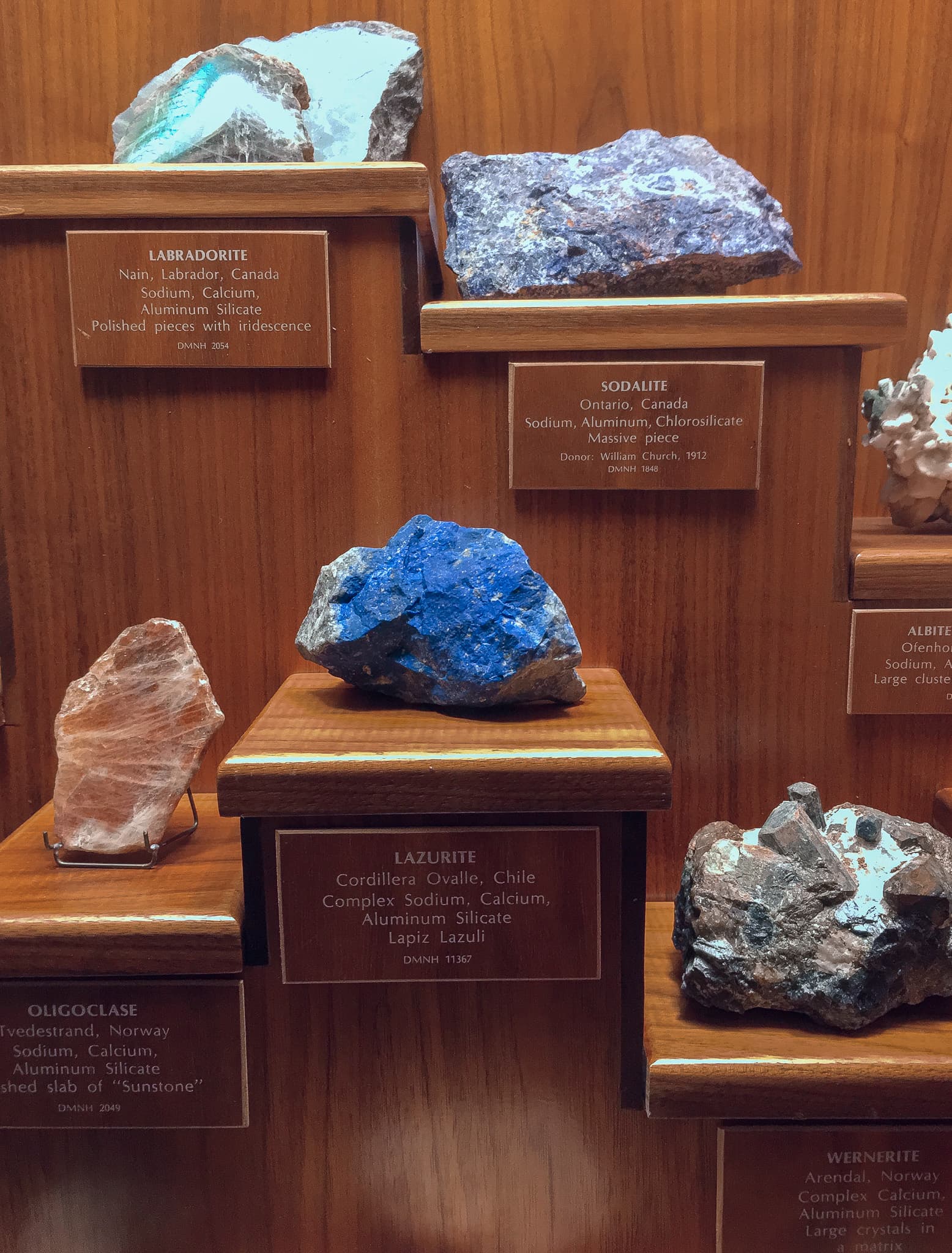
A museum-quality piece of Lapis Lazuli
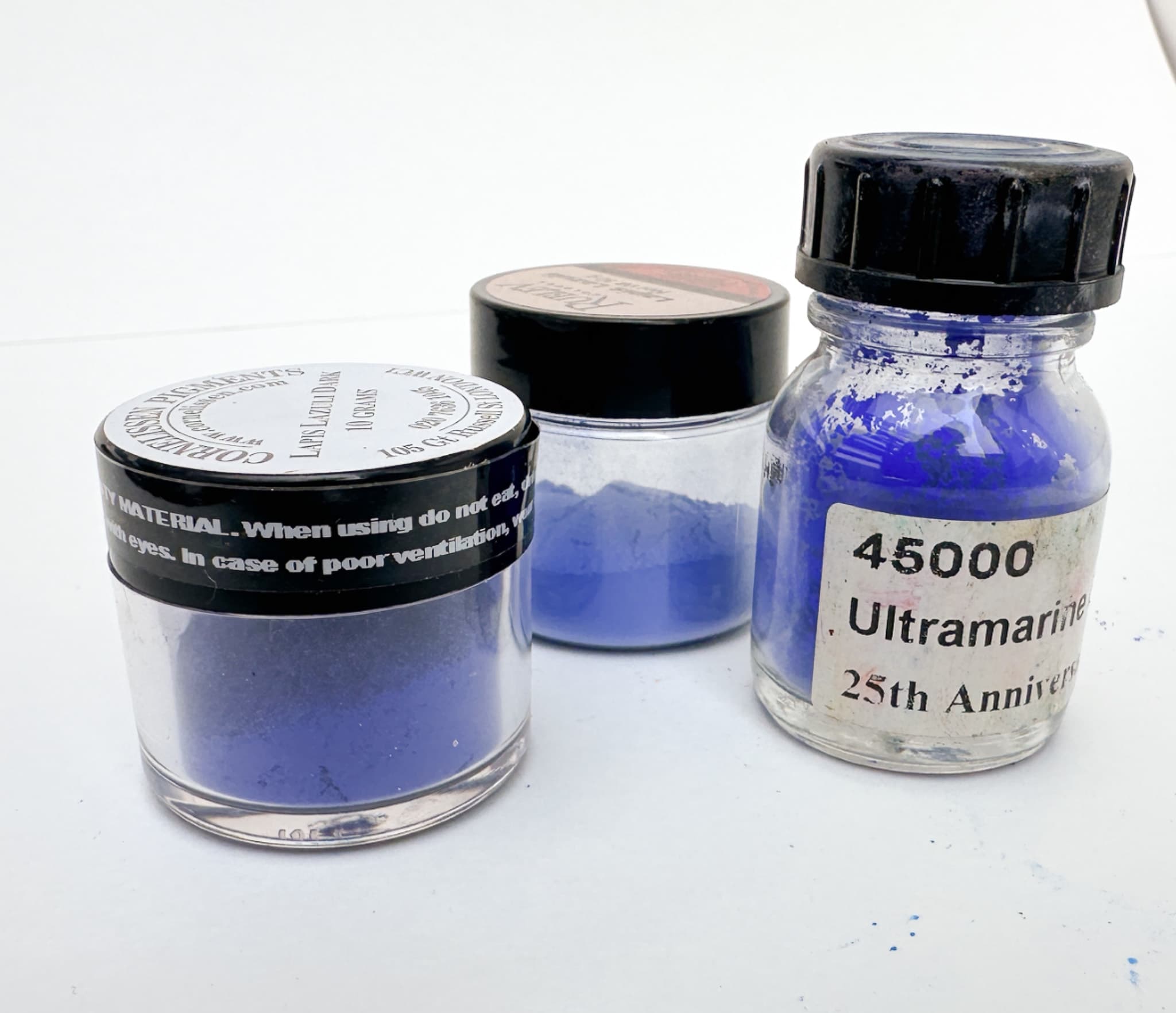
Lapis Lazuli on the left compared with Synthetic Ultramarine Pigment on the right. From left to right, L. Cornellisen and Son Lapis Lazuli, Rublev Lapis Lazuli, Kremer Pigments Ultramarine. While the pigments share the same pigment code, PB29, they have different behaviors
Resources
PB29 Lapis pigment data from David G. Myers, The Color of Art Pigment Database, [Artiscreation.com](https://artiscreation.com/blue.html#PB29 Lapis),
Spurgeon, Tad. Living Craft: A Painter's Process. Mt. Airy, Philadelphia, PA: Zoetrope, 2018. Newer version available here: https://www.thomaskitts.com/page/36804/tad-spurgeons-living-craft,
Bomford, David, et. al,. Impressionism. London: The National Gallery, in association with Yale University Press,1990. Internet Archive, Web. Accessed June 2025. https://archive.org/details/impressionism0000unse_z3w3 Church, A. H.. The Chemistry of Paints and Painting. London : Seeley, Service1915. Internet Archive, Web. Accessed June 2025. https://archive.org/details/chemistryofpaint00churuoft
Information about PB29 Lapis from Bruce MacEvoy, [Handprint Guide to Watercolors](https://www.handprint.com/HP/WCL/waterb.html#PB29 Lapis), General information about this class of pigments from Handprint, More from Handprint
CAMEO Materials Database: Conservation & Art Materials Encyclopedia Online, Museum of Fine Arts Boston. (Accessed June 2043). Lapis Lazuli https://cameo.mfa.org/wiki/Lapis_lazuli. Museum of Fine Arts Boston
Stats
Lightfastness
Excellent
See notes for PB29. While these could vary, it may be helpful to cross-reference Golden’s research on the synthetic version. We have also read that the natural form may darken some.
Transparency
Transparent, Semi-Transparent
Toxicity
Possible hazard, refer to notes from CAMEO materials database
We were surprised to see a toxicity note on CAMEO. See SDS for any pigments you use. Treat all pigments and paints with studio safety protocols.
Tinting
Low
Dry Time
Medium
Chemical Name
complex sulfurous sodium aluminosilicate compound
(Na,Ca)₄(Al,SiO₄)₃(SO₄,S,Cl)
DISCLAIMER: Please note that we are not experts in health and safety and we are not toxicologists, please consult the proper experts. We are not liable for any issues that may arise from the use of our website or its contents. The information contained in this site is provided without warranty or guarantee of any kind. We do not necessarily endorse any other website that are linked from our site. For any important pigment specs, please reference the manufacturer details. If you discover errors or omissions, please reach out through our contact form. Thank you.
