

Naples Yellow (Genuine)
PY41
Alternate Name
Antimony Yellow
Pigment Description
Genuine Naples Yellow has been gone for so long and the blends are popular enough that this name space has taken on a life of its own. So when one sees a paint tube named "Naples Yellow" for sale, it is almost always a convenience blend. (We counted about 54 different combinations for blends that approximate this color in oils alone). The imitation hue for this color is so common that brands no longer mark it as a "hue," as it is almost always a blend of pigments. However this entry is for the genuine article-- toxic, heavy, and hard-to-fine, a single historical pigment, PY41.
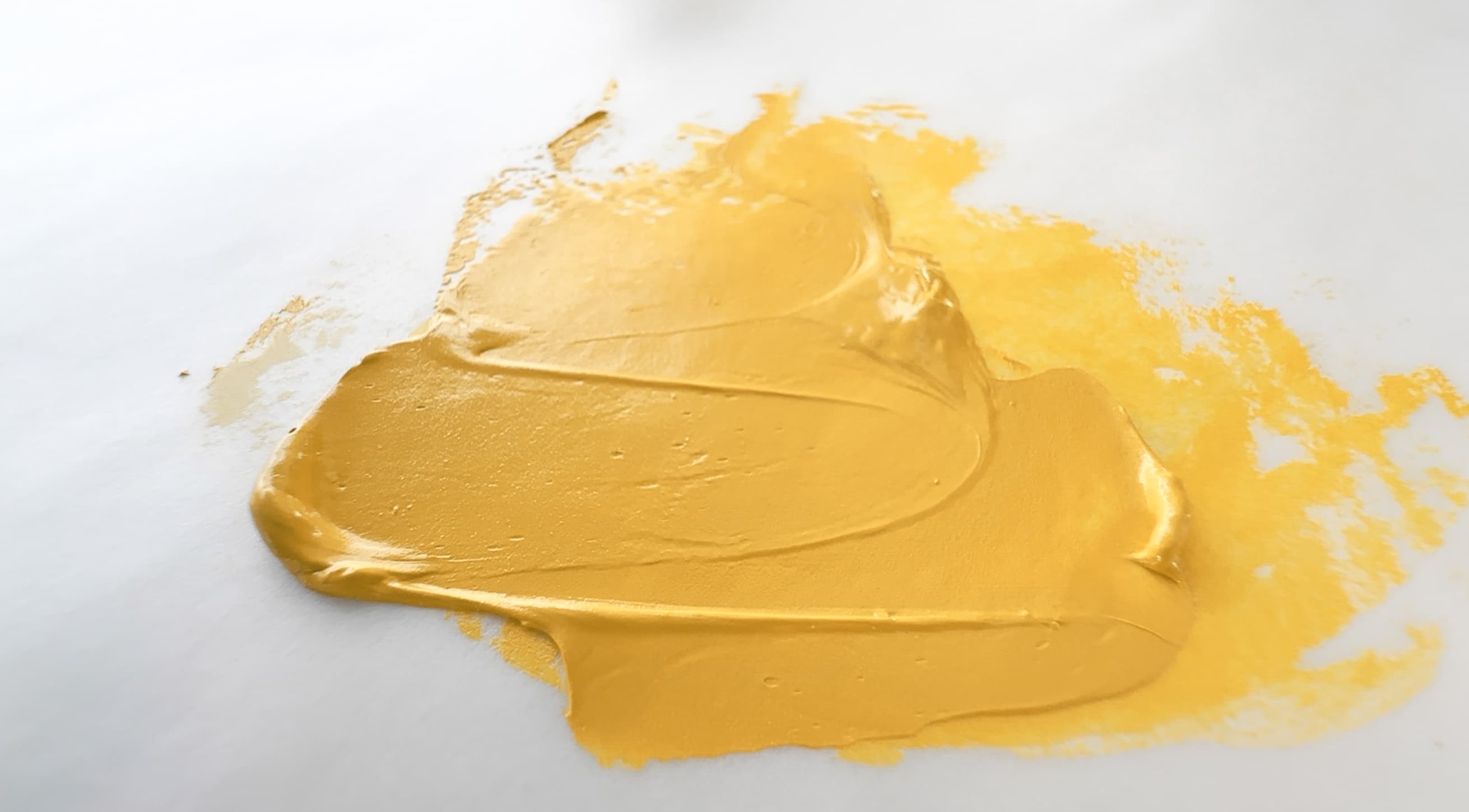
Genuine Naples Yellow Deep, PY41 Michael Harding
Genuine Naples yellow comes in several varieties and can range from a pastel true yellow (think cadmium yellow mixed with white) to a complex light brown. PY41 refers to the toxic lead color and has inspired a myriad of less-toxic blends to approximate it.
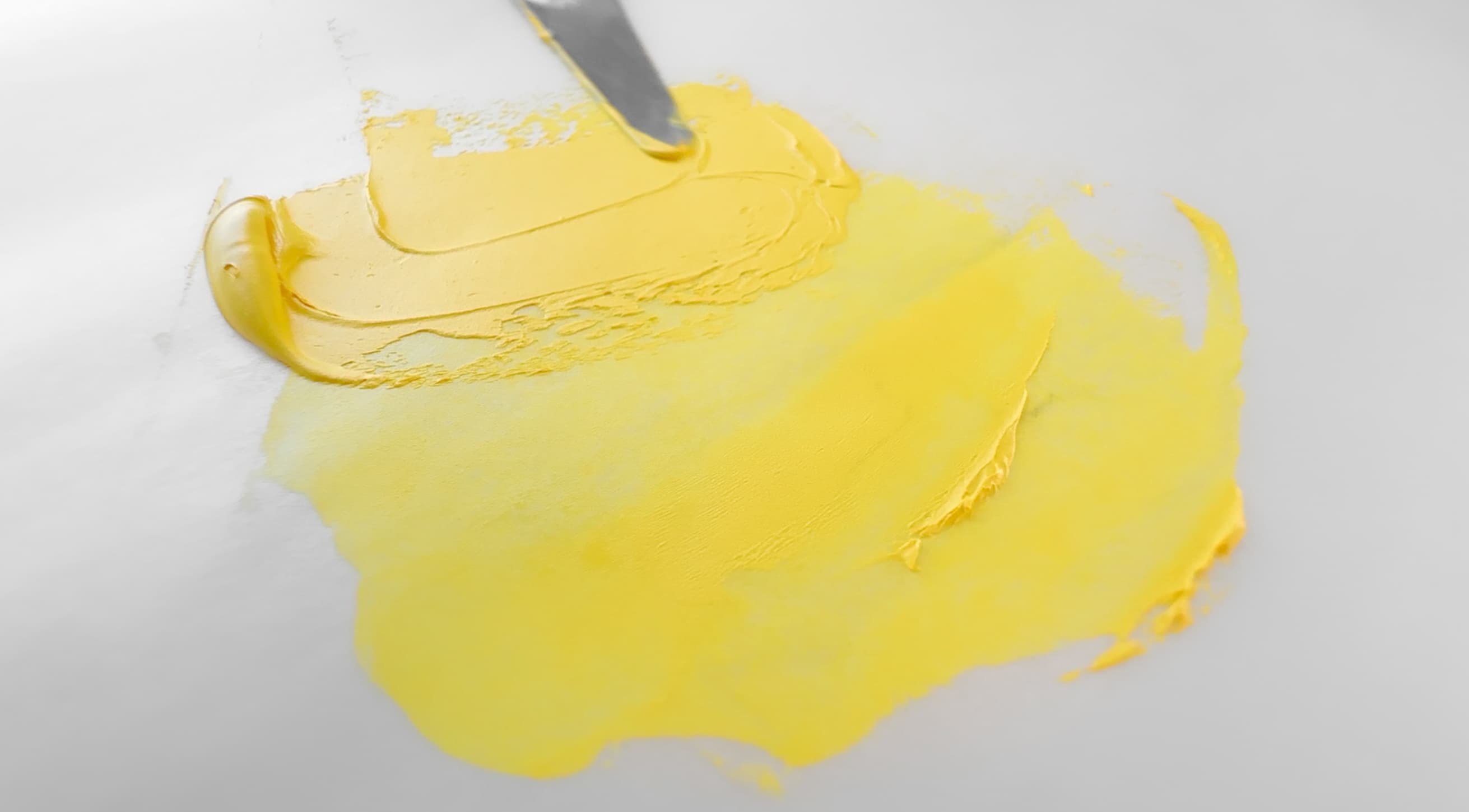
Genuine Naples Yellow PY41, known as Giallorino, or Antimony Yellow, is a single-pigment toxic lead-based yellow. In color it ranges from a fairly opaque middle yellow with fairly high chroma to caramel brown. The age old question is do you need the "real thing"?
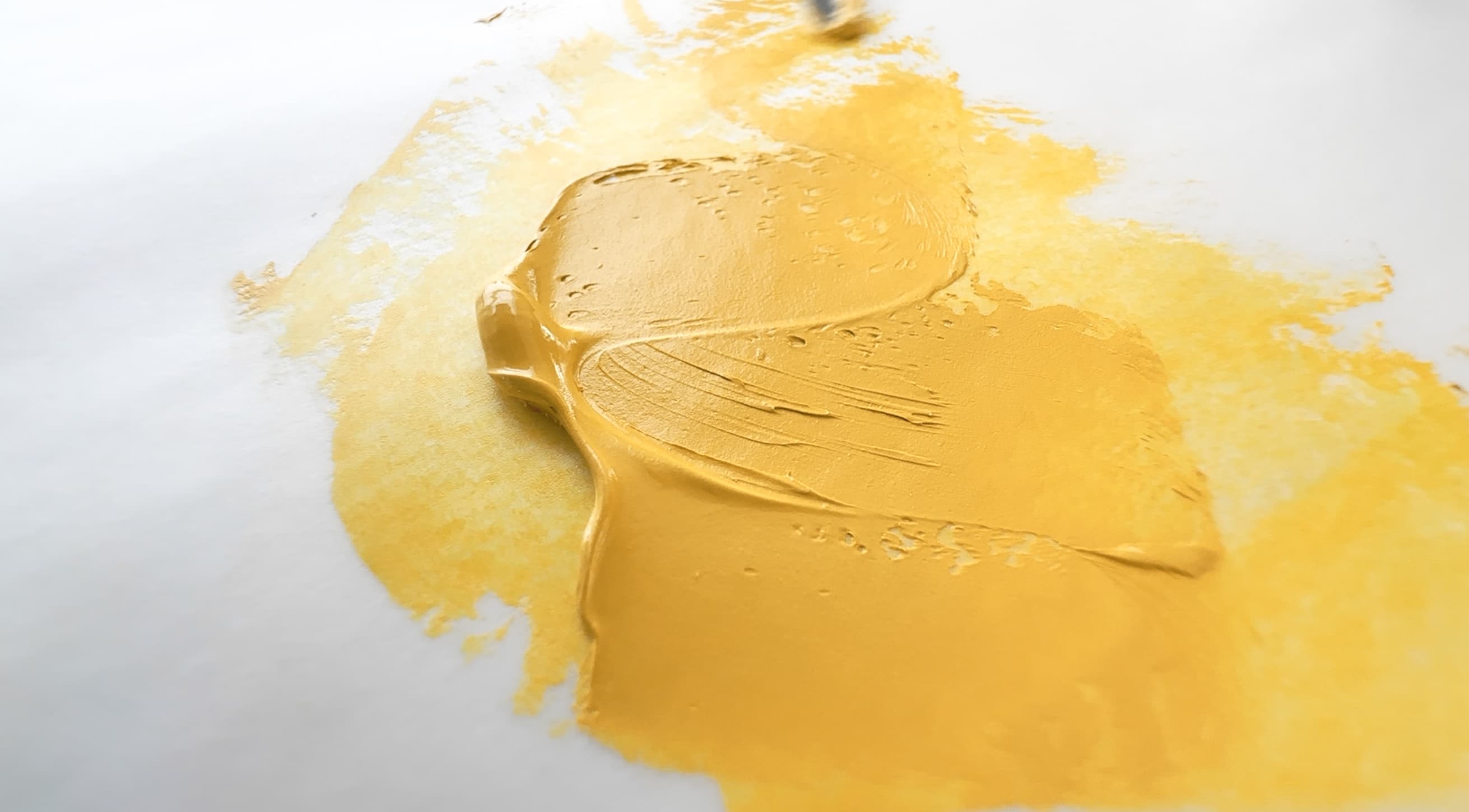
Genuine Naples Yellow Deep by Michael Harding
There are a couple of shades of this color which can be found at Natural Pigments. We've tried a handful of these in our historical color quests. We started with a caramel brown version of this color and branched out into other kinds.
While it is interesting in mixes, its toxicity is a huge drawback. Monona Rossol's work has a section on health problems from lead as well as antimony in pigments in the Artist's Guide to Health and Safety. Her most recent research can be found through her site. Lead is toxic, and even though Naples Yellow Genuine is great for portraiture, we avoid lead in the studio and haven't missed it.
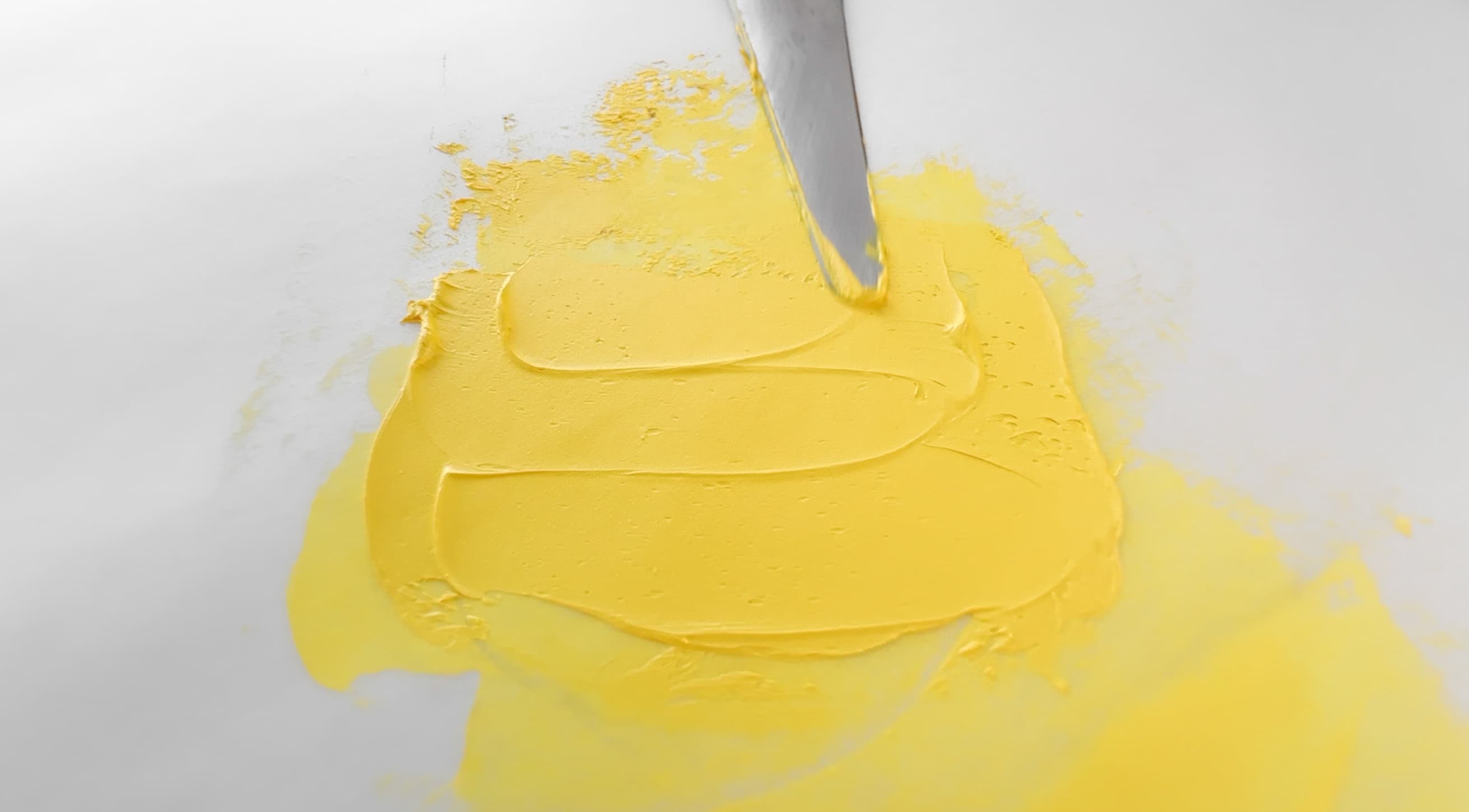
Genuine Naples Yellow Light, PY41, in oils by Michael Harding
Genuine Naples yellow tends to require a medium amount of oil, which is interesting in comparison to Lead White which requires very little. Naples Yellow Genuine has a fairly fast drying time, though some have felt it was more of a medium drying time - opinions differ a bit. It is also a heavy pigment.
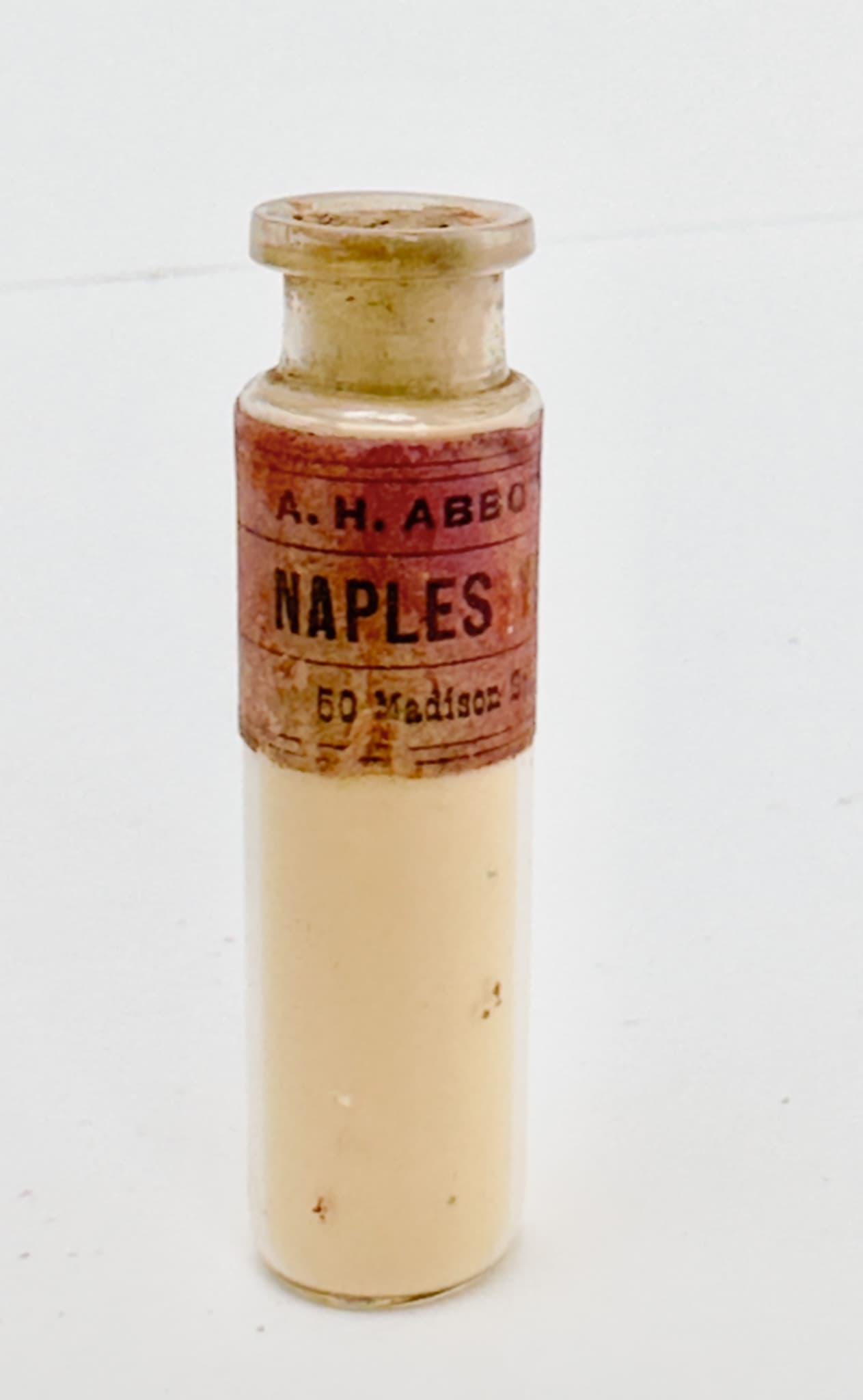
A vintage vial of Naples Yellow pigment. It is unclear whether this is genuine Naples Yellow, but just in case one must handle with extreme caution. Dry Pigment from A.H. Abbot.
Resources
PY41 pigment data from David G. Myers, The Color of Art Pigment Database, Artiscreation.com,
Bomford, David, et. al,. Impressionism. London: The National Gallery, in association with Yale University Press, 1990. Internet Archive, Web. Accessed June 2025. https://archive.org/details/impressionism0000unse_z3w3
Church, A. H. The Chemistry of Paints and Painting. London : Seeley, Service, 1915. Internet Archive, Web. Accessed June 2025. https://archive.org/details/chemistryofpaint00churuoft
Field, George. Field's Chromatography : a treatise on colours and pigments for the use of artists. London : Winsor and Newton, 1885. Internet Archive, Web. Accessed June 2025. https://archive.org/details/Fieldquotschrom00Fiel
Gettens, Rutherford J.. Painting materials : a short encyclopaedia. New York : Dover Publications, 1966. Internet Archive, Web. Accessed June 2025. https://archive.org/details/paintingmaterial0000gett
Feller, Robert L, ed.. Artists' pigments : a handbook of their history and characteristics. Washington, DC : National Gallery of Art, 1986. Internet Archive, Web. Accessed June 2025. https://archive.org/details/artistspigmentsh0000unse
Koleske, J. V. Paint and coating testing manual : fourteenth edition of the Gardner-Sward handbook. Philadelphia, PA : ASTM, 1995. Internet Archive, Web. Accessed June 2025. https://archive.org/details/paintcoatingtest0000unse
Information about PY41 from Bruce MacEvoy, Handprint Guide to Watercolors
Elliott, Virgil. Traditional Oil Painting. Echo Point Books & Media, LLC, 2019. https://amzn.to/4nwIdzq
CAMEO Materials Database: Conservation & Art Materials Encyclopedia Online, Museum of Fine Arts Boston. (Accessed June 2025). Naples Yellow https://cameo.mfa.org/wiki/Naples_yellow, Museum of Fine Arts Boston.
CAMEO Materials Database: Conservation & Art Materials Encyclopedia Online, Museum of Fine Arts Boston. (Accessed June 2025). Lead Antimonate Yellow https://cameo.mfa.org/wiki/Lead_antimonate_yellow. Museum of Fine Arts Boston
Rossol, Monona. The Artist's Complete Health and Safety Guide. New York, NY : Allworth Press, 2001. The book is rather dated, updated information is available from her website.
Stats
Lightfastness
Excellent
Solid highest marks (all 8’s) for lightfastness
Transparency
Opaque, Semi-Opaque
Toxicity
Extremely Toxic
Artiscreation assigns this pigment a "C" to a "D", with C meaning "\Hazardous, use appropriate precautions for handling toxic substances, especially if working with the dry powder; Do not ingest; Avoid dust & spray." D connotes, "Extremely Toxic, only attempt working with these pigments (especially the dry form) in laboratory like conditions with proper safety equipment." There are also extremely serious hazards for pigments containing lead. We are not toxicologists so we suggest consulting third party research as well as manufacturer MSDS. Also see Monona Rossol's research available upon request here for more information on pigments with lead and antimony.
Tinting
Medium
Dry Time
Fast to Medium
Most lead-based pigments are fast driers. Several sources mention rapid drying. Rublev lists the drying rate as Medium.
Oil Content
Low to medium
Sources vary with some indicating low by volume and others medium. Mayer assigns it a medium with a score of 82, others say the lower end of medium.
Chemical Name
Lead Antimoniate
PbSb₂O₆
DISCLAIMER: Please note that we are not experts in health and safety and we are not toxicologists, please consult the proper experts. We are not liable for any issues that may arise from the use of our website or its contents. The information contained in this site is provided without warranty or guarantee of any kind. We do not necessarily endorse any other website that are linked from our site. For any important pigment specs, please reference the manufacturer details. If you discover errors or omissions, please reach out through our contact form. Thank you.
