

Irgazin Yellow, Green Gold
PY129
Alternate Names
Green Gold
Azomethine Yellow 56
Azomethine Yellow 5G (Copper)
Pigment Description
This is a super mysterious and weirdly fascinating color is also known as Green Gold. It's magic is not its masstone but rather what it does in mixes-- it is concentrated sort of like how yellow food dye often doesn't look yellow, but a drop of it in white brings out bright color. This transparent color is like the essence of deep yellow-greens, and it is actually necessary to expand the gamut. In masstone, it's actually quite green but it takes on more of a yellow in tints. PY129 shines in the low notes of the yellow-greens and allows some of the highest chroma low-lightness greens in oil paints.
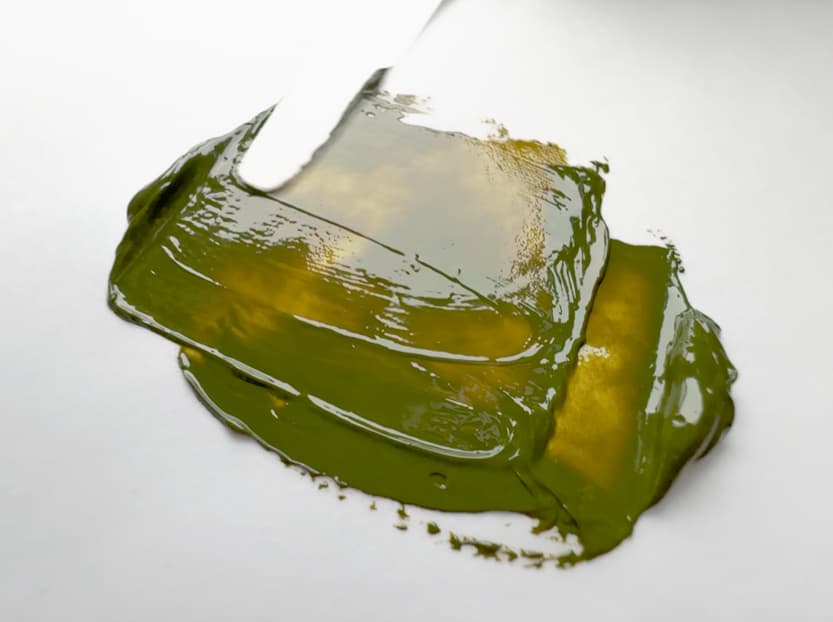
Vasari Swamp Green, PY129 in oils
Toxicity is listed as B so handle with care. It has some things in common with PY150, which is like a warmer counterpart.
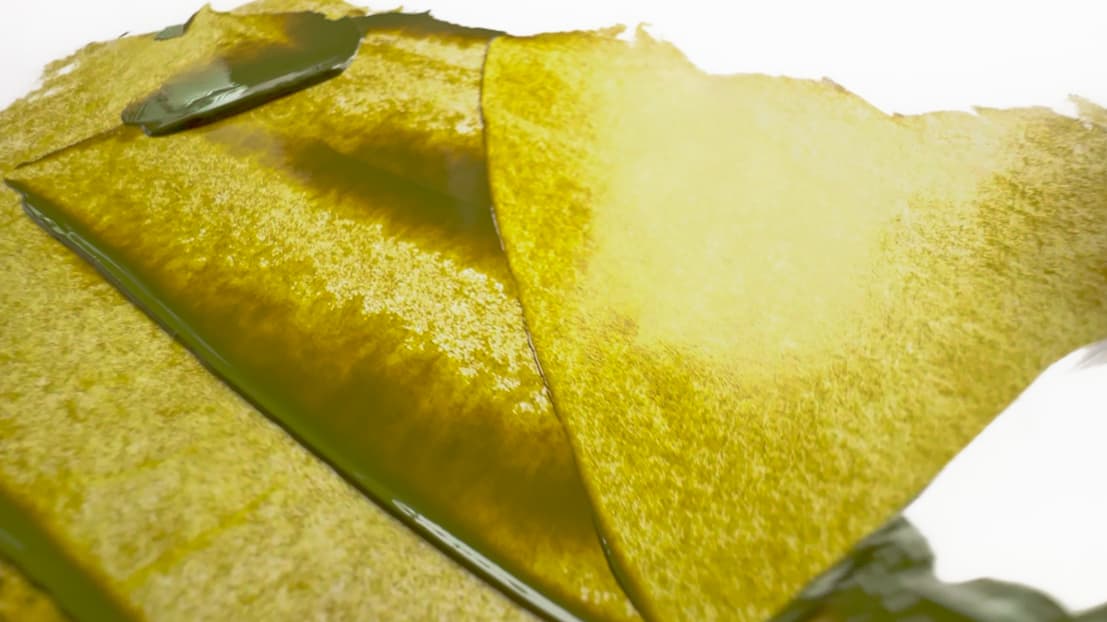
PY129 is highly transparent and chromatic color. This is Vasari's Swamp Green
A slightly more impasto take on Green Gold is possible, however the transparency still shines through
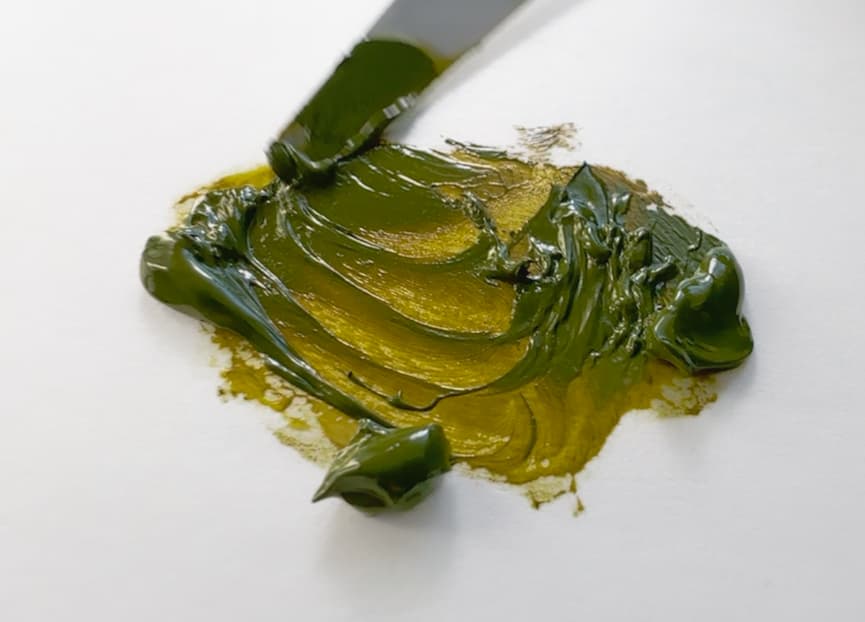
Williamsburg's Green Gold, PY129
Unfortunately in the recent Williamsburg lightfastness tests it displayed more reactivity than we would have hoped depending on the mixing white. In that round of testing, it looks like it did not respond well to a handful of things such as Lithopone, Safflower Oil, Zinc, or Flake White. Depending on the brand of Flake/Cremnitz Lead White, PY129 might not fare well. This was interesting news because PY129 is such a great pigment for a hard-to-replace area of the gamut and for us it may be worth it to use it in the ways wherein it performed well. See Golden's Testing for more.
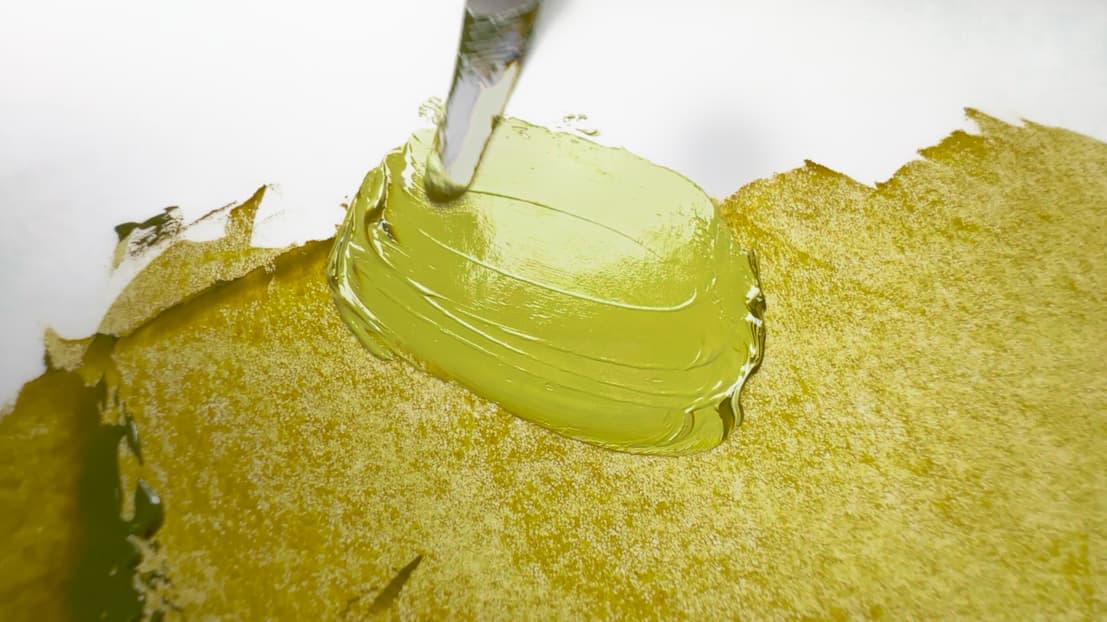
A tint made with PY129, Vasari's Swamp Green
Resources
PY129 pigment data from David G. Myers, The Color of Art Pigment Database, Artiscreation.com
Information about PY129 from Bruce MacEvoy, Handprint Guide to Watercolors, General information about this class of pigments from Handprint,
Stats
Lightfastness
Excellent, but varies by mixing white in oils
Depends on Variables in oils. Some pigment suppliers showed a pigment that fades slightly in tints. May be reactive to certain formulations with safflower oil, choice of mixing white in oil may be very important. Golden’s Lightfastness Testing in oils revealed intense variation depending on the mixing whites used. It tanked in Flake White (Linseed and Safflower), Lithopone in Safflower oil, pure Zinc White, and Pure Titanium White in safflower oil. However in the Titanium-Zinc white, as well as a few other scenarios it was an ASTM I. For more details on this pigment see Golden’s report. In watercolor, Bruce MacEvoy recommends testing each green gold to be sure it is indeed lightfast. The 1980s tests for this pigment relayed by the NPIRI showed solid results across indoor and outdoor exposures.
Transparency
Transparent, Semi-Transparent
The transparency can vary from Transparent to Semi-Opaque in oils, however the pigment seems to be Transparent.
Toxicity
Hazard, Use more caution, also contains copper
The NPIRI notes this pigment contains copper. Refer to Monona Rossol’s work on copper-containing pigments.
Dry Time
Slow, may contain driers
Some paints list a fast dry time (1-2 days), or a medium one (2-7 days). As a slower drying pigment, these may contain driers.
Particle Size
Very Fine
Chemical Name
methine, 5G copper complex of azomethine
DISCLAIMER: Please note that we are not experts in health and safety and we are not toxicologists, please consult the proper experts. We are not liable for any issues that may arise from the use of our website or its contents. The information contained in this site is provided without warranty or guarantee of any kind. We do not necessarily endorse any other website that are linked from our site. For any important pigment specs, please reference the manufacturer details. If you discover errors or omissions, please reach out through our contact form. Thank you.
