

Top Pigment
Lead White
PW1
Alternate Names
Cremnitz White
Flake White
Cerusse
Basic Carbonate White Lead
Pigment Description
Lead White, Flake White, also known as Basic Lead Carbonate, or a mixture of basic lead carbonate with some lead carbonate. It is a pigment of a thousand names and several different important variations. Lead white is a toxic, silvery white color which is in many ways the backbone of modern art history. It ages well and forms strong oil paint films, which unfortunately do have a tendency to yellow, however they stay more intact than most other colors. Our discussion here mostly centers around oil painting.
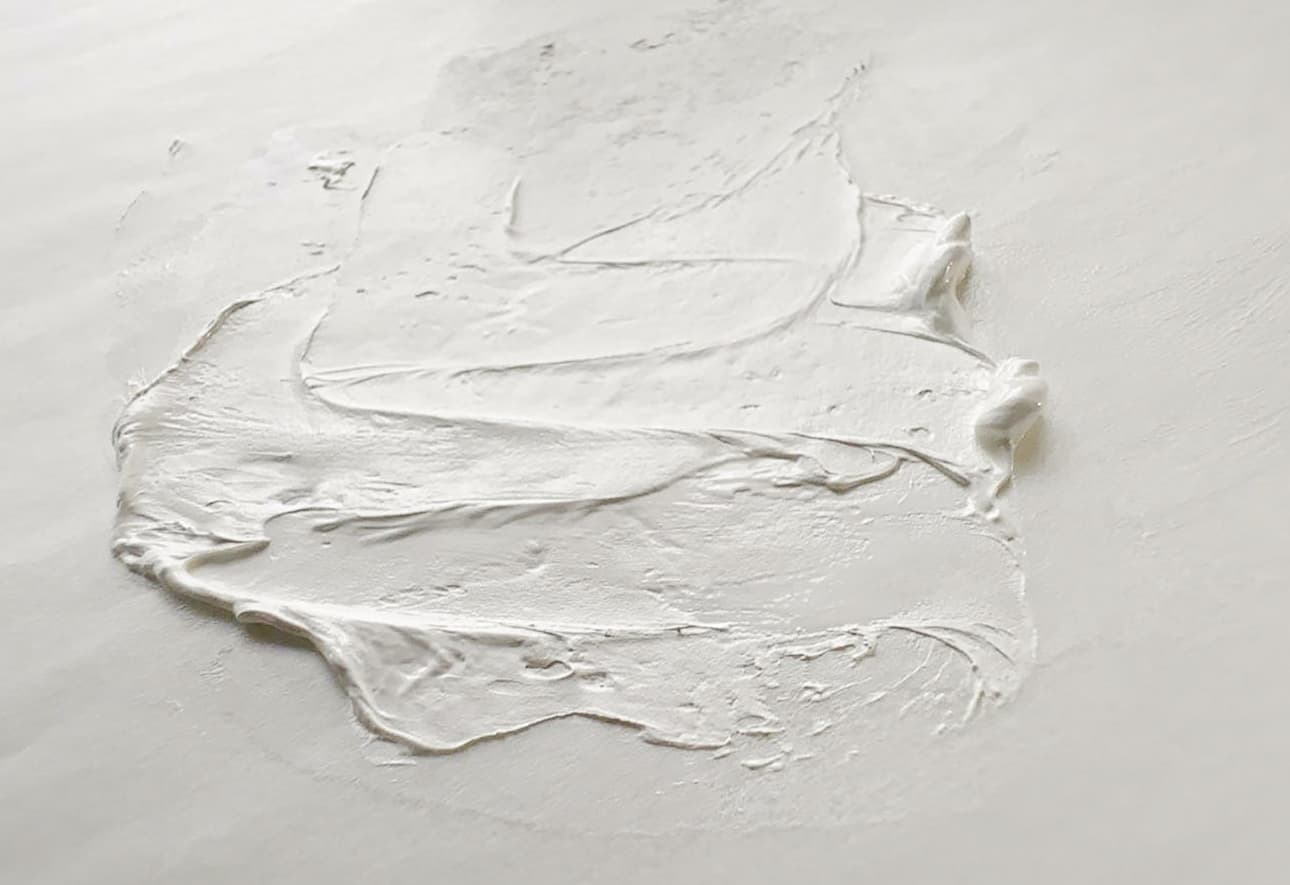
Lead white is slightly different in handling than other white pigments. However, it's unseen properties perhaps matter most. It forms stronger paint films than other white colors but it is very toxic.
The pigment code PW1 applies to both what we call the regular lead white available on the market, as well as lead white which was made by the Dutch process or Stack Lead white, which handles differently.
There are several other white pigments made of lead, but PW1 is the main lead white pigment- an opaque warm white which can have a faint pearlescence before it dries.
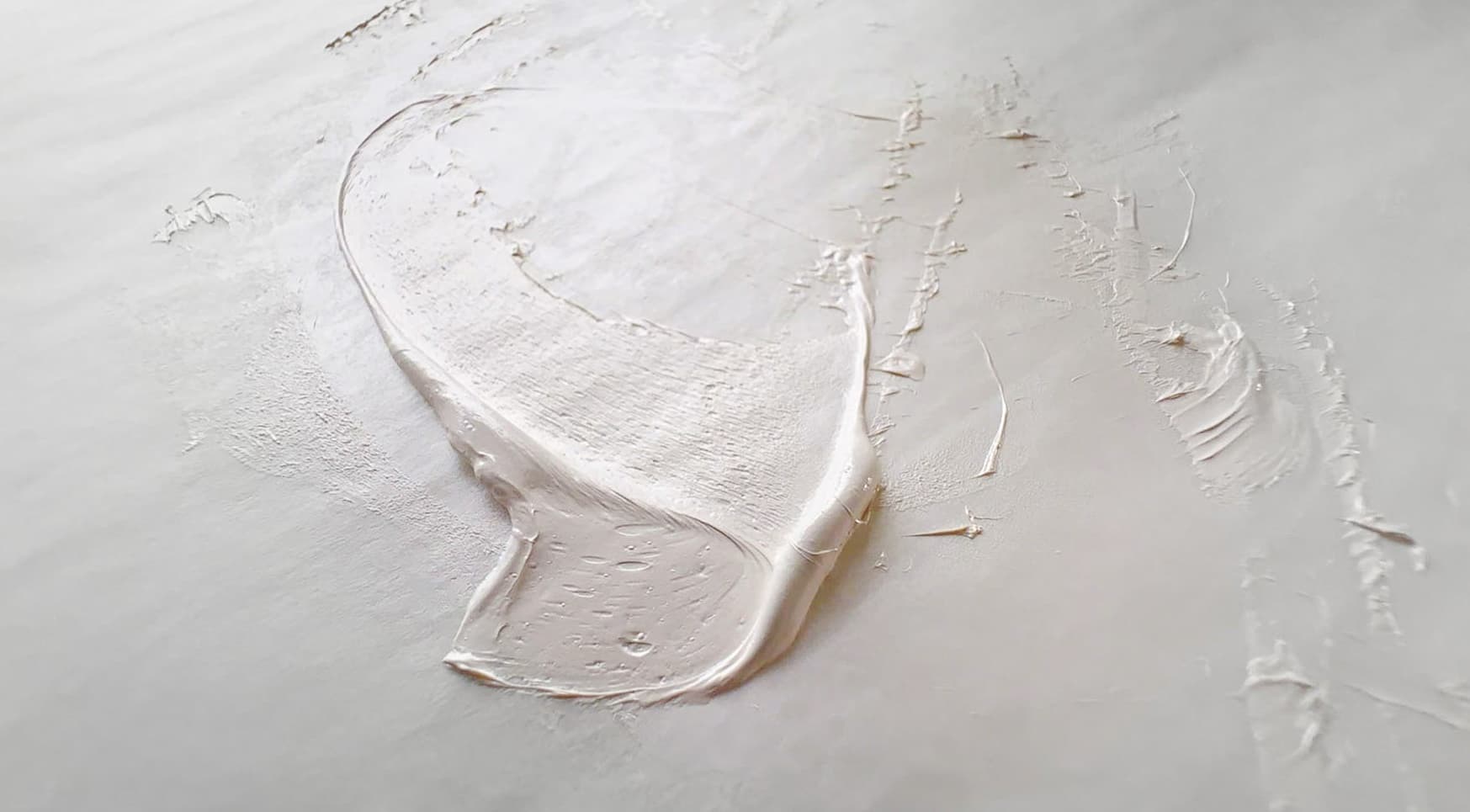
Rublev Lead White in Walnut Oil has a faint pearlescence
The biggest drawback to lead white is its toxicity. That topic goes beyond the bounds of this page and so we urge you to do your own research as well as mitigation strategies to be sure none of your toxic pigments are around pets, children, or people who are not properly trained. Even with proper precautions we have heard some terrible anecdotal stories-- most painters are just not equipped to handle the truly toxic paints, nor are their studios and habits fitted for safe handling. That said, it is certainly possible to use it with the proper protocols, and the task of developing a mitigation plan should not be taken lightly.
Aside from its toxicity, which is serious, this color has been favored by painters for several qualities, which include translucency and gentler tinting strength than titanium white. All these qualities make it prized for applications such as portraiture and flesh tones. Lead white is also a fast drier and forms strong paint films.
An ultra-fast drying Lead White
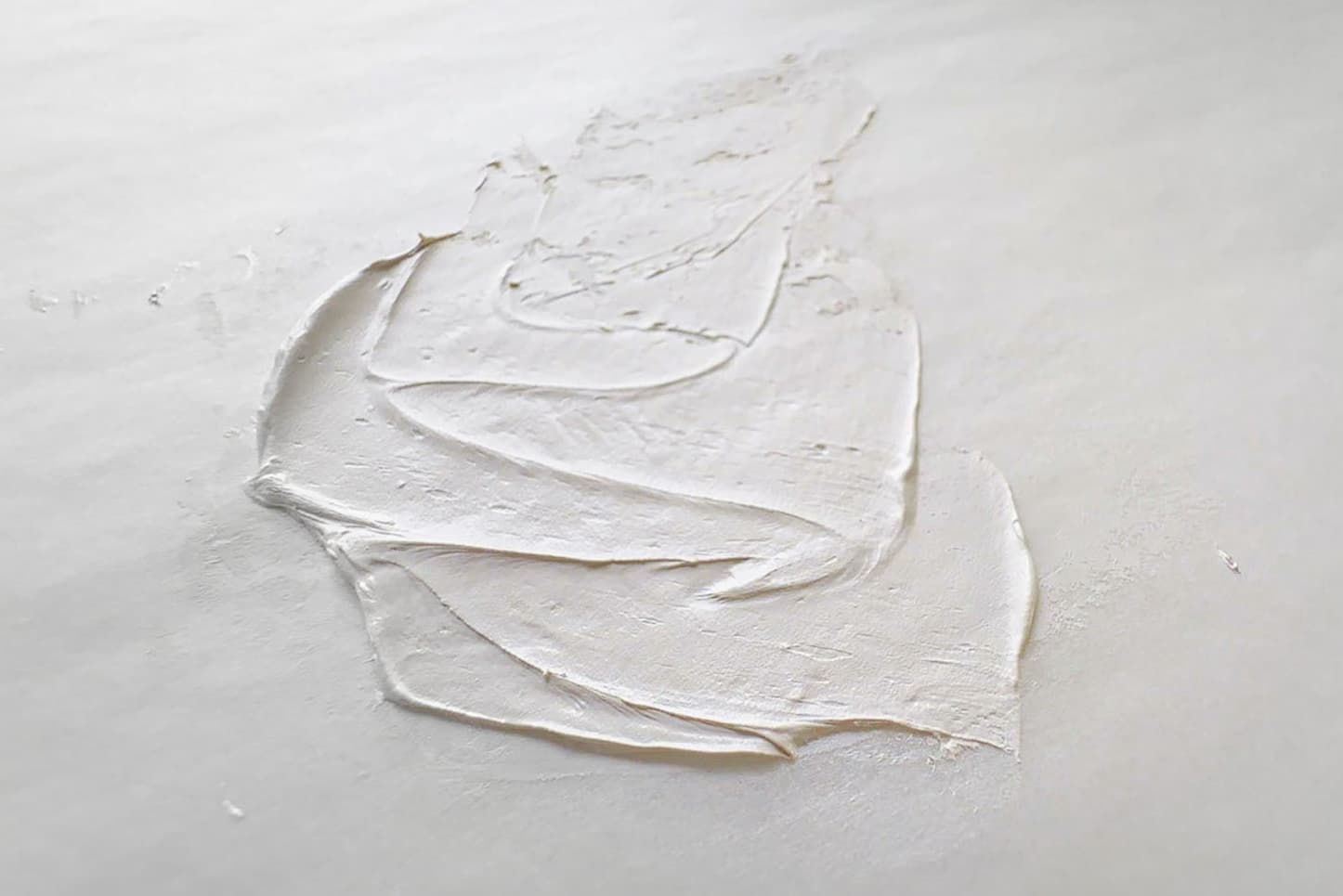
Lead white in general is a fast drier, but some companies have formulated an even faster version, which dries so quickly it may actually dry in hours or overnight (results vary based on numerous factors). The version shown here is Rublev Underpainting Lead White.
In terms of sub-variants of lead white, the pigment used for modern lead white is not made in the same way as the historical pigment for lead white. One of the differences is the particle size and shape of the pigment itself. The historical Dutch Process, sometimes called Stack Lead White (not shown here) is harder to find than the regular lead white and is favored for this different handling. Stack Lead white has different properties in its oil paint behavior (the five-dollar word for this is thixotropy).
As with any other white paint which will be mixed into the other colors on the palette, binding oils make a difference. It's common to find Lead White in linseed oil or walnut oil. There are many names for lead white, which unfortunately have been used rather freely by paintmakers over the years, so it is often hard to determine exactly which name refers to which pigment variety or blend. Sometimes within a brand they will have a Flemish White, a Lead White, and a Cremnitz White, and they will use these historical names to differentiate between lead whites made with different oils, or different pigment blends.
Lead White is also known as Flake White, Cremnitz White, Cremser White, Dutch Process White, Ceruse, and Silver White, to list just a few of the most common names.
Sometimes these names referred to blends of lead white with other pigments, such as zinc or barium sulphate. For example Rublev/Natural Pigments offers a handful of lead whites which have different combinations of pigments or binding oils, as does RGH.
In general, lead white will often react with sulfur, which is in various pigments as well as in the atmosphere, and can darken or blacken. It also does something called dark yellowing (which other oil colors do, too) but in our experience lead white is one of the more noticeable areas, perhaps because of its light color. So while it dark-yellows quite a bit, in general it also just yellows. Additionally, lead was somewhat reactive with certain modern pigments in terms of lightfastness, as explored by Golden's recent testing.
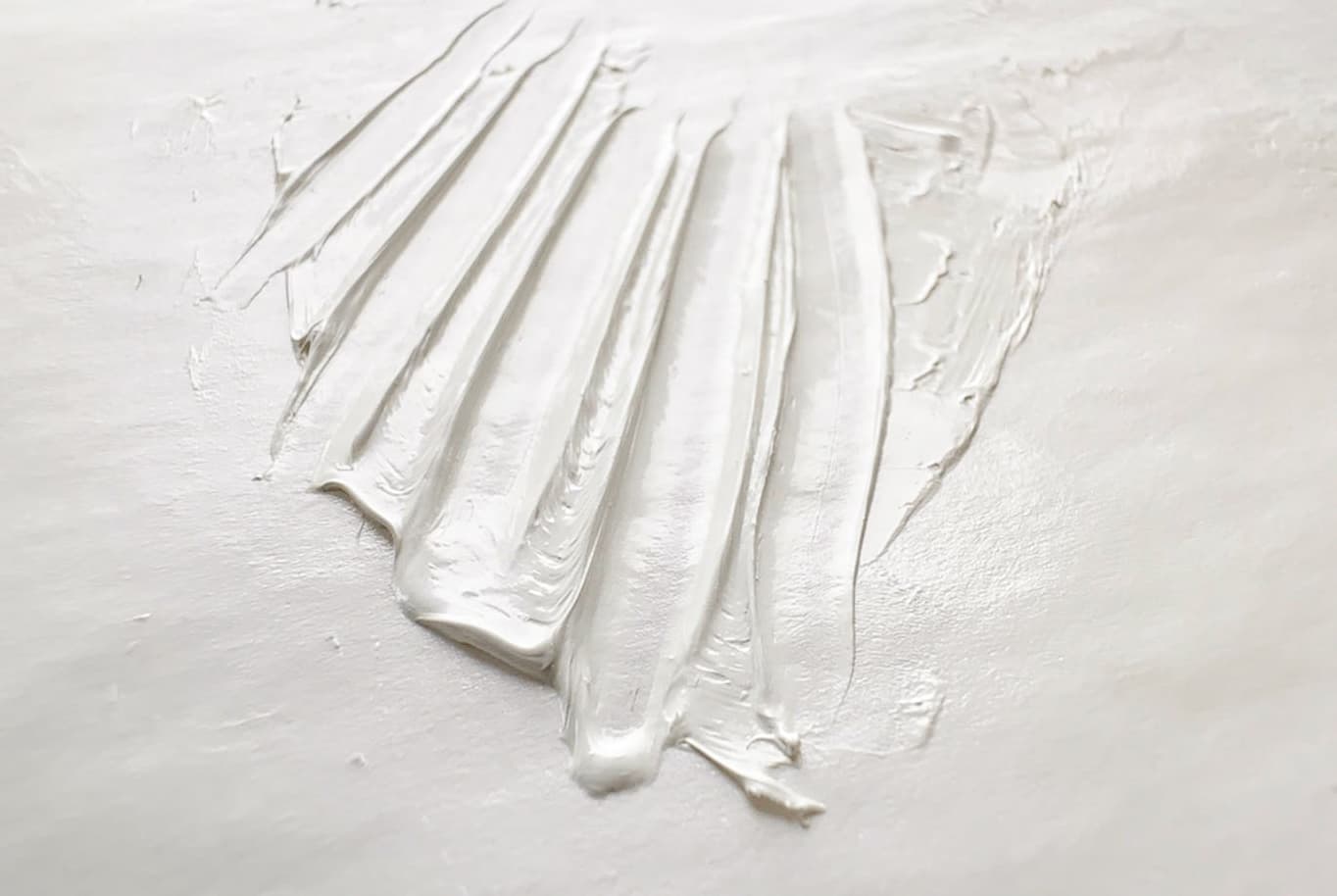
RGH Cremnitz Safflower Lead White
Due to its toxicity, Lead White is harder to acquire in Europe. Some companies have made a specialty out of lead white. Natural Pigments/Rublev is one of these companies and they have a number of articles on Lead White:
Historical Manufacture of Stack Lead White
Flemish White and Lead Sulfate](https://www.naturalpigments.com/artist-materials/lead-sulfate-flemish-white)
Some paint companies are pursuing interesting alternatives. While the alternatives do not provide stronger paint films in terms of chemistry, the toxicity of lead white is such a drawback that the alternatives are always interesting to explore.
Lead white is Toxic, so please consult the relevant experts for health and safety warnings.
Resources
PW1 pigment data from David G. Myers, The Color of Art Pigment Database, Artiscreation.com
Elliott, Virgil. Traditional Oil Painting. Echo Point Books & Media, LLC, 2019. https://amzn.to/4nwIdzq,
Lipscher, Juraj (Accessed July 2025). Lead White https://colourlex.com/project/lead-white/. ColourLex.
Information about PW1 from Bruce MacEvoy, Handprint Guide to Watercolors
CAMEO Materials Database: Conservation & Art Materials Encyclopedia Online, Museum of Fine Arts Boston. (Accessed June 2025). Lead White https://cameo.mfa.org/wiki/Lead_white. Museum of Fine Arts Boston.
Stats
Lightfastness
Excellent, but yellows. Also vulnerable to hydrogen sulfide, may react with some pigments
The conversation around the lightfastness of lead white is bracketed by its tendency to yellow. When used as a mixing white, it can be somewhat reactive with certain other pigments. Several colors performed a bit better depending on the binding oil, but others displayed reactivity in both safflower oil and linseed oil. Some measure of this might be related to different lead white formulations by various brands. Golden shares, "These results suggest that the lead white pigment, regardless of binder oil, can reduce the lightfastness of certain colors. Additionally, many Flake White and Flake White Safflower tints yellowed dramatically, and significant chalking was seen in some cases, especially in QUV testing." Some of the colors that may be affected by lead white include Alizarin Crimson PR83, Cobalt Yellow PY40, Napthol Red PR112, Green Gold PY129, Indanthrone Blue PB60 (especially in linseed oil), Permanent Yellow Deep PY65, Phthalo Blue PB15 (esp. linseed oil), Phthalo Green PG7 (more in linseed oil), and Pyrrole Orange PO73 (especially in Safflower oil). Prussian Blue PB27 is likely affected as well. This list is not comprehensive, as not every pigment was listed in Golden’s testing. For more details on lead white as a mixing white, please see their article.
Transparency
Semi-Opaque, Opaque
Ranges in oils from Transparent to Opaque with most rated as Opaque. The nature of its opacity is different than Titanium White such that it seems more semi-opaque in comparison. Though described as Opaque, it has some semi-opacity to it
Toxicity
Toxic, Lead
Lead is toxic. There are extremely serious hazards for pigments containing lead as well as paints. We are not toxicologists so we suggest consulting third party research as well as manufacturer MSDS. Also see Monona Rossol's research available upon request here for more information on pigments with lead. Artiscreation assigns this pigment a "C", meaning "Hazardous, use appropriate precautions for handling toxic substances, especially if working with the dry powder; Do not ingest; Avoid dust & spray." IMPORTANT: The proper precautions for working with lead white go beyond what we can cover here, but please be advised that the toxicity is very serious and lead can be even absorbed through the skin. Do not breathe it, do not eat it, and do not let it sit on your skin. Special decontamination is also needed. Please consult the relevant health and safety authorities.
Tinting
Medium
Dry Time
Fast
Tends to dry fast. One of the longer estimates is 2-7 days (medium). We have found it to dry a lot faster
Oil Content
Low
Most paintmakers highlight just how little oil this pigment needs. It is low, but it seems to actually be a tiny bit oilier (by volume) than titanium white according to this chart. By weight, Artiscreation lists 11-15 g/100g of oil and cites Chruch's work. Mayer lists and oil volume of 56 (low).
Particle Size
Varies
Chemical Name
lead carbonate, basic lead carbonate, lead hydroxycarbonate. Extra note: Artiscreation has more details on the various forms, notes on impurities, the natural minerals and valuable resources linked. While lead white may be basic lead carbonate, it may also be a mixture of basic lead carbonate and regular lead carbonate. Source
₂PbCO₃.Pb(OH)₂
DISCLAIMER: Please note that we are not experts in health and safety and we are not toxicologists, please consult the proper experts. We are not liable for any issues that may arise from the use of our website or its contents. The information contained in this site is provided without warranty or guarantee of any kind. We do not necessarily endorse any other website that are linked from our site. For any important pigment specs, please reference the manufacturer details. If you discover errors or omissions, please reach out through our contact form. Thank you.
