

Top Pigment
Dioxazine Violet
PV23
Alternate Names
Dioxazine Purple
Carbazole Violet
Pigment Description
Deep, chromatic and powerful, Dioxazine Violet, also is sometimes found as PV23RS or PV23BS (red shade and blue shade respectively). This is a nearly ubiquitous violet. Unfortunately it is not perfectly lightfast, which seems to be a trend among violet pigments. But the high chroma makes this rich purple gemtone hard to resist.
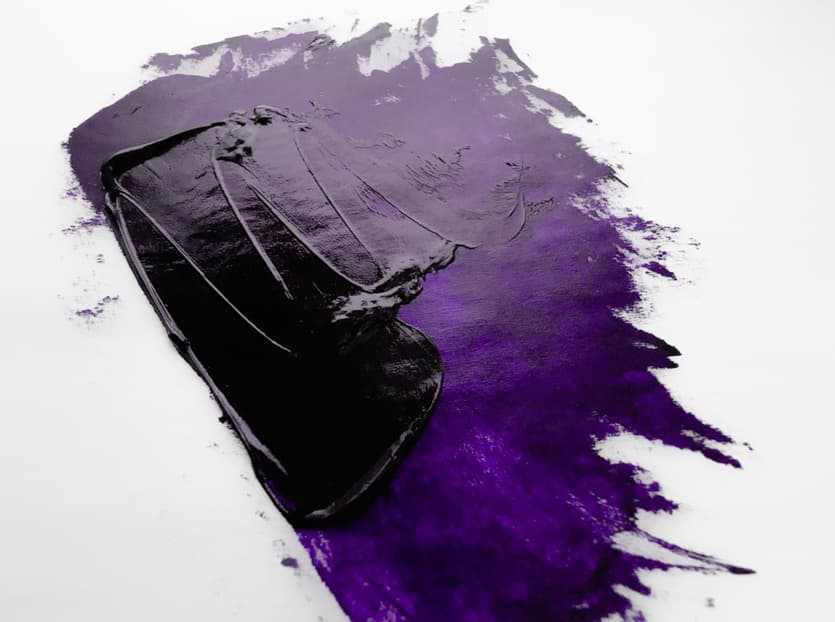
Michael Harding Deep Purple (Dioxazine), PV23
This is one of those pigments which has varying lightfastness depending on the pigment manufacturer, so it is worth testing one's own paints. We found some interesting notes from Bruce MacEvoy's work on watercolor which suggested that sometimes violet mixes didn't actually have as strong of lightfastness as the higher-quality versions of single-pigment PV23, so that was a shock. Whether those tests only apply to watercolor or extend to oil would be interesting to discover.
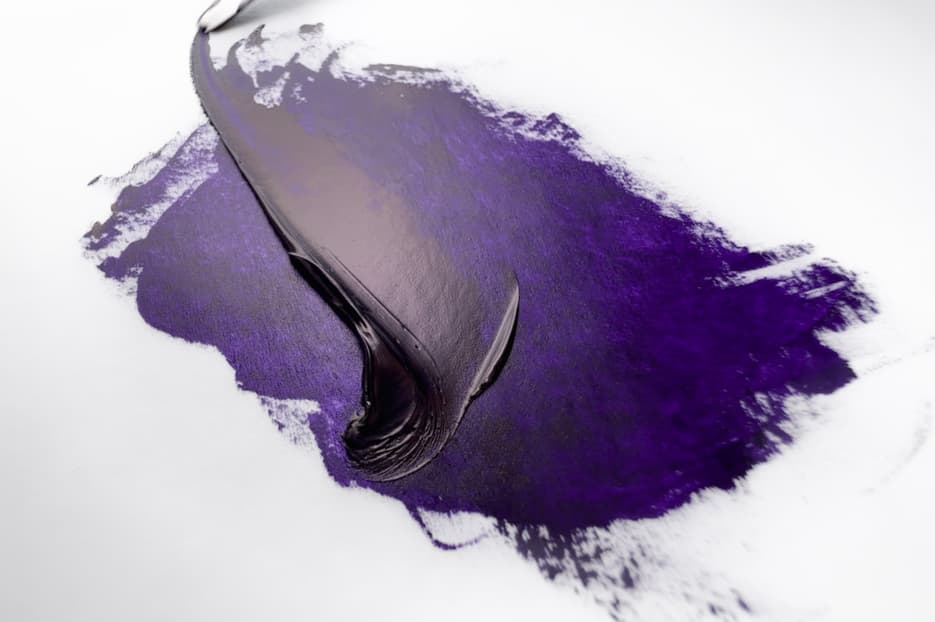
Dioxazine Mauve by Old Holland, PV23
This is a deep dark color in masstone that unfurls its chroma in glazes and tints.
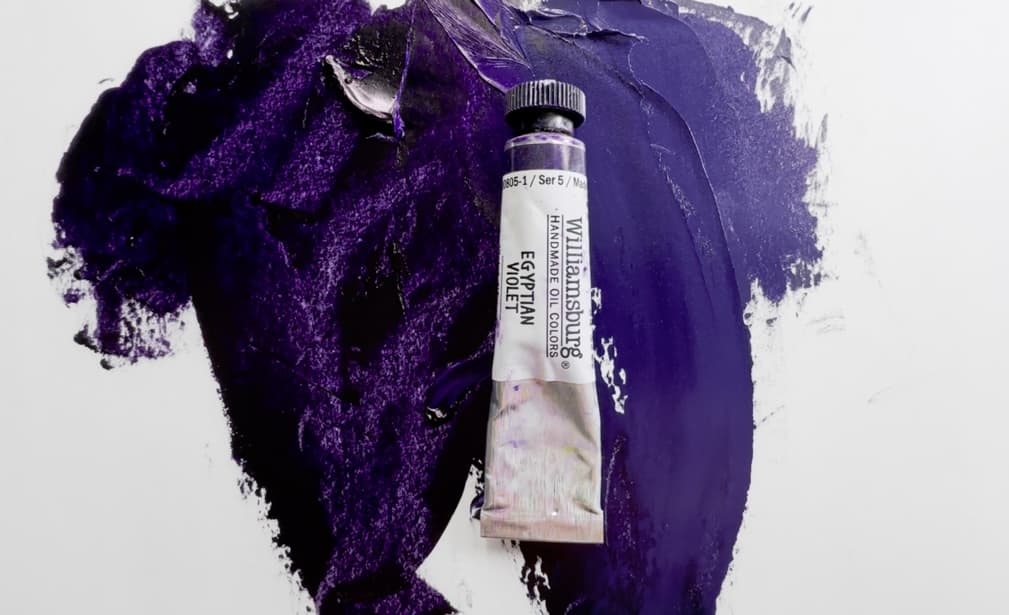
Williamsburg Egyptian Violet, PV23, tinted on the right with a bit of Titanium White
Though the toxicity is generally thought to be low, we still handle it with caution, as we do all pigments and artists' paints. We were surprised to hear that depending on the pigment supplier, PV23 can sometimes have undisclosed contaminants. According to Monona Rossol's work PV23 is sometimes contaminated by dioxins.
Resources
PV23 pigment data from David G. Myers, The Color of Art Pigment Database, Artiscreation.com
Information about PV23 from Bruce MacEvoy, Handprint Guide to Watercolors, General information about this class of pigments from Handprint,
Rossol, Monona. The Artist's Complete Health and Safety Guide. New York, NY : Allworth Press, 2001. The book is rather dated, updated information is available from her website.
Stats
Lightfastness
Varies tremendously depending on pigment supplier with some samples as excellent and others poor. May be sensitive to mixing whites. Also the Blue Shade and the Red Shade (two of many varieties of PV23) are assessed differently by the ASTM.
It has long been rumored that the lightfastness of this pigment varies depending on which pigment supplier was used by a given paintmaker. Golden found that it may vary from ASTM I (excellent) to ASTM III (poor) depending on the manufacturer. It is recommended to test any given brand you may use and update those tests periodically. In Golden’s lightfastness testing in oils, their version (called Egyptian Violet) performed at ASTM I in tints with Titanium White and Titanium-Zinc White. It slid to mostly ASTM II in the other mixing whites, but it is interesting that this color tanked in Lithopone mixed with safflower oil. In pure zinc, it tested as ASTM II but the sample also cracked off of the testing substrate. In watercolor, Dioxazine Violet may be as bad as ASTM III or ASTM IV, however Bruce MacEvoy’s tests showed that some PV23 samples could be as good as ASTM II.
Transparency
Transparent
Toxicity
Previously thought to be in the category of Lower Concern but may have toxic impurities
May be contaminated by dioxins (which are extremely toxic). See Monona Rossol’s latest work, available here on request.
Tinting
Very Strong
Dry Time
Very Slow
We have heard several negative reports about the terrible drying properties of PV23. While we have not experienced it in commercial products, one of the most negative reports came from a respectable paintmaker before he apparently solved the issue and was able to offer Dioxazine Violet. Some manufactures list 10-21+ days, and others have a shorter timeframe. May contain driers.
Particle Size
Very Fine
Chemical Name
Dioxazine, or otazine, carbazole dioxazine BS, or carbazole dioxazine RS
DISCLAIMER: Please note that we are not experts in health and safety and we are not toxicologists, please consult the proper experts. We are not liable for any issues that may arise from the use of our website or its contents. The information contained in this site is provided without warranty or guarantee of any kind. We do not necessarily endorse any other website that are linked from our site. For any important pigment specs, please reference the manufacturer details. If you discover errors or omissions, please reach out through our contact form. Thank you.
