

Top Pigment
Ultramarine Violet, Ultramarine Red, Ultramarine Pink
PV15
Alternate Names
Sodium Aluminosilicate Violet
Ultramarine Red B
Pigment Description
This color can be a transparent indigo purple, a solid violet, or even a dull pink. Among paints labeled Ultramarine Violet the color can vary from indigo to violet depending on the brand, and if it labeled Ultramarine Red or Ultramarine Pink it's likely to have a different color appearance entirely. The pink versions tend to be middle chroma (somewhat desaturated) and transparent.
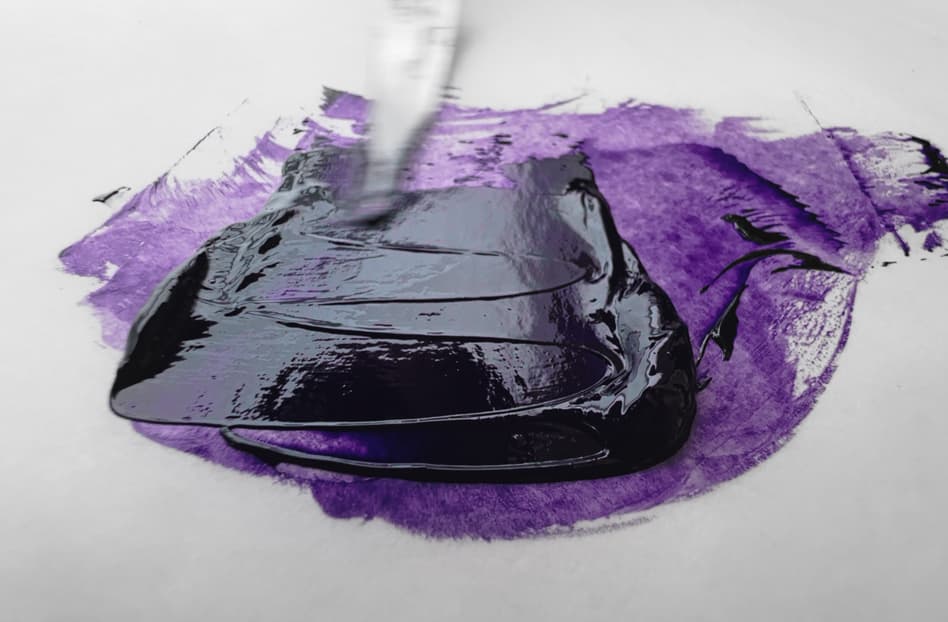
Ultramarine Violet in oil paint by Grumbacher
PV15 is often found as a lovely strong purple which behaves somewhat mildly in mixtures, depending on the variety. It is listed as having excellent lightfastness, though there may be some nuance to this depending on the mixing white in oil paints. The indigo varieties are very helpful color for the mixes to neutralize yellow if using oils.
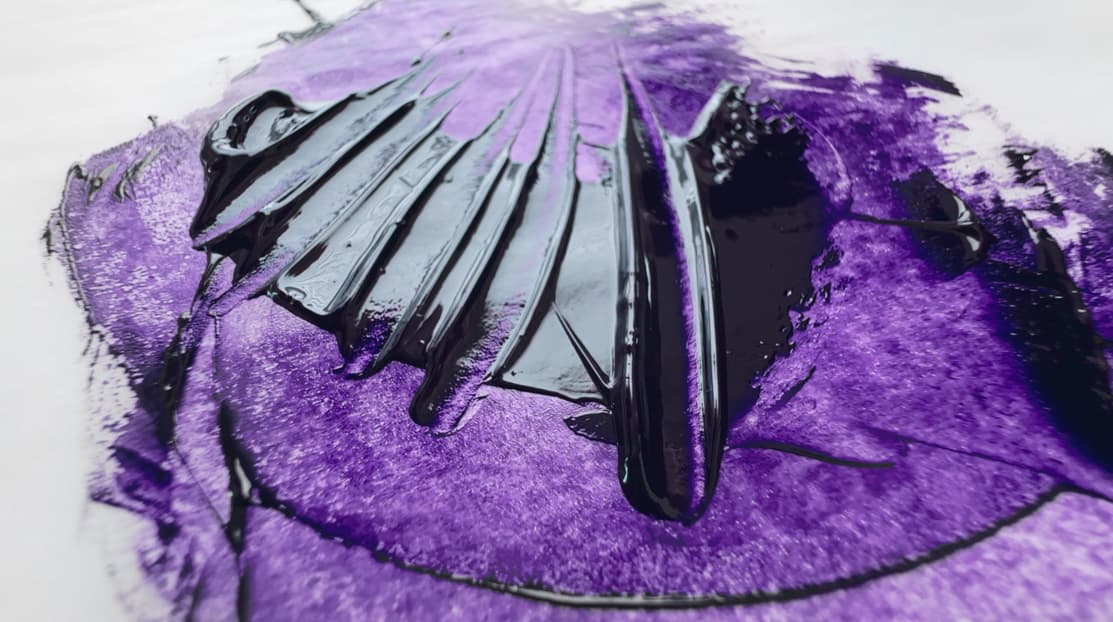
Ultramarine Violet in oil paint PV15
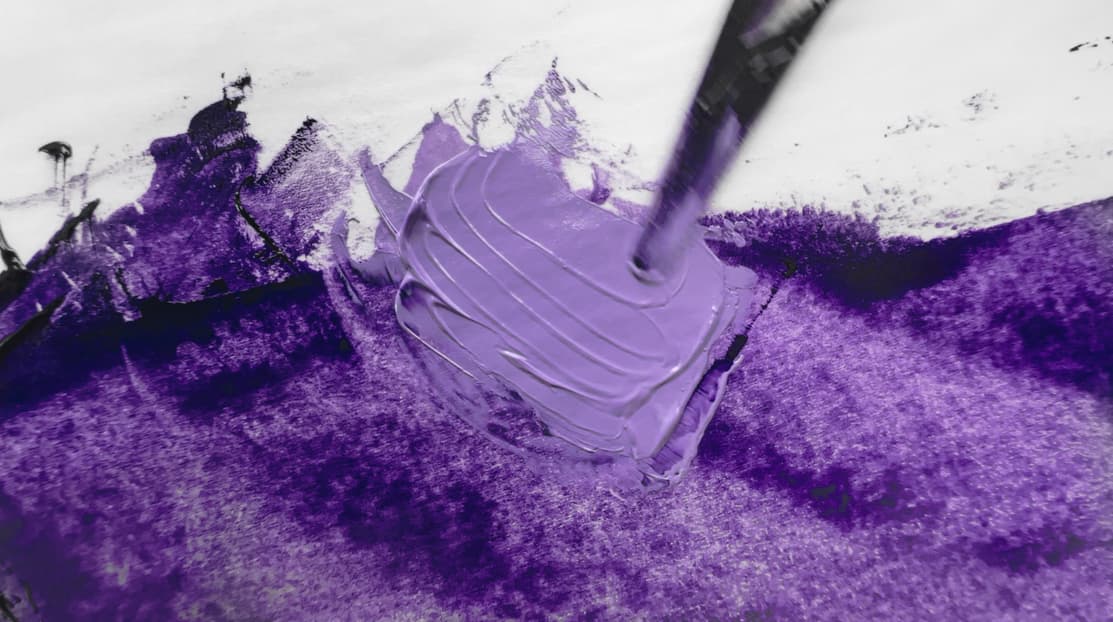
A Tint of Ultramarine Violet
There is so much to appreciate about Ultramarine Violet, and we fell in love with the even more red-violet version of this pigment, Ultramarine Pink. Though it has gentle tinting strength, we always welcome a lightfast pigment in this area of the spectrum. While interesting alone, it especially shines in mixtures. Unfortunately Williamsburg stopped making their Ultramarine Pink, PV15, and we miss it terribly. We have heard that some versions of the pigment are still on the market, so you may be able to find Ultramarine Pink in other brands.
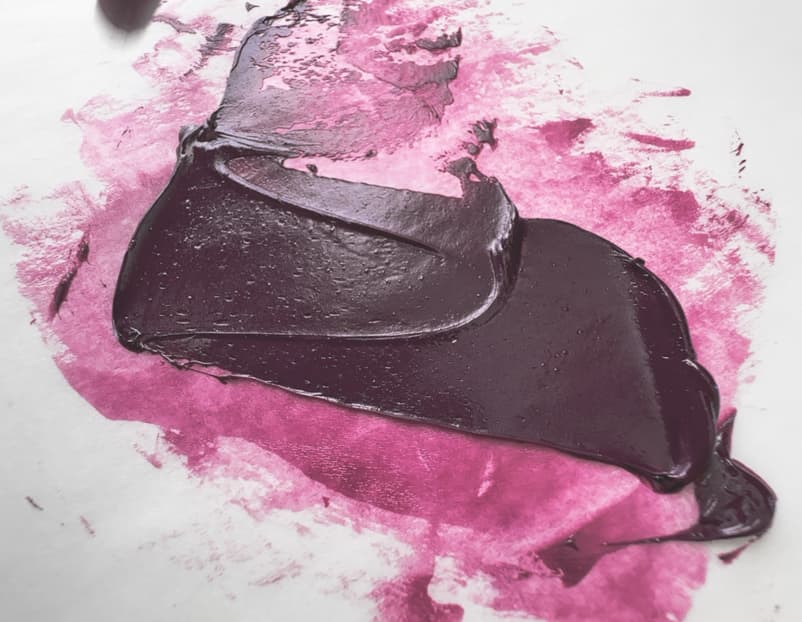
The legendary Williamsburg Ultramarine Pink, PV15 (Sadly, this useful color is no longer available from Williamsburg)
A different but equally prized behavior among the pink varieties is their ability to tone down greens. This pigment is related to Ultramarine Red as well as Ultramarine Blue. Also reference pigment PR259, which is sometimes called Ultramarine Red.
While typically in the category of lower concern, Monona Rossol mentions that PV15 may qualify as a "nuisance dust" which does have thresholds for exposure and best practices associated with it. Her work can be found here.
Resources
PV15 pigment data from David G. Myers, The Color of Art Pigment Database, Artiscreation.com
Information about PV15 from Bruce MacEvoy, Handprint Guide to Watercolors, General information about this class of pigments from Handprint,
Rossol, Monona. The Artist's Complete Health and Safety Guide. New York, NY : Allworth Press, 2001. The book is rather dated, updated information is available from her website.
Stats
Lightfastness
Excellent, but refer to notes from Golden on mixing whites
This color comes in pink and purple forms, which may have different lightfastness. In their recent lightfastness testing, Golden assessed both their Ultramarine Pink (now discontinued) as well as Ultramarine Violet. In regards to Violet, Golden mentioned that the Florida-exposed sample changed significantly, and that the color also experienced notable fading in simulated exposure environments such as QUV. Its tints retained the ASTM I excellent designation in pure titanium white for both linseed and safflower (as well as ASTM mixing white), but slid to ASTM II for every other mixing white that they tested. For more details on both, see their research. Bruce MacEvoy noticed some variance brand to brand in watercolor with some brands changing opacity slightly and whitening. However it is still among his top 40 pigments. If this color is part of your process it may be worthwhile to do your own lightfastness tests.
Transparency
Transparent to Semi-Transparent
Ranges in oil paint from transparent to semi-opaque. The red/pink versions tend to have even more transparency. NPIRI notes Opaque in water.
Toxicity
Lower Concern but may have some hazards as a dust
Monona Rossol specifically mentions the thresholds specified for the dust. It qualifies as a "nusiance dust" which does have thresholds for exposure and best practices associated with it. Her work can be found here. Treat all pigments and paints with studio safety protocols. Some grades of PV15 may be FDA approved, be sure to check certifications.
Tinting
Medium
The pink varieties are especially gentle mixers. Some of the purple kinds are a bit stronger but they are much milder than Dioxazine Violet.
Dry Time
Medium-Slow
Some paintmakers list this as slow or very slow, but others list fast so it may contain driers. Some list 5-14 days, while others list 3-6.
Particle Size
Very Fine
Chemical Name
Sodium aluminium sulfosilicate (blue purple shade) or sodium alumino-sulphosilate, or sodium aluminium sulfur silicate, or Sodium aluminosilicate violet (red/pink shade), or complex silicate of sodium and aluminum with sulfur
Al₆Na₆O₂₄S₈Si₆
DISCLAIMER: Please note that we are not experts in health and safety and we are not toxicologists, please consult the proper experts. We are not liable for any issues that may arise from the use of our website or its contents. The information contained in this site is provided without warranty or guarantee of any kind. We do not necessarily endorse any other website that are linked from our site. For any important pigment specs, please reference the manufacturer details. If you discover errors or omissions, please reach out through our contact form. Thank you.
