

Top Pigment
Cobalt Violet Phosphate
PV14
Alternate Names
Cobalt Violet Deep
Cobalt Violet Light
Pigment Description
Cobalt violet (Cobaltous phosphate). This fabulous violet comes in two forms- light and deep, though some brands have a color somewhere in between. (For other Cobalt Violet Light pigment varieties see also PV47 and PV49).
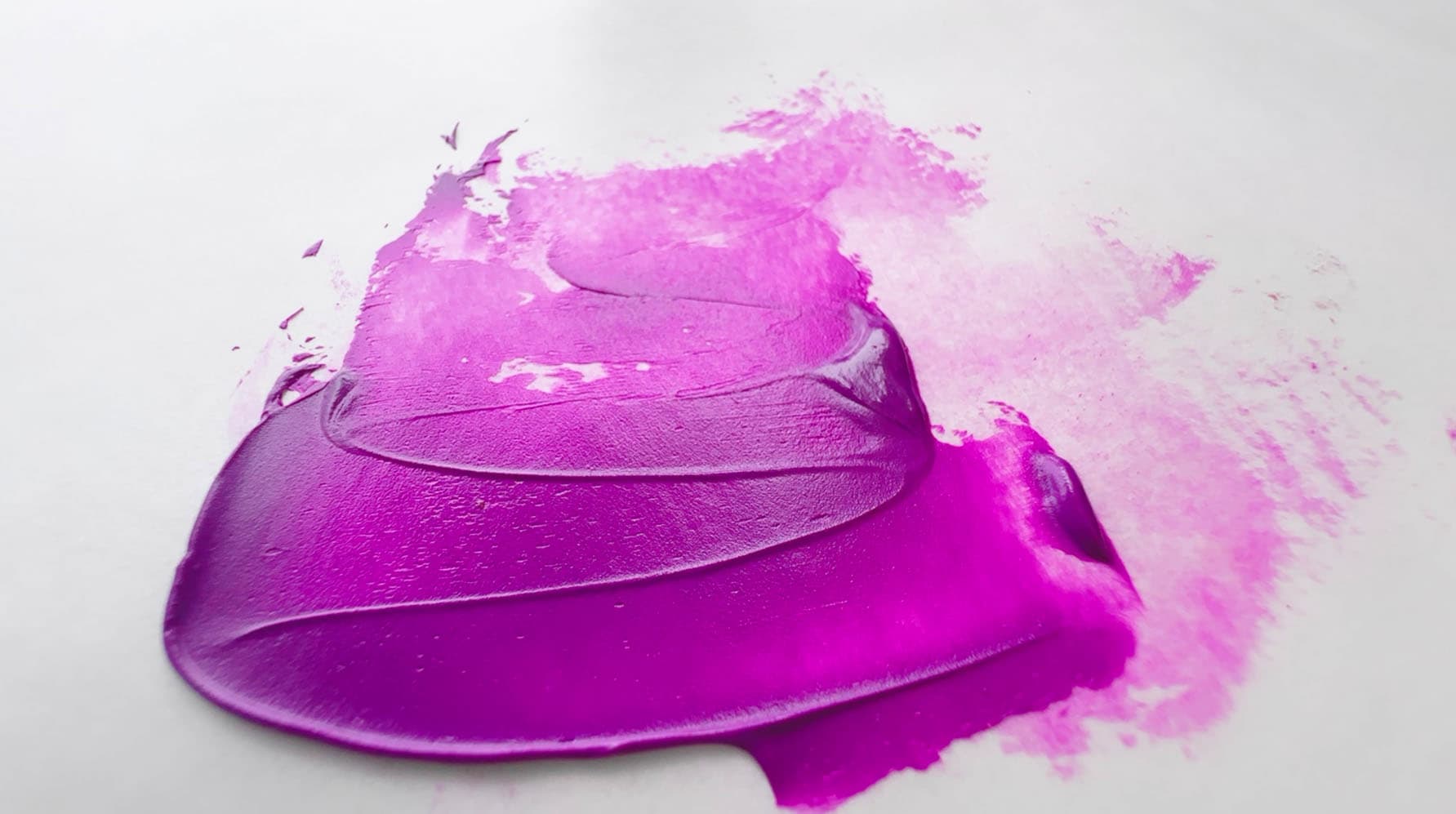
Blockx Cobalt Violet Light, PV14
Cobalt violet comes in two forms, also sometimes called light and dark, and the lighter is more of an electric red-purple. The dark version is a deep middle violet with high chroma. We tend to think of them as more opaque violets, but the pigment itself is fairly transparent- especially cobalt violet light. They are not strong tinters.
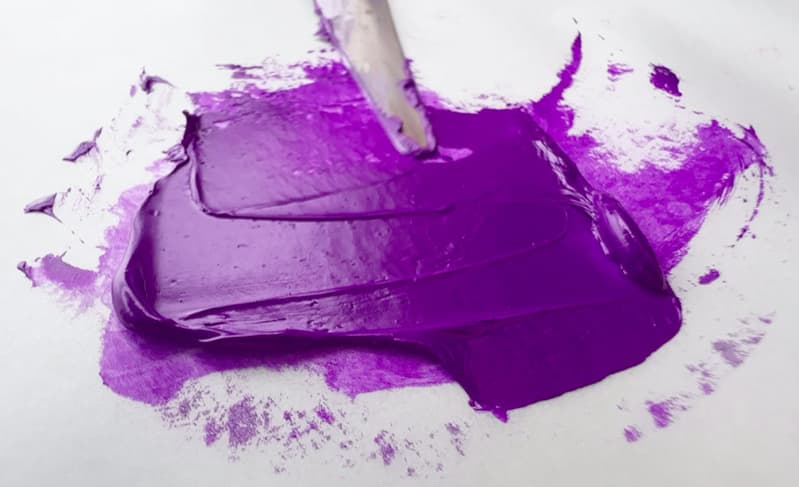
Blockx Cobalt Violet Deep, PV14
Cobalt violets were a favorite of the Impressionists, and the darker version of cobalt violet (as well as the more poisonous antiquated version of cobalt violet light, the historical pigment arsenate of cobalt) were used by Monet.
The modern version of PV14 is much less toxic but should still be handled with great care. PV14 has a toxicity rating of B, so it does have toxicity and should be treated with caution. For more information on the hazards associated with cobalt pigments, see Monona Rossol's book, The Artist's Guide to Health and Safety. Her most recent work can be found through her site.
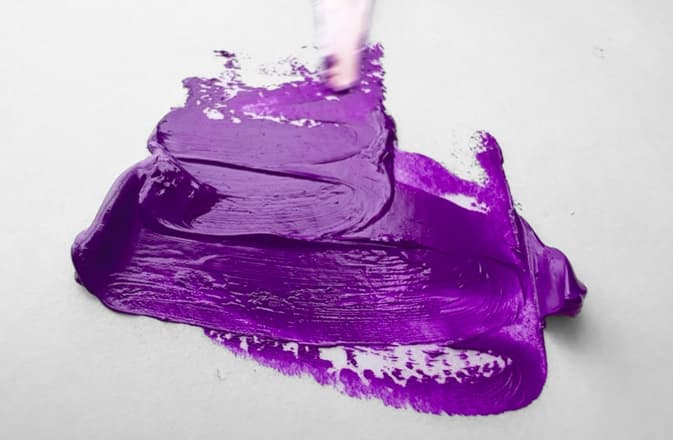
Cobalt Violet PV14 by Blockx
In the past this color has been given the most stellar lightfastness ratings, and for a violet it is incredibly lightfast. However, new research from Golden suggests that it may be more vulnerable to a certain kind of light used in their testing methods than once was thought.
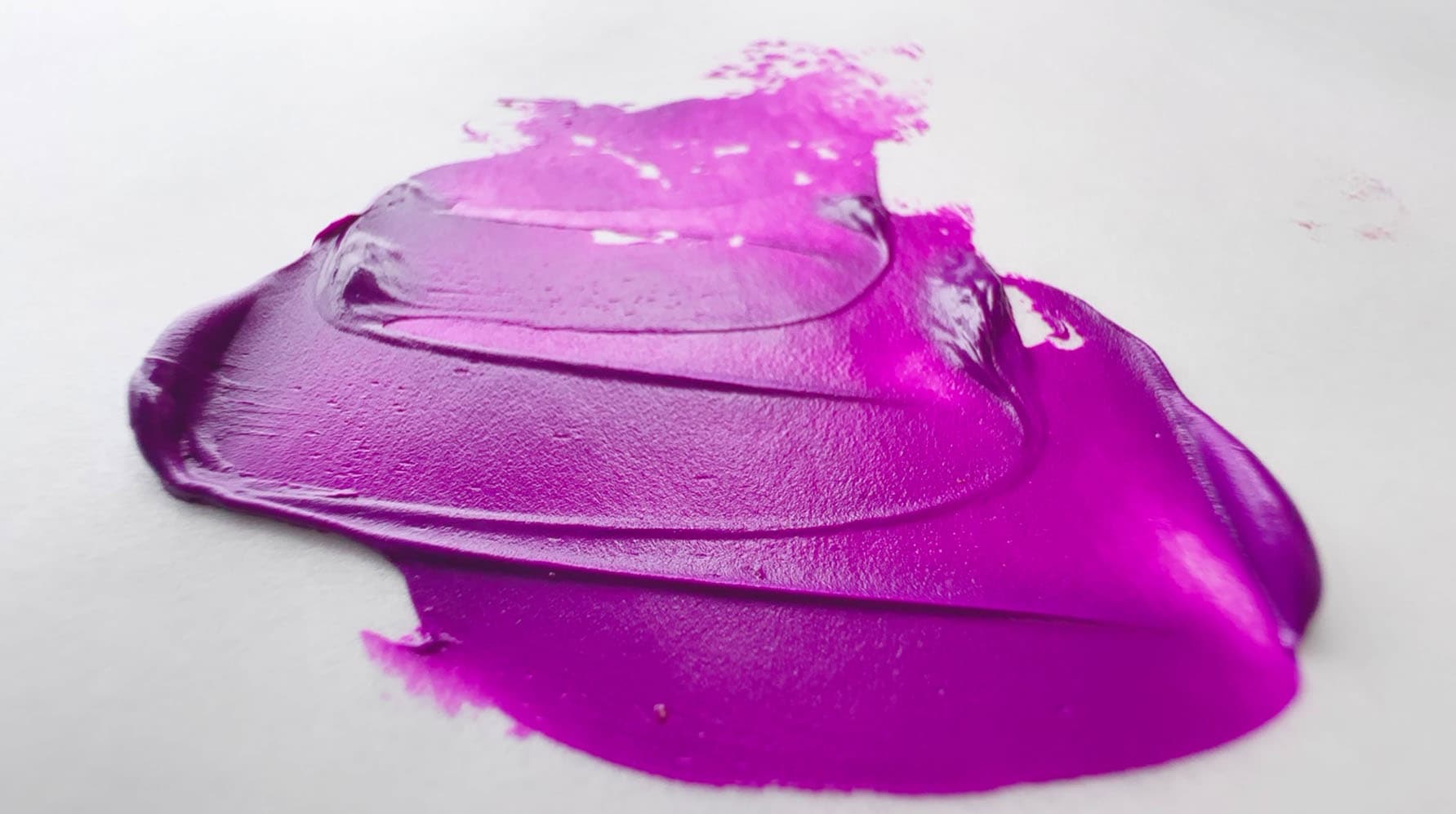
Blockx Cobalt Violet Light, PV14
We have heard that cobalt violet has low oil requirements when made into a paint, however this is one of the colors where we've had the oil falling out of solution from our commercially prepared tubes which make it look oiler than it is. Despite the oil separation sometimes we've found it be a useful color with unique properties. Be advised that it is a very gentle mixer, i.e. not a strong tinter at all.
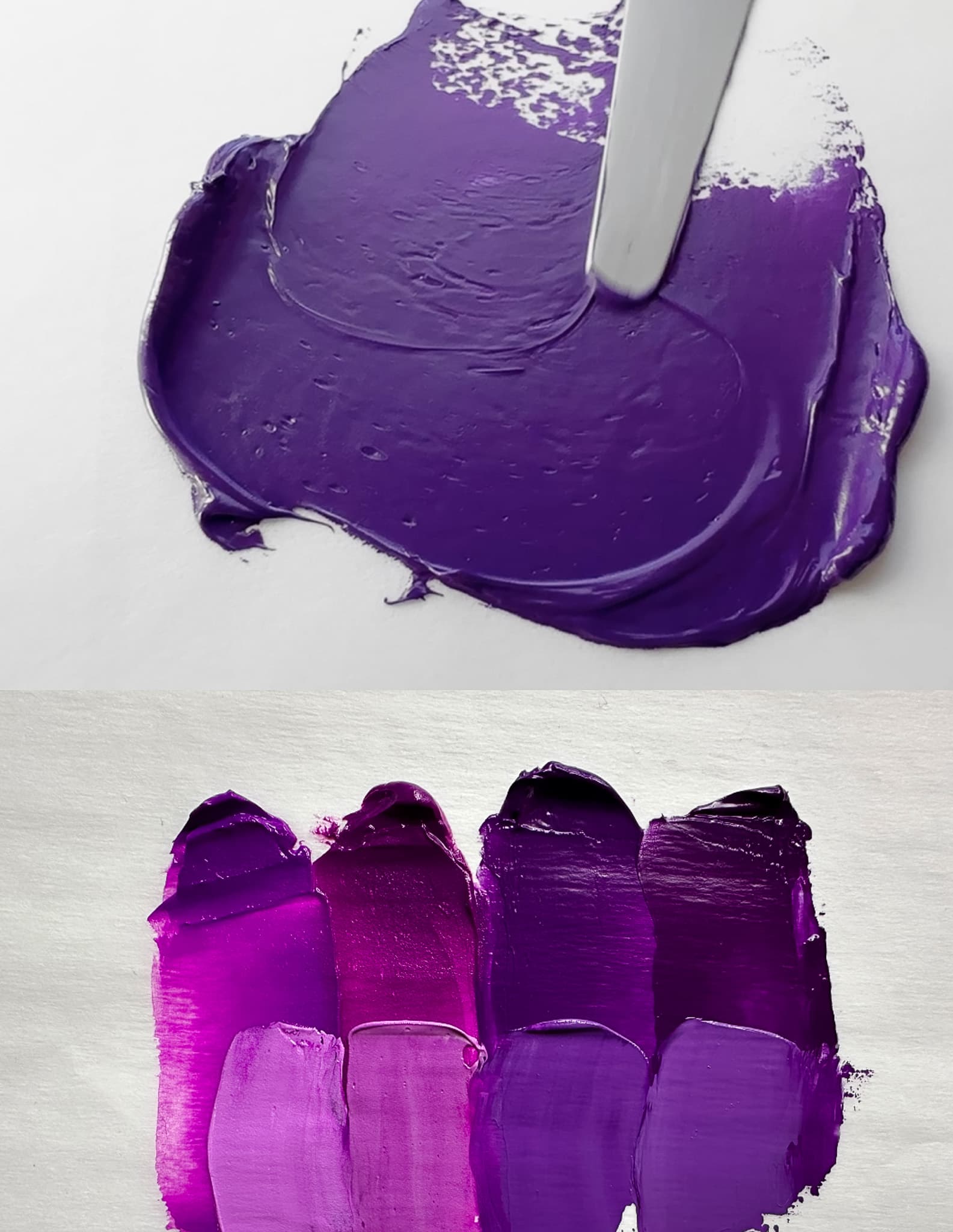
Varieties of Cobalt Violet, PV14 in oils. Cobalt Violet Light tends to be an electric purple while deep is a more middle purple
Like other cobalts it dries quickly, though some classify this as moderate when set against really fast driers like lead white. We have found this color incredibly useful for neutralizing greens, and overall is a very useful pigment.
Resources
PV14 pigment data from David G. Myers, The Color of Art Pigment Database, Artiscreation.com,
Bomford, David, et. al,. Impressionism. London: The National Gallery, in association with Yale University Press,1990. Internet Archive, Web. Accessed June 2025. https://archive.org/details/impressionism0000unse_z3w3 Church, A. H.. The Chemistry of Paints and Painting. London : Seeley, Service1915. Internet Archive, Web. Accessed June 2025. https://archive.org/details/chemistryofpaint00churuoft Field, George. Field's Chromatography : a treatise on colours and pigments for the use of artists. London : Windsor and Newton1885. Internet Archive, Web. Accessed June 2025. https://archive.org/details/Fieldquotschrom00Fiel Gettens, Rutherford J.. Painting materials : a short encyclopaedia. New York : Dover Publications1966. Internet Archive, Web. Accessed June 2025. https://archive.org/details/paintingmaterial0000gett Feller, Robert L, ed.. Artists' pigments : a handbook of their history and characteristics. Washington, DC : National Gallery of Art,1986. Internet Archive, Web. Accessed June 2025. https://archive.org/details/artistspigmentsh0000unse/mode/2up Koleske, J. V. Paint and coating testing manual : fourteenth edition of the Gardner-Sward handbook. Philadelphia, PA : ASTM1995. Internet Archive, Web. Accessed June 2025. https://archive.org/details/paintcoatingtest0000unse,
Elliott, Virgil. Traditional Oil Painting. Echo Point Books & Media, LLC, 2019. https://amzn.to/4nwIdzq,
Spurgeon, Tad. Living Craft: A Painter's Process. Mt. Airy, Philadelphia, PA: Zoetrope, 2018. Newer version available here: https://www.thomaskitts.com/page/36804/tad-spurgeons-living-craft,
Information about PV14 from Bruce MacEvoy, Handprint Guide to Watercolors, General information about this class of pigments from Handprint,
Rossol, Monona. The Artist's Complete Health and Safety Guide. New York, NY : Allworth Press, 2001. The book is rather dated, updated information is available from her website.
Stats
Lightfastness
Excellent to Very Good, but choice of oil matters
While it tends to get solid highest marks for lightfastness (all 8’s on the BWS), unfortunately in oils it’s hard to get this beautiful color to retain the glory it has right out of the tube. Historically considered a lightfast violet, it yellows more in linseed oil than it does in other oils. In Golden’s recent lightfastness testing, PV14 was not specifically mentioned in their report, so results may or may not be similar to the other cobalts they examined. They did test Cobalt Violet Light PV49, so that may be a helpful point of comparison.
Transparency
Semi-Opaque, Opaque
Ranges from Transparent to Opaque in oils depending on the formulation. Most often found as semi-transparent, though this also depends on the pigment load.
Toxicity
Hazard, Use more caution, contains Cobalt
Handle as toxic. Artiscreation assigns a "B" meaning, "Hazard if carelessly handled, ingested in large amounts or over long periods of time; Do not ingest; Avoid dust & spray." For more information on the hazards associated with cobalt pigments, see Monona Rossol's book, The Artist's Guide to Health and Safety. Her most recent work can be found through her site.Treat all pigments and paints with studio safety protocols.
Tinting
Low
Dry Time
Medium, 2-7 days or less
This color has a drying effect. We've seen it listed as medium, but in practice the drying is noticeable
Oil Content
Sources Vary
The general consensus is that this is low. We wish more brands listed their colors by oil volume, but Williamsburg has published categories, and lists it as low by oil volume. Mayer also assigns it a low oil volume (66, which is in the low category) and there is agreement from another respected source. By weight, Artiscreation lists 15-24 g/100g of oil.
Particle Size
Very fine but may vary
Chemical Name
Cobaltous phosphate, Cobalt ammonium phosphate
DISCLAIMER: Please note that we are not experts in health and safety and we are not toxicologists, please consult the proper experts. We are not liable for any issues that may arise from the use of our website or its contents. The information contained in this site is provided without warranty or guarantee of any kind. We do not necessarily endorse any other website that are linked from our site. For any important pigment specs, please reference the manufacturer details. If you discover errors or omissions, please reach out through our contact form. Thank you.
