

Top Pigment
Anthraquinone Red
PR177
Alternate Names
Permanent Alizarin Crimson
Anthraquinoid Red
Pigment Description
This is a widely used pigment in "Alizarin Crimson Permanent" and other substitutes for the fugitive genuine Alizarin, however some tests indicate PR177 may not be hold its lightfastness as long as is hoped. Some tests have shown that in longer exposures, PR177 does indeed fade, but it holds its own long enough to make it through the old ASTM tests.
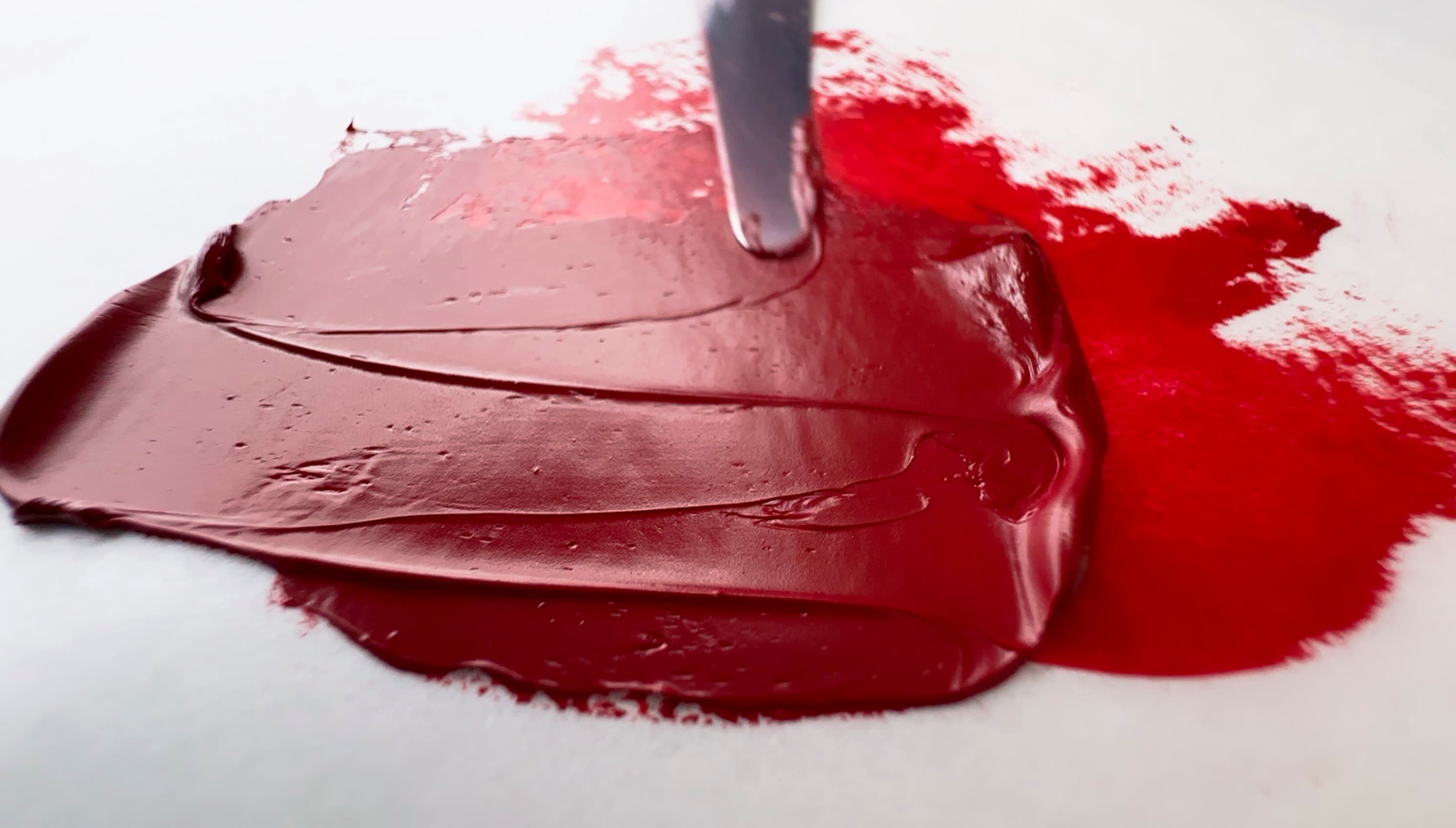
PR177 Old Holland Burgundy Wine Red
Anthraquinone red is transparent. In comparison with genuine Alizarin Crimson, PR83, Anthraquinone Red does not have the gemlike depth that Alizarin possesses. However, Anthraquinone Red, PR177 is a useful transparent red.
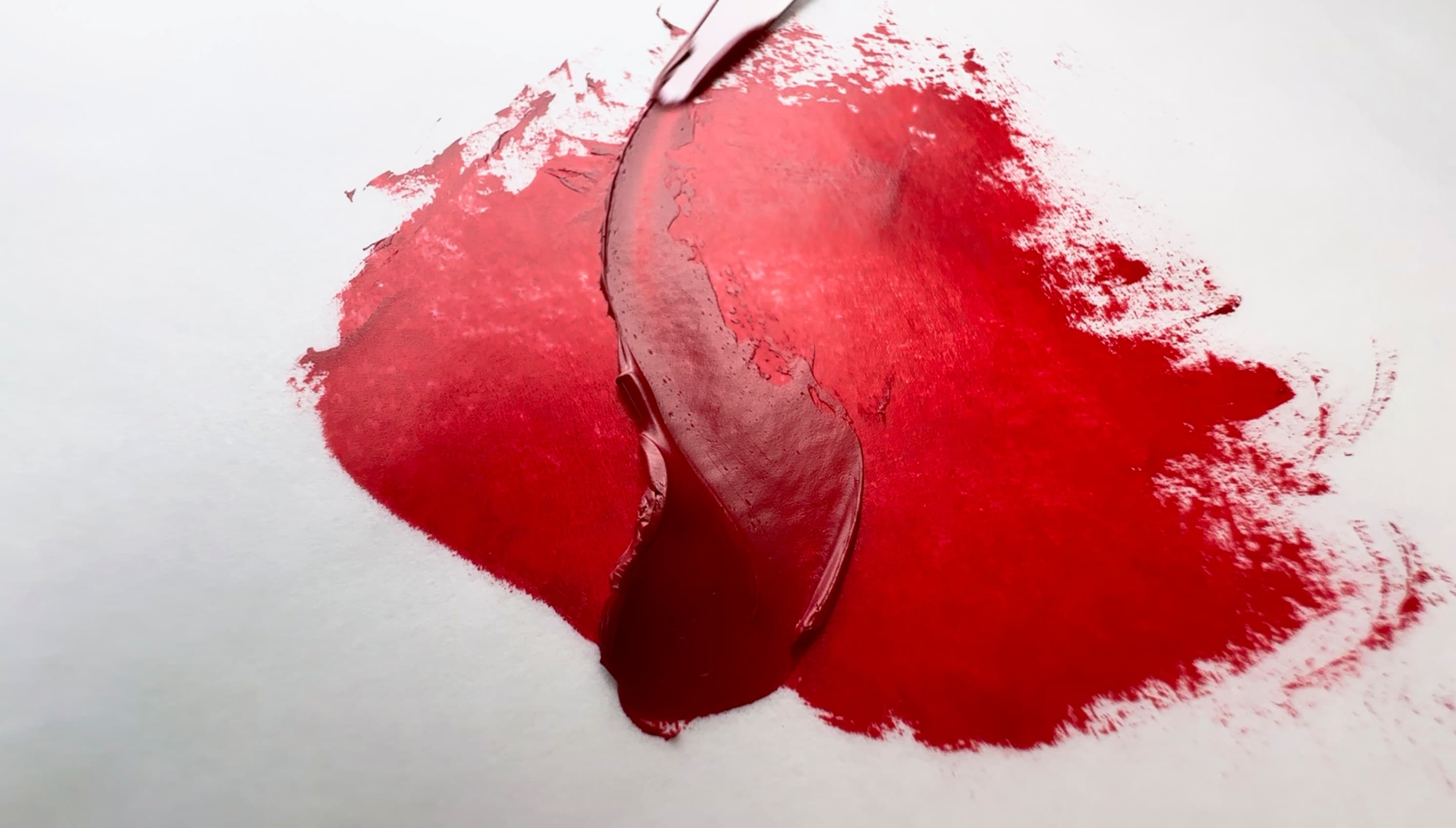
A stroke of Burgundy Wine Red from Old Holland, PR177
This color, along with other similar anthraquinone pigments, may be carcinogenic. While this specific pigment has not been tested, other similar pigments have been listed as "reasonably believed to be carcinogenic." Please refer to Monona Rossol's research work for more.
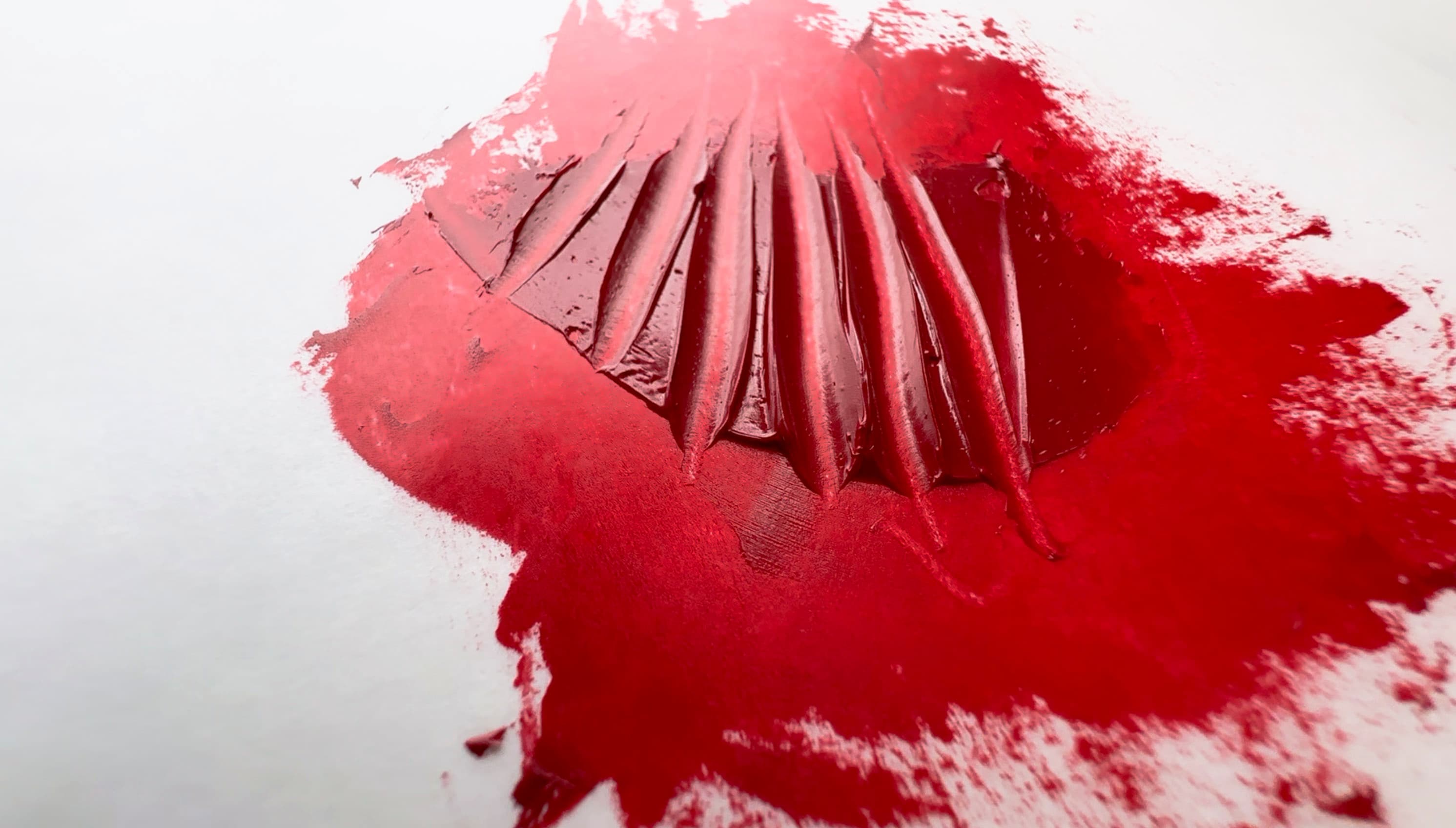
PR177 oil paint. Old Holland Burgundy Wine Red
Even though Anthraquinone Red received an ASTM I designation, it is reported to eventually fade, given enough sun exposure. Virgil Elliott's long term lightfastness tests revealed interesting traits that go beyond the regular ASTM testing. One of his six-year test panels can be found here. So, while some pigment suppliers make a product that can receive all 8's (excellent) on the blue wool scale, this pigment does appear to fade eventually with long-term exposures which go beyond usual lightfastness testing.
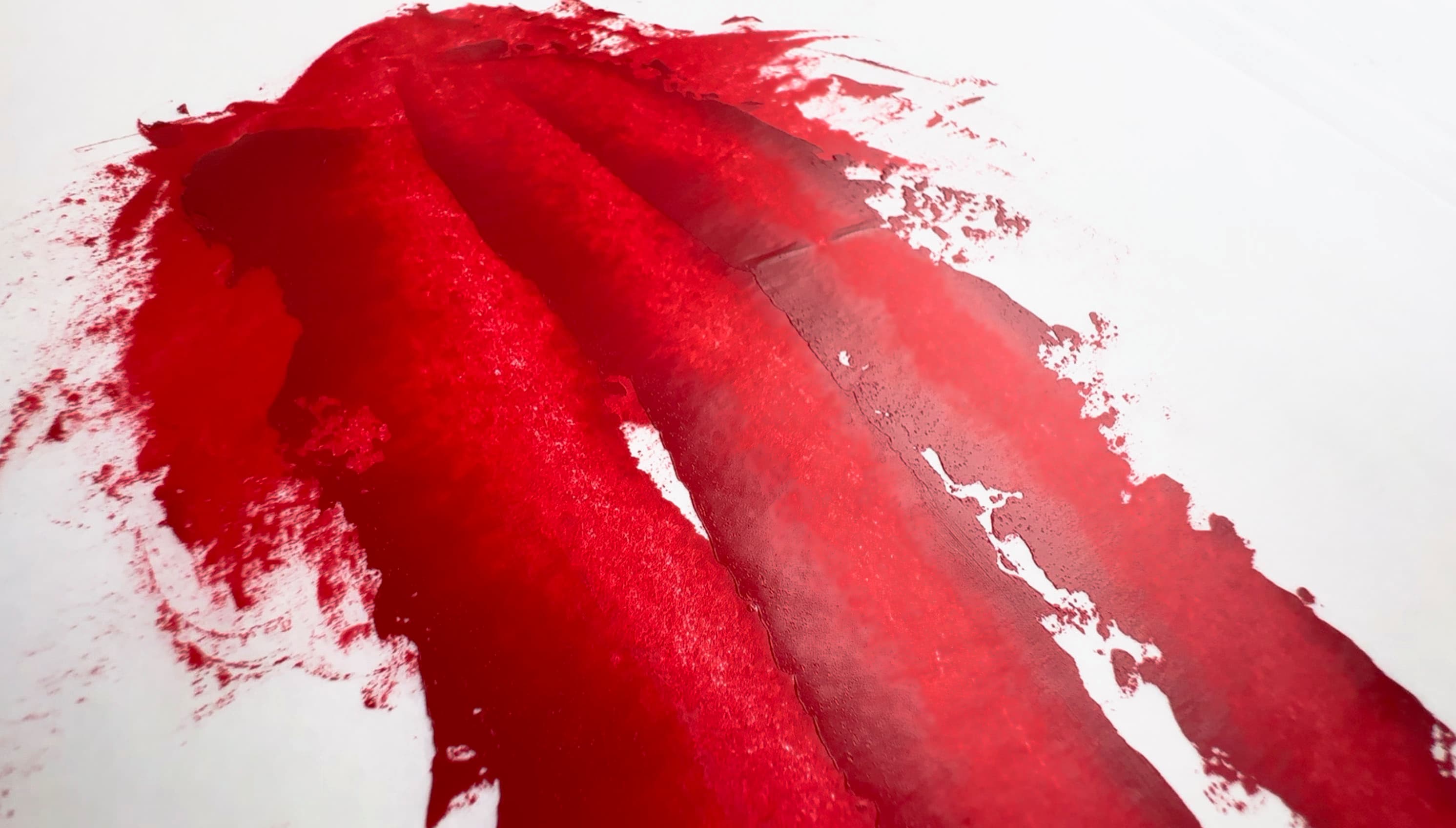
PR177 is Capable of transparency when spread thinly or used in glazes. This version is by Old Holland
This is a rich, lustrous, sparkling red with depth in a helpful area of the spectrum. It is transparent and chromatic at a low lightness. If you use this color it might be helpful to do your own lightfastness tests since among suppliers it seems to vary a bit.
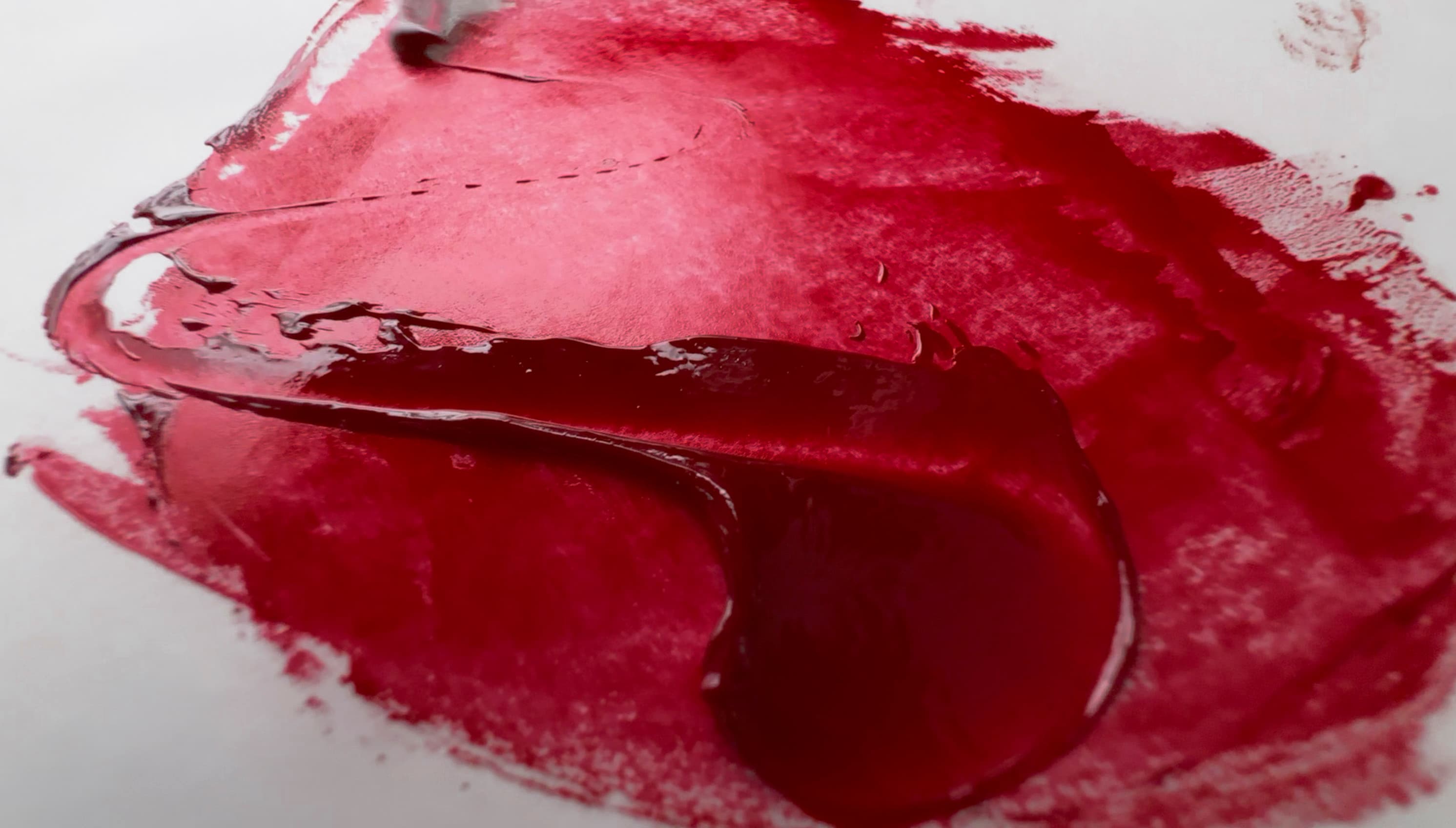
Winsor and Newton Winton, PR177
Resources
PR177 pigment data from David G. Myers, The Color of Art Pigment Database, Artiscreation.com
Information about PR177 from Bruce MacEvoy, Handprint Guide to Watercolors, General information about this class of pigments from Handprint,
Rossol, Monona. The Artist's Complete Health and Safety Guide. New York, NY : Allworth Press, 2001. The book is rather dated, updated information is available from her website.
Stats
Lightfastness
Good, but depends on supplier
Golden’s version performed relatively well, but some brands can fall to a BWS 6 in tints, so lightfastness testing may be advisable. In watercolor, Bruce MacEvoy found that it varies from brand to brand which is also echoed by its low ASTM ratings vs the relatively high ASTM equivalencies found in the variety chosen by Golden. In oil, recent tests from Golden on mixing whites, their version performed at ASTM I with most whites, but tested at ASTM II in Williamsburg’s Flake Whites (Linseed and Safflower), as well as in pure Zinc White (however another brand of Flake White tested differently). In regards to PR177 generally, Virgil Elliot’s tests have shown that this crimson does fade with years of direct exposure to sunlight. His tests suggest that in the long run it is not all that much better than Alizarin Crimson PR83, though his tests were more harsh than the ASTM and examined long-term exposures. He found that specific preparations of natural rose madder NR9 (though a different color- more of a pink) actually fared better long-term than PR177, though high quality varieties of NR9 are closer to an ASTM II overall. However, small variances in the manufacture of NR9 make a big difference and the type of Rose Madder he tested is no longer being made by the same company. It is fairly ironic that natural madder may perform better over the years in some contexts than either the synthetic Alizarin Crimson or Permanent Alizarin PR177. A version tested in the 1980s (outdoor exposure, Florida sunlight) cited in the NPIRI showed slight fading in tints during 6 months of testing. Indoor tests also showed slight fading in tints.
Transparency
Transparent
Most oil formulations are transparent or semi-transparent
Toxicity
Previously thought to be in the category of Low Concern, new research suggests this may be carcinogenic.
Monona Rossol’s writing about pigments and artist safety available on request here notes that this pigment has a similarity to other Anthraquinones which are carcinogenic. While this specific pigment has not been tested, other similar pigments have been listed as "reasonably believed to be carcinogenic." Treat all pigments and paints with studio safety protocols.
Tinting
Medium, Slow
Dry Time
Medium, may contain driers
Some sources say 2-7 days, others 5 days in oils. May Contain Driers
Particle Size
Very Fine
Chemical Name
Anthraquinone
DISCLAIMER: Please note that we are not experts in health and safety and we are not toxicologists, please consult the proper experts. We are not liable for any issues that may arise from the use of our website or its contents. The information contained in this site is provided without warranty or guarantee of any kind. We do not necessarily endorse any other website that are linked from our site. For any important pigment specs, please reference the manufacturer details. If you discover errors or omissions, please reach out through our contact form. Thank you.
