

Top Pigment
Cadmium Red
PR108
Alternate Names
Cadmium Red Light
Cadmium Red Medium
Cadmium Red Deep
Pigment Description
A palette essential. As a red it is almost regal it has such presence. A smashing pigment that is opaque, high chroma, and lightfast. Cadmium Red varieties form an arpeggio of colors (that share one pigment code) from red-orange to classic bright red, to rare and moody maroons. Each of these colors is made with the same pigment code, PR108, so painters must try to rely on the paint name (such as Cadmium Red Medium vs. Deep) to try to guess at the color of the paint. One of the reasons we founded Paint List was to help sort this out.
Cadmium Red Light, Medium, and Deep
Cadmium Reds, all PR108, Come a Range of Colors

Genuine Cadmium Red will be labeled with Pigment Code PR108, but the name provides a clue to the color, as genuine cadmium reds can be red orange, middle reds, or cool deep reds
The naming structure for paints can be a bit confusing— in the case of Cadmium Red, it is often labeled as Light, Medium and Deep, and these names follow the spectral progression from orange to dark red. When Cadmium Red is named Light, it refers to a chromatic red orange, whereas Medium often connotes a high chroma middle red, and the name Deep usually refers to a cooler deeper middle red. Paints labeled Cadmium Maroon or Purple are less frequently found, and these describe dusky dark red-purples.
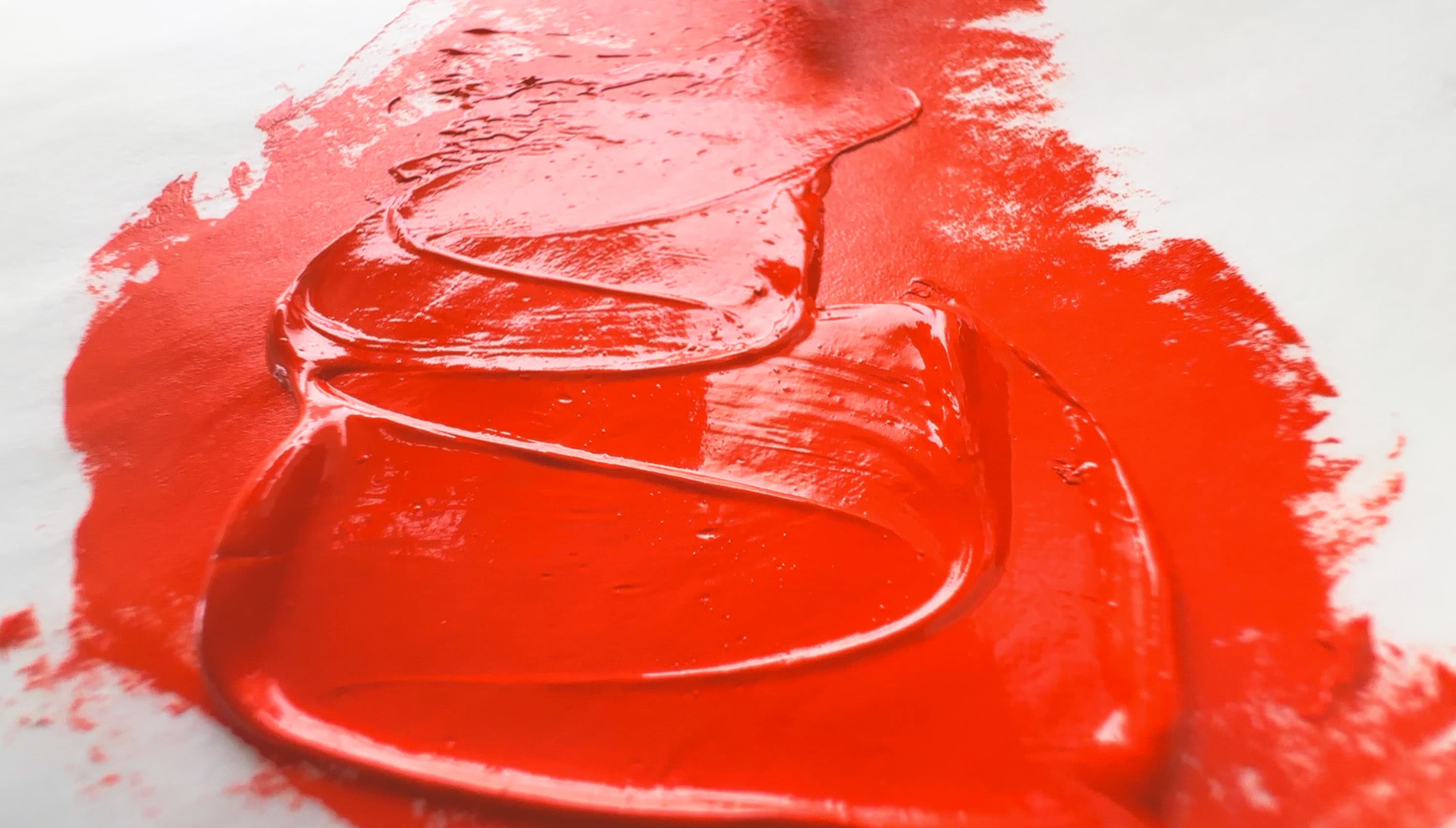
Michael Harding Cadmium Red Light
A Red with Excellent Lightfastness
Each one of these sub-variants gets solidly excellent marks for lightfastness. Bear in mind though that prolonged exposure in direct sunlight (i.e. years of direct exposure) will eventually darken them, though in comparison with other reds their lightfastness is excellent. However it has some sensitivity to moisture, so do keep that in mind.
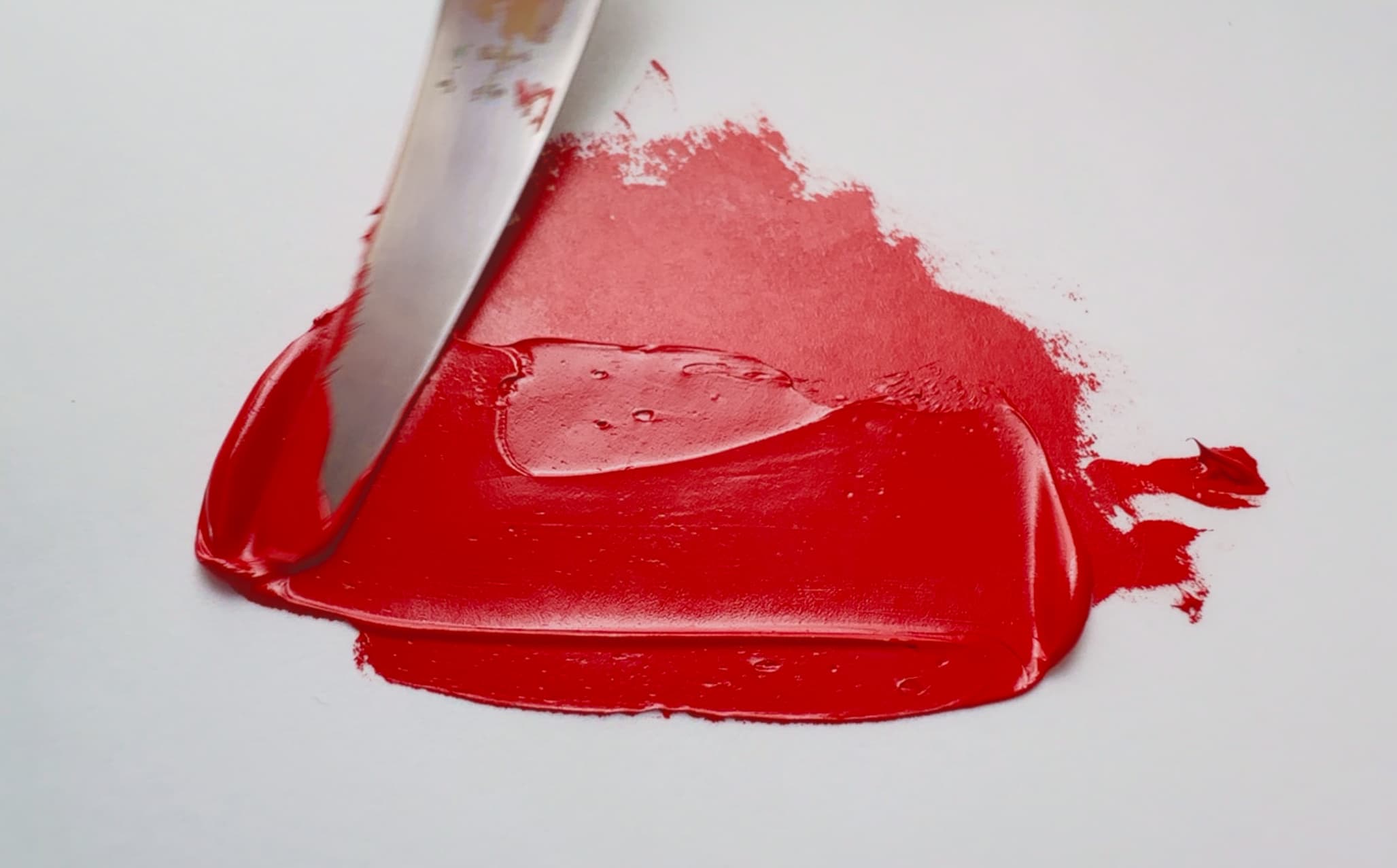
One of several PR108 paints made by Old Holland. This is Old Holland Cadmium Red Vermilioned
Opacity can be hard to come by in certain areas of the reds, and the character of Cadmium Red makes it extremely useful as an opaque, bright, lightfast red. All versions are opaque (unless diluted by the paintmaker) and they tend to cover well. The opacity of any given tube may depend on the pigment concentration in that brand.
Also, a quick reminder that lightfastness does not mean the same as weather-fastness. Cadmium reds are sensitive to moisture, so they are not intended for outdoor use.
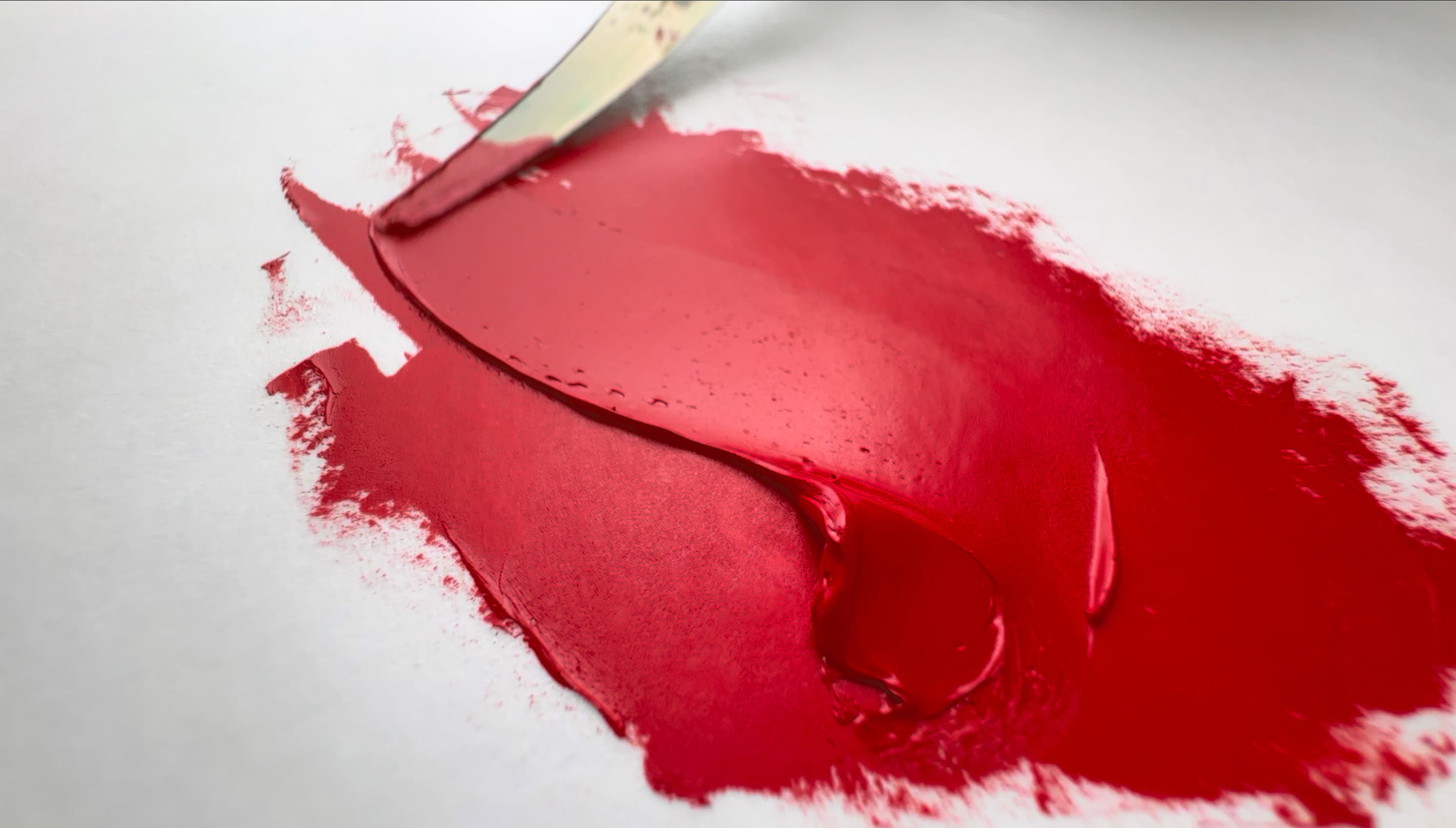
Old Holland Cadmium Red Deep, PR108
Debate has raged around the toxicity of cadmiums, and they are listed as pigments with toxicity, so do err on the side of caution and be extremely careful with them. Lately we have seen a lot of resources suggesting the modern cadmium pigments are engineered to be far less toxic source, another source and another source, compared with regular cadmium. However, we always err on the side of being careful with pigments (there is no downside to being protected) and so we always handle these with respect. Also beware when it comes to older tubes of cadmiums as they may also contain toxic adulterants like lead.
We have read to never breathe them (this means not using them for airbrush). However, we are not experts in health and safety so please consult the relevant authorities on their proper handling and disposal. According to the work of Monona Rossol, cadmium is a carcinogen and causes kidney damage. The Artist's Guide to Health and Safety has more information about the hazards of pigments containing Cadmium as well as Selenium. They should not be sprayed and the dust should be stringently avoided (remember in regard to avoiding sanding). It should go without saying, but absolutely do not ingest any pigment.

Michael Harding Cadmium Red Deep, made with PR108
There is a related pigment code which denotes a less-expensive version of Cadmium Red, which is PR108:1. While this is a less expensive way of making cadmium red, PR108:1 also has less strength and sometimes slightly less chroma/clarity in mixing.
If a pigment is marked PR108:1, that means it contains more than 15% barium sulfate. We've heard that often PR108:1 has quite a lot more barium in it than just the 15% mark.
In contrast, PR108 regular (also called the CC version) refers to a higher-quality version of cadmium. The CC refers to the concentrated cadmium version.
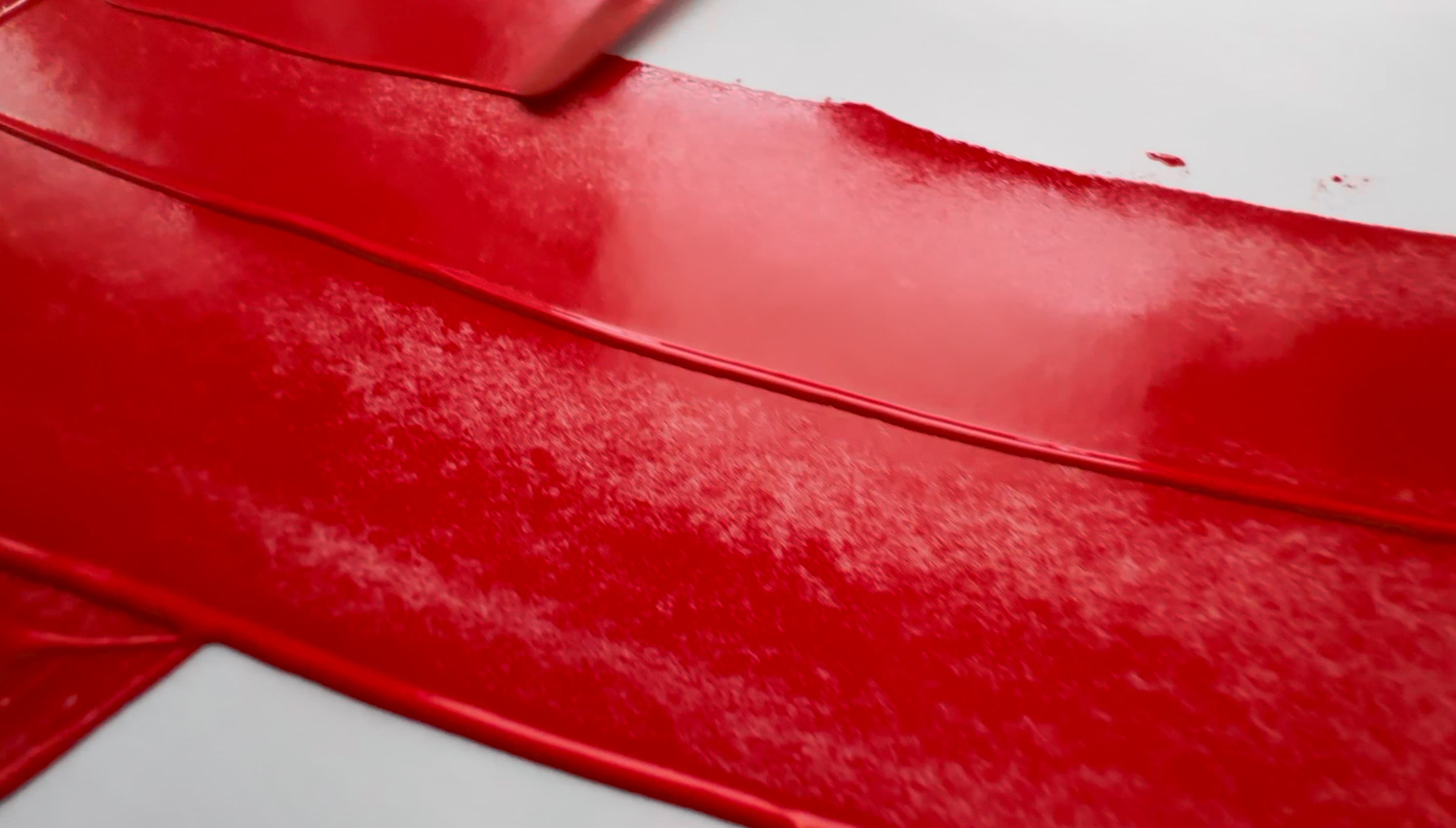
Vasari Cadmium Red Medium, a free-flowing version of Cadmium Red made with PR108
One interesting thing for oil painters is that cadmium reds and the related cadmium-barium reds as having rather lean to medium oil requirements, which relate to their use in lower levels of an oil painting. If additional driers have not been added, they do tend to dry slowly.
Overall, Cadmium Red is a superb pigment for use by professional painters.
%2FCadmium_Red_medium_and_deep_premium_in_context.jpg&w=3840&q=75)
Cadmium Reds, PR108, vary in color as well as their undertone in tints with Titanium White. These are Cadmium Red Mediums, Deeps, and Maroons. Specific comparisons of colors can be found in our articles
If you're curious about color comparisons of oil paints, it can be hard to judge online, but we have made with Deep Red Cadmiums, Medium Red Cadmiums, and Cadmium Red Lights to share.
%2FCadmium_Red_medium_and_deep_premium_in_context_with_cadmium_red_light.jpg&w=3840&q=75)
Cadmium Red Medium and Light across brands, all made from PR108. When tinted with Titanium White, PW6, the paints have different undertones
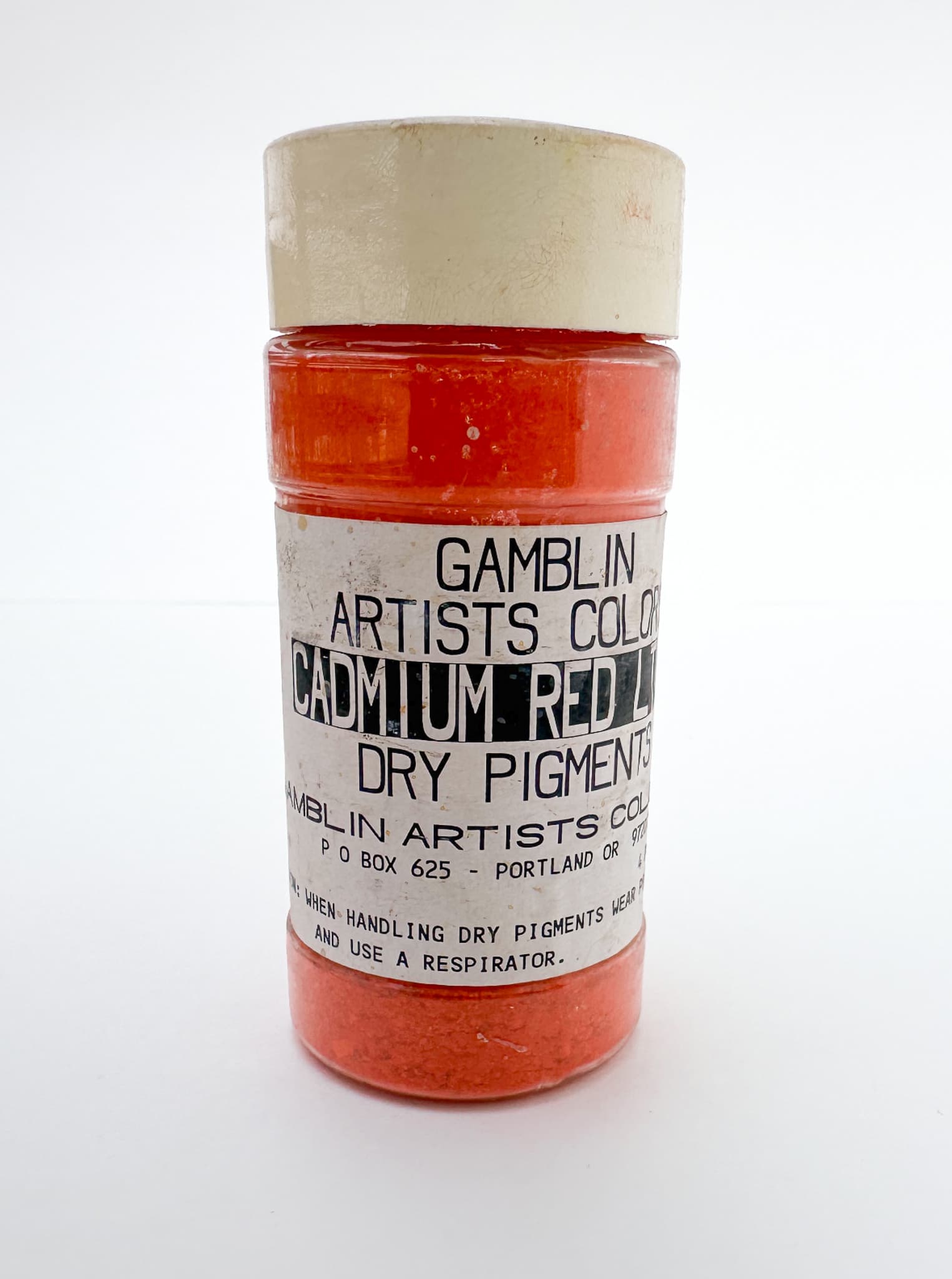
Gamblin Cadmium Red Light, PR108, dry pigment
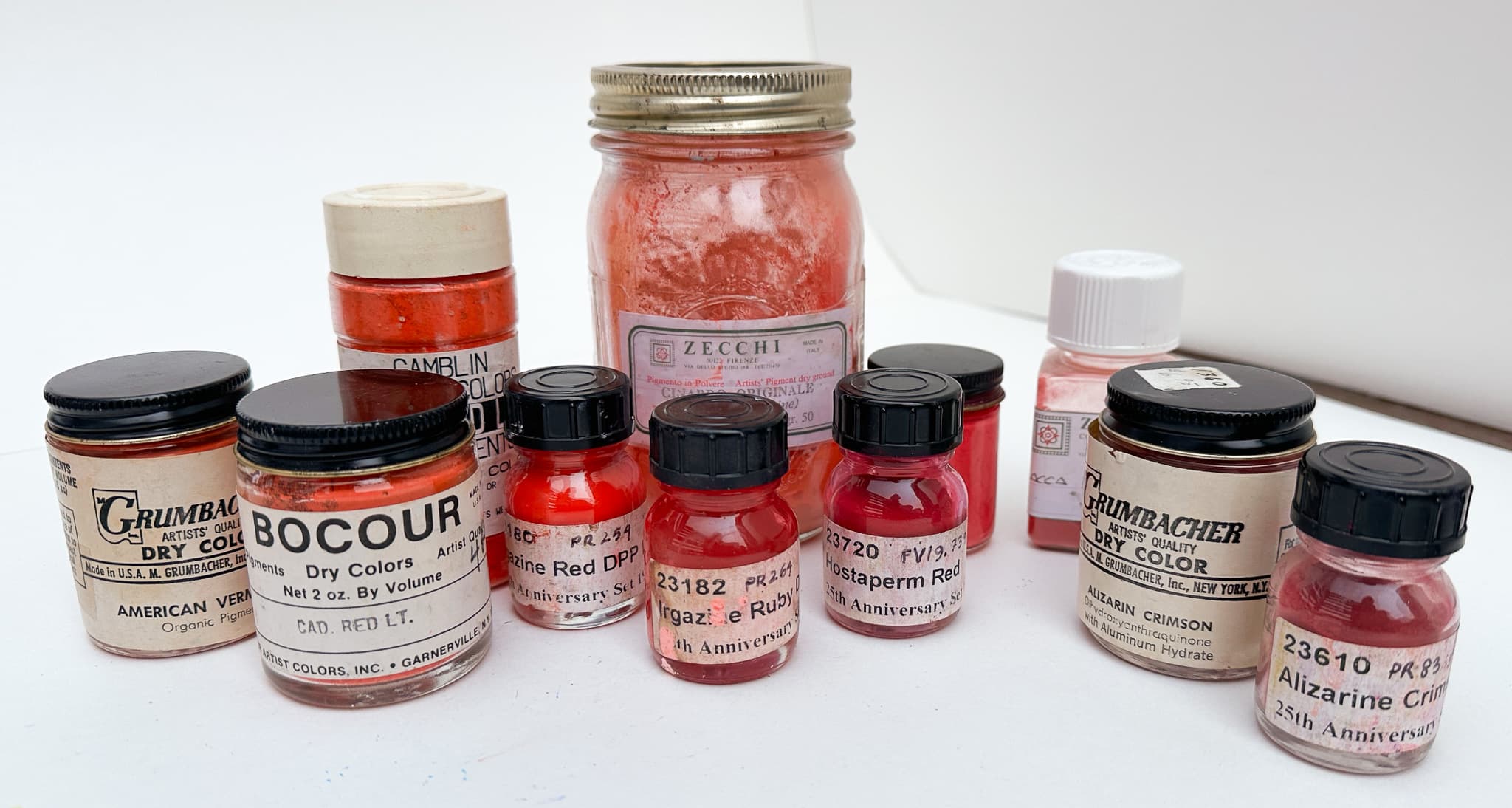
A variety of Red Pigments including several Cadmium Reds

Sign Up for the Latest Articles
If you'd like to be notified our latest articles, sign up for our Newsletter.
Resources
PR108 pigment data from David G. Myers, The Color of Art Pigment Database, Artiscreation.com
Elliott, Virgil. Traditional Oil Painting. Echo Point Books & Media, LLC, 2019. https://amzn.to/4nwIdzq,
Information about PR108 from Bruce MacEvoy, Handprint Guide to Watercolors, General information about this class of pigments from Handprint,
International Cadmium Association (n.d. Accessed June 2025). Cadmium Pigments https://cadmium.ionainteractive.com/applications/pigments/. International Cadmium Association,
Rossol, Monona. The Artist's Complete Health and Safety Guide. New York, NY : Allworth Press, 2001. The book is rather dated, updated information is available from her website.
Stats
Lightfastness
Excellent, protect from moisture
Excellent lightfastness but may be sensitive to moisture, so not recommended for outdoor applications. In Golden’s lightfastness testing for oils, it displayed a slight dip (an ASTM II - Very good) in pure zinc white, and showed ASTM I excellence in tints across the other mixing whites. The NPIRI from the ‘80s mentions that in Florida Sunlight (high humidity) the masstone held steady but outdoors (exposed to moisture) tints faded appreciably. In indoor exposures its lightfastness was excellent. Despite the moisture sensitivity, the NPIRI described Cadmium Red, along with PR113, as “the most lightfast pigments in their shade range.” (Probably PR254 would qualify as well).
Transparency
Opaque
Cadmium Red in its various colorations is an excellent opaque red.
Toxicity
Hazard, use more caution. Seriously avoid the dust/spraying. Out of caution, handle as Toxic, Cadmium, Selenium
Out of caution, treat as though hazardous. More on artiscreation.com. Some cadmiums contained toxic pigments as adulterants. While thought to be less bioavailable as a pigment, cadmium is a carcinogen which also causes kidney damage, and it poses serious hazards when breathed. In the Artist's Guide to Health and Safety Monona Rossol writes about the hazards of pigments containing Cadmium as well as Selenium. See also her most recent work available by request here. We are not health and safety experts, nor toxicologists, so please consult the MSDS. For alternative perspectives on the seriousness, consult further third party discussion of cadmiums, however we err on the side of caution in terms of handling. As with all pigments, do your own research and handle all paints with proper studio safety protocols.
Tinting
Fairly Strong
Tinting is related to pigment load. Since this is an expensive pigment, companies will vary in how much they put into a paint tube. Tinting strength tests are valuable here across brands.
Dry Time
Slow to Very Slow. May contain driers.
Reports of this pigment’s drying range from slow to very slow, with very slow being the consensus. Mayer lists it as very slow. Some brands list that the paint dries in 5 days but it may contain driers. Williamsburg notes that their Cadmium Red Deeps and Red-Purples dry in 5-14 days, while their Medium and Light dry in 2-7 days. Mayer notes that Cadmiums form "fairly strong" paint films.
Oil Content
Moderately Low, Low to Medium
Low/Lean to medium. This pigment does not require a large amount of oil relative to other pigments, but it is probably best in the medium category. Mayer doesn't differentiate between PR108 and PR108:1- he only discusses the latter, and assigns the barium version a medium for oil volume with a score of 79 for both cadmium red light and cadmium red deep. One source (Williamsburg) specifies cadmium red maroon as being medium-high. However, if used in lower layers of a painting please bear in mind that it does dry slowly (unless driers have been added, however driers may present other problems). By weight, Artiscreation lists approximately 17-21g/100g of oil, but your pigment may have different requirements.
Particle Size
Fine
Oil Binders
It’s common to find this pigment in linseed oil. It can be bound in safflower, poppy, walnut, etc.
Chemical Name
Concentrated Cadmium Selenosuphite (CC) or Cadmium sulfoselenide, Cadmium-seleno sulfide (CdS, CdSe) with less than 15% barium sulfate
CdS, CdSe
DISCLAIMER: Please note that we are not experts in health and safety and we are not toxicologists, please consult the proper experts. We are not liable for any issues that may arise from the use of our website or its contents. The information contained in this site is provided without warranty or guarantee of any kind. We do not necessarily endorse any other website that are linked from our site. For any important pigment specs, please reference the manufacturer details. If you discover errors or omissions, please reach out through our contact form. Thank you.
