

Top Pigment
Carbon Black
PBk7
Alternate Names
Lamp Black
Furnace Black
Channel Black
Pigment Description
A pigment capable of some of the deepest darkest blacks out there. This tends to be a cool black that pulls blue in mixtures. It is related to some significant drying problems in oil, so use with a bit of caution and do not use it in the lower layers of a painting (unless you want to, of course).
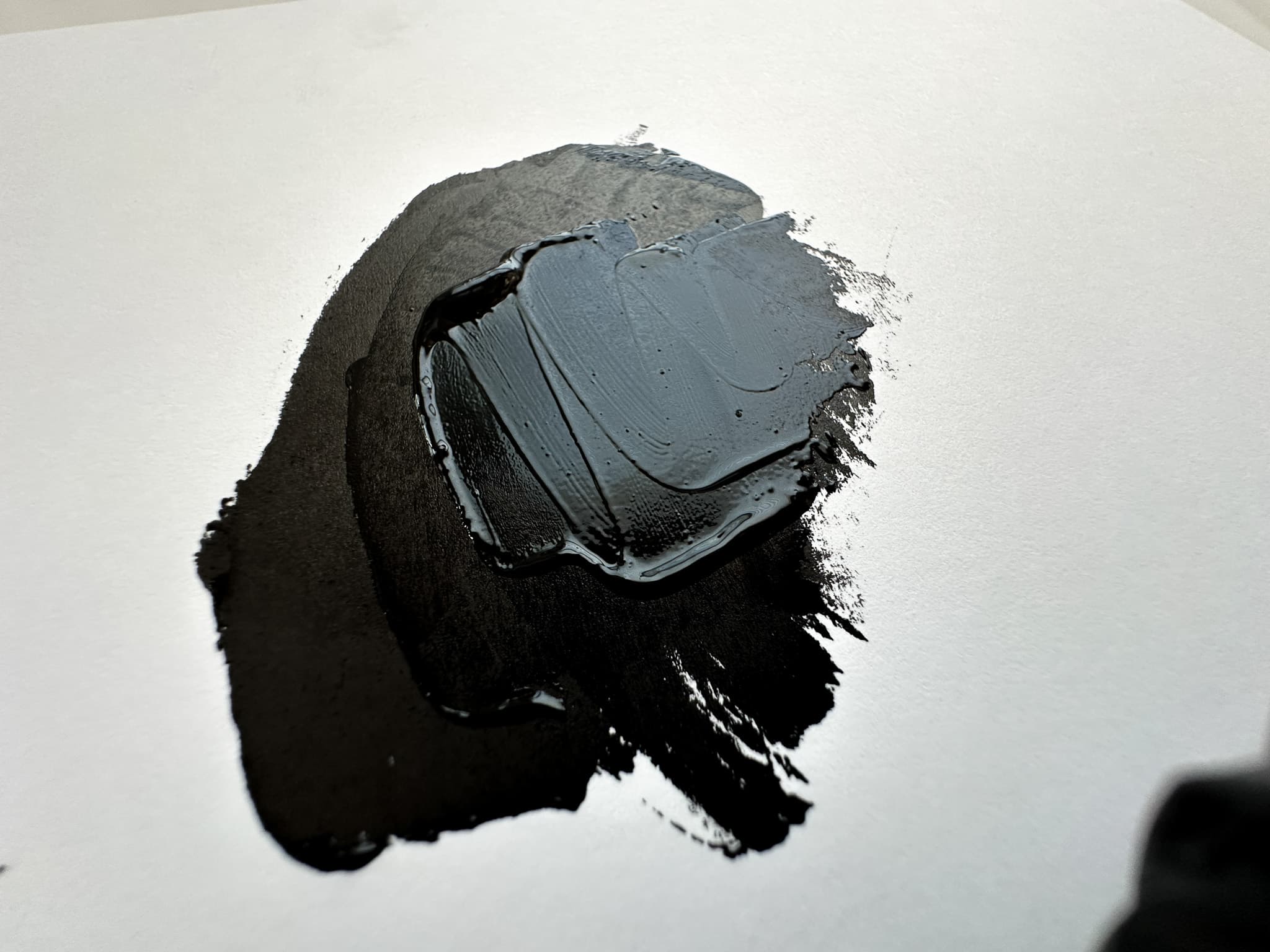
Maimeri Puro Carbon Black, pigment PBk7
There are several different varieties of carbon black, and they have different pigment codes. Unfortunately there is some confusion between the pigment codes and names, specifically between PBk6 and PBk7. Both are amorphous carbon, however they have somewhat different sources. PBk6 is often labeled Lamp Black in oils, and PBk7 is sometimes called Furnace Black or just Carbon Black, though both pigments are carbon blacks.
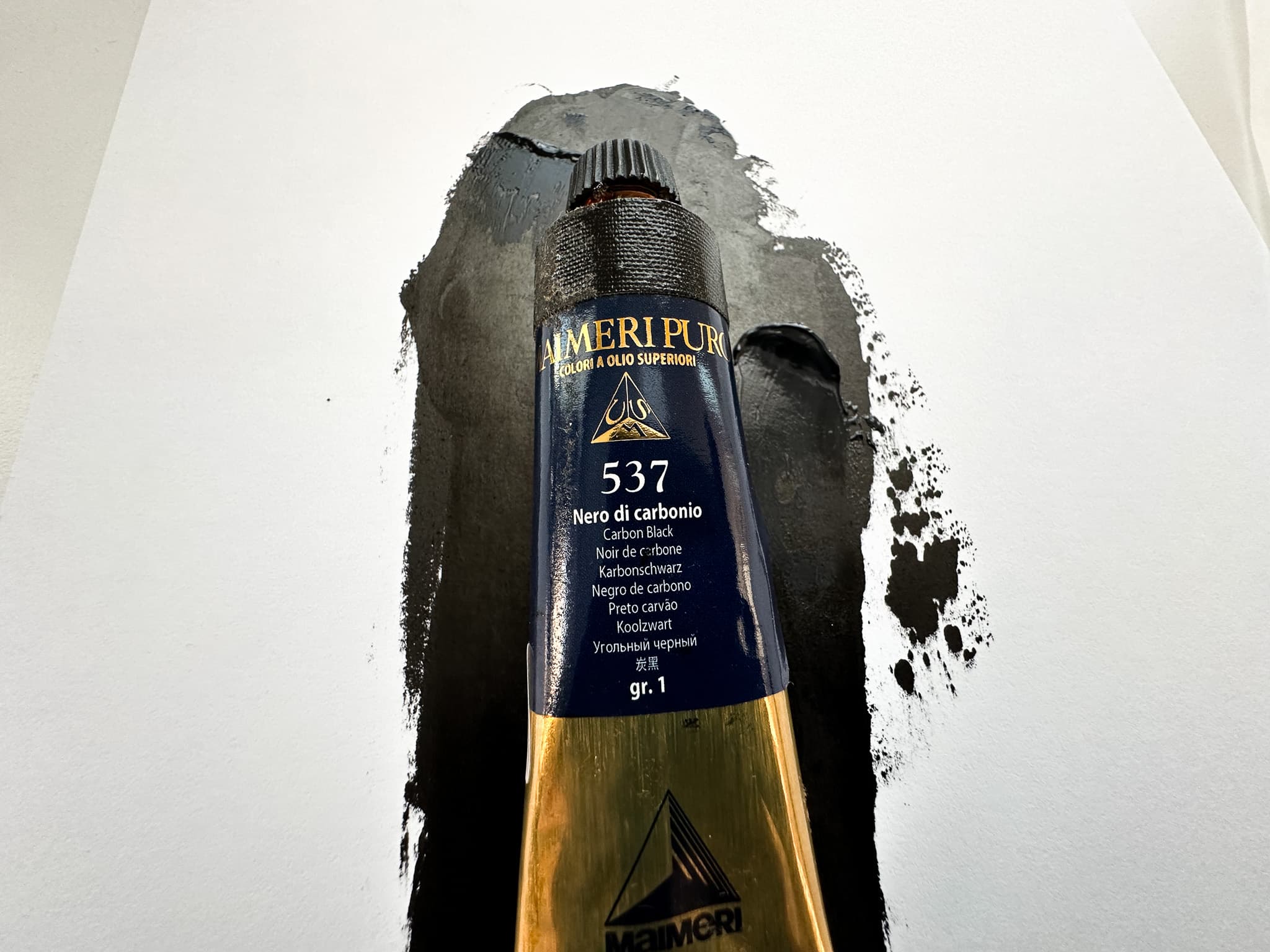
One of a handful of oils made with PBk7, Maimeri Puro Carbon Black
Carbon blacks can be made by burning certain materials in a specialized environment. There are slight differences in the pigment behavior depending on the origin of the material used to make the carbon black. This also applies to PBk8, Vine Black, and PBk9, Ivory Black, which are also carbon blacks.
PBk6 and PBk7 are both very intense carbon blacks and for most painters the difference between these two is not going to be major. Some painters opt not to paint with black at all since it behaves in a particular way when color mixing.
In order to set the stage for the PBk6-PBk7 disentanglement, we’ll have to delve into a few sources. The ASTM and Bruce MacEvoy identify PBk6 as Lamp Black and assign PBk7 as Carbon Black (or Furnace Black). However, Artiscreation goes the other direction and calls PBk7 Lamp Black, and assigns PBk6 to a rare natural carbon black. However there are a lot of paints marked PBk6 which we are guessing are not a rare carbon black, but rather the Lamp Black that we're accustomed to seeing, so it seems they are following the ASTM table.
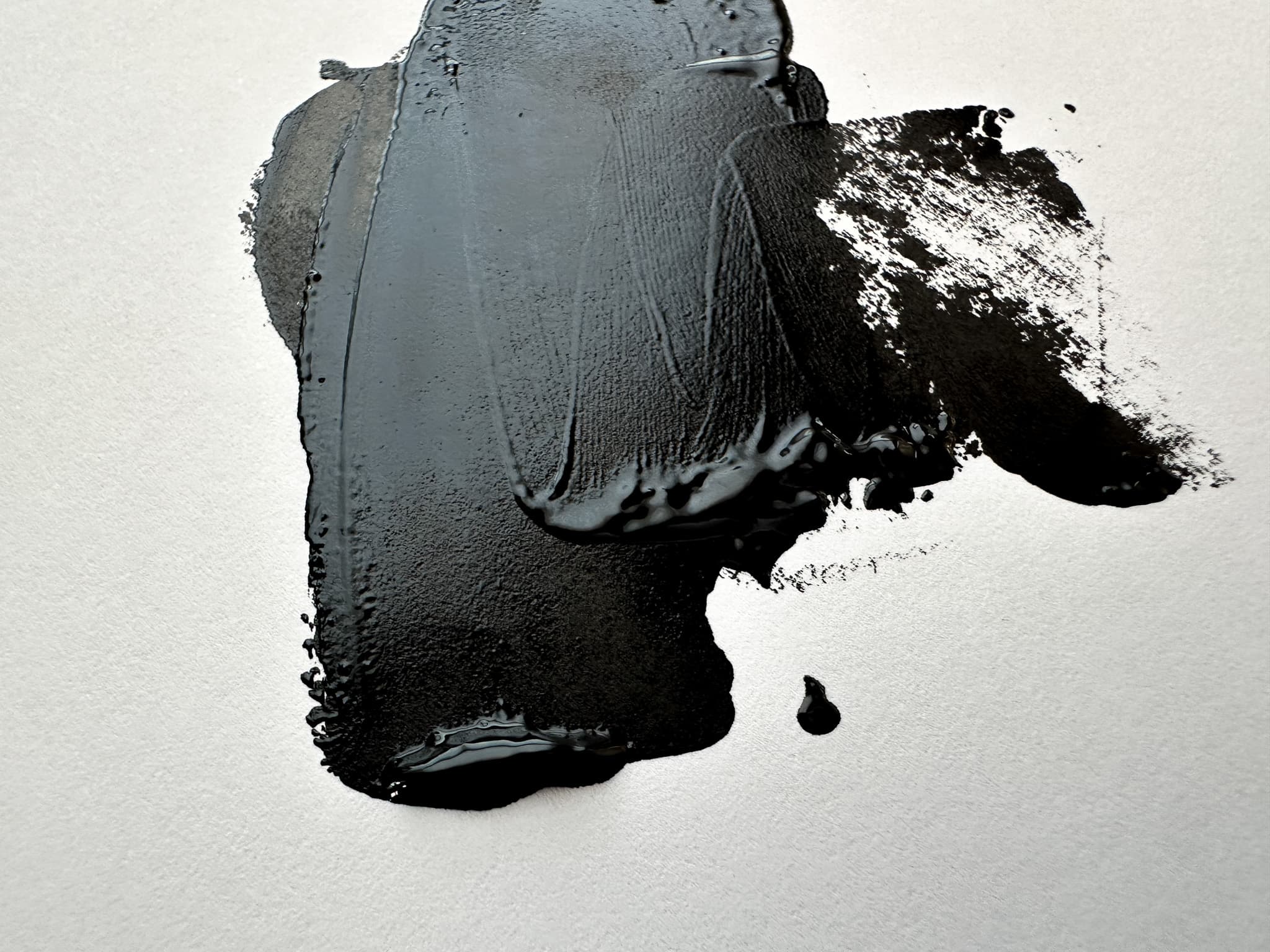
A swish of Maimeri Puro Carbon Black, PBk7
For Lamp Black, we'll go with PBk6, and we'll talk about the other Carbon Black, or furnace black, here for PBk7. We've read that Lamp Black seems to be made by burning oil, and that PBk7 is possibly made by burning natural gas or coal. (Other carbon blacks include PBk8 from burning vegetative matter, and PBk9 when animal bones are used as the source).
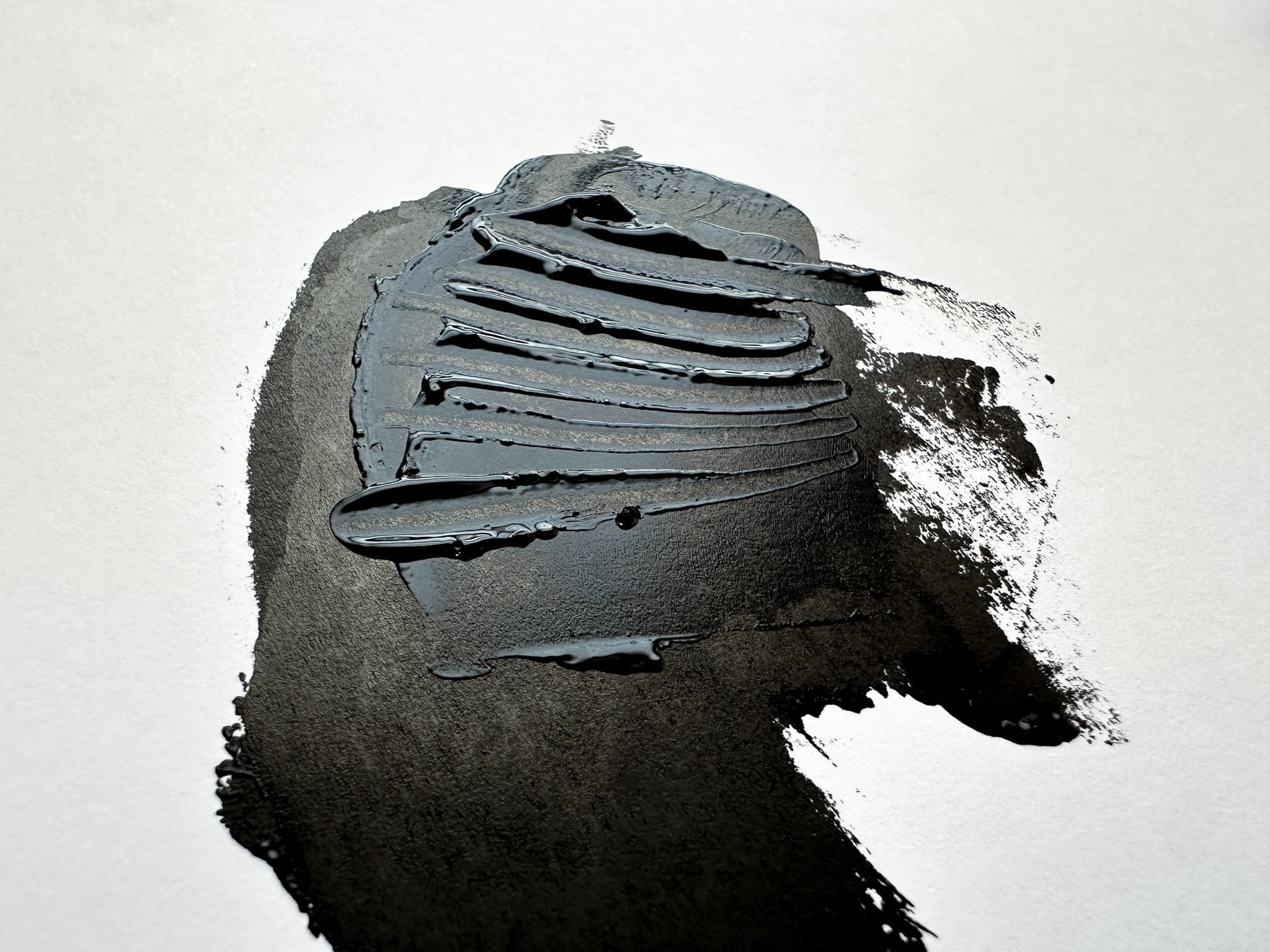
As a pigment, PBk7 doesn't have much impasto, but it does have incredible opacity and coverage
The particle size is super tiny and the end product is extremely intense. In fact it behaves more like an organic pigment, which might be helpful to keep in mind if you are doing value studies and experience some of the infamous rogue darkening of mixtures that sometimes happen when oil paint is drying.
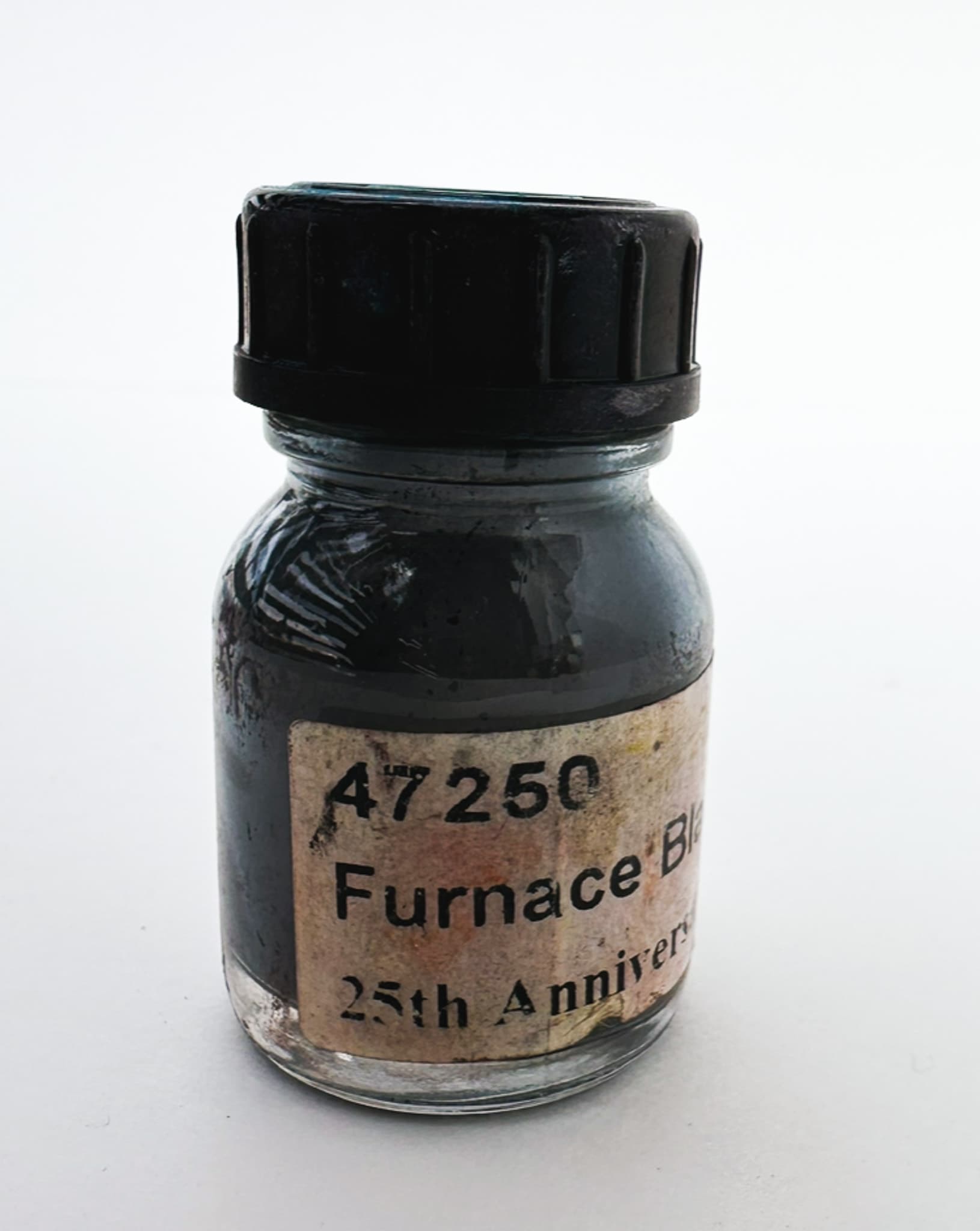
Kremer Pigments Furnace Black, PBk7 dry pigment
While not as dark-black as an Anish Kapoor nanotube situation, for a regular paint this is one of the deepest darkest and most opaque black colors. In mixes it is cool, and pulls towards blue.
Some painters opt for convenience blacks instead of carbon black, as PBk7 can be too intense.
The naming for PBk7 paints also contributes to the confusion. On the one hand, the pigment receives a handful of names: Lamp Black, Carbon Black, or even Ivory Black, all with PBk7 on the back. On the other hand, the name Lamp Black gets used on paint tubes containing other pigments— we’ve seen paints called "Lamp Black" contain PBk6, PBk7, PBk8 or PBk9.
Keep in mind that Carbon black itself is sometimes listed as a carcinogen, so like all pigments handle with care. According to Monona Rossol's work, in regard to both PBk6 and PBk7, "Old manufacturing processes create cancer-causing impurities. New manufacturing processes can produce it without," but it is difficult to know whether one's carbon black has impurities. She goes on to add that nanoparticle carbon black is actually toxic just by itself.
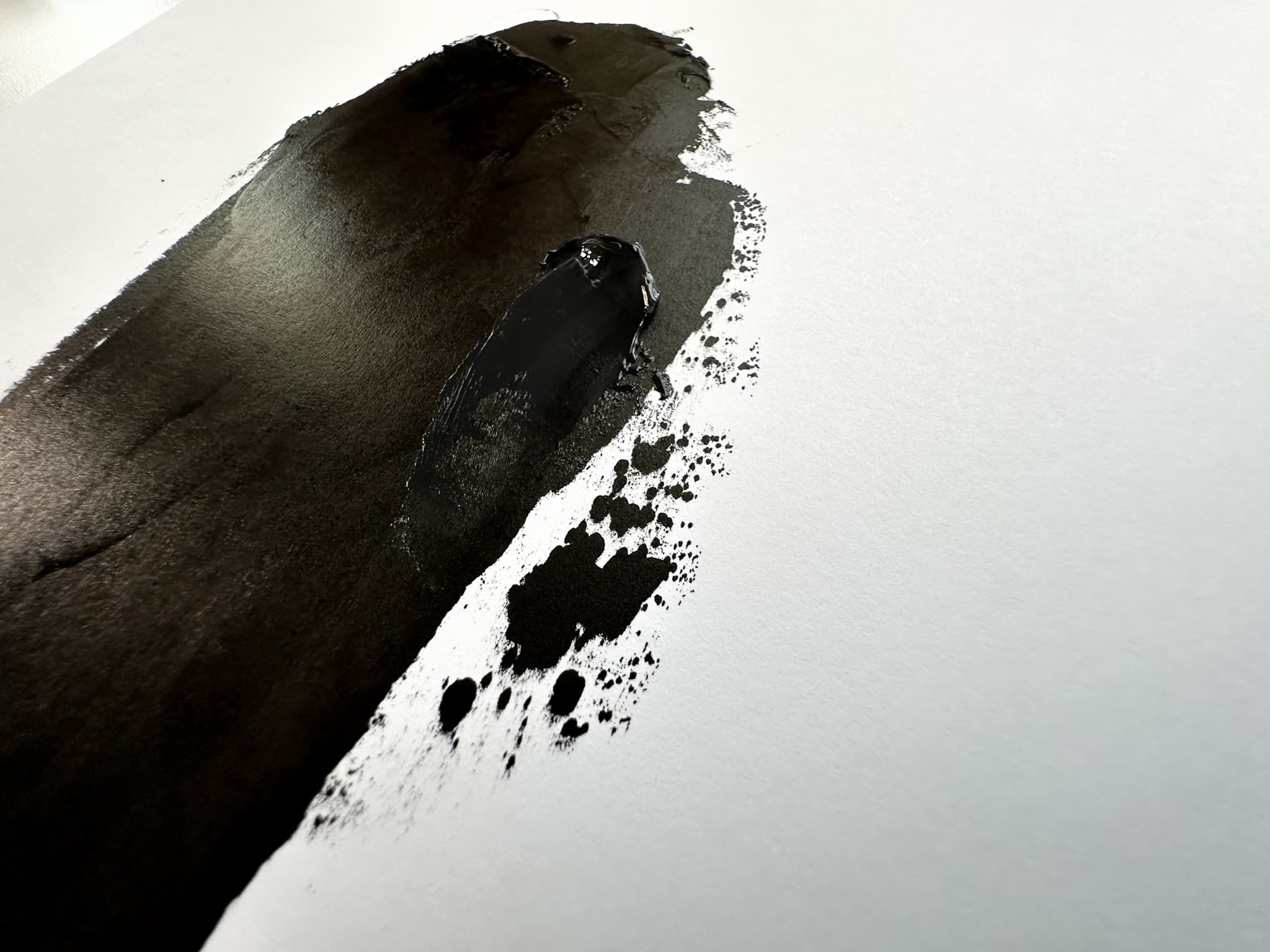
Intense opacity even when used thinly, Maimeri Puro Carbon Black, PBk7
Resources
PBk7 pigment data from David G. Myers, The Color of Art Pigment Database, Artiscreation.com
Information about PBk7 from Bruce MacEvoy, Handprint Guide to Watercolors,
Rossol, Monona. The Artist's Complete Health and Safety Guide. New York, NY : Allworth Press, 2001. The book is rather dated, updated information is available from her website.
Stats
Lightfastness
Excellent
Reported to be ASTM I
Transparency
Semi-Opaque to Opaque
Toxicity
Previously thought to be Lower Concern, with caveats, contains carbon black, possible carcinogen
Monona Rossol cautions that older manufacturing processes could create impurities that can cause cancer, but there are better modern ways of producing it which avoid this problem. However there is no way to know which process was used to create the pigment. So, use extra precautions when handling this pigment just in case. Carbon Black is itself a possible carcinogen.
Tinting
Strong
Dry Time
Very slow, even with driers. Lamp black may actually interfere with the drying process in oils.
Some brands list 6-18 days of drying in oils, and we have read that all the commercially available paints contain driers. (Even with the long dry times they likely still have driers).
Oil Content
Extremely High
Some sources highlight lampblack Pbk6 as being the really wild one for oil, but Mayer showed a bit higher range for Carbon Black. By volume, Mayer placed it as extremely high. He gave it a score ranging from 164-284, the upper end (284) was the highest level for oil volume. By weight, Artiscreation lists a range of approximately 58-117g/100g of oil, but your pigment may have different requirements.
Chemical Name
Carbon (Amorphous), nearly pure
DISCLAIMER: Please note that we are not experts in health and safety and we are not toxicologists, please consult the proper experts. We are not liable for any issues that may arise from the use of our website or its contents. The information contained in this site is provided without warranty or guarantee of any kind. We do not necessarily endorse any other website that are linked from our site. For any important pigment specs, please reference the manufacturer details. If you discover errors or omissions, please reach out through our contact form. Thank you.
