

Indanthrone Blue
PB60
Alternate Names
Indanthrene Blue
Anthraquinone Blue
Anthraquinoid Blue
Pigment Description
This color is as deep as the sea, a blue worthy of exploration. A deep indigo which is excellent on its own or for complementary color mixing. Compared to Ultramarine, Indanthrone is often every so slightly muted, as one would think of Indigo often having just a slight low-saturation note amid its brightness. It is usually a bit of a darker indigo than phthalo or ultramarine, and is a lovely color for landscape work.
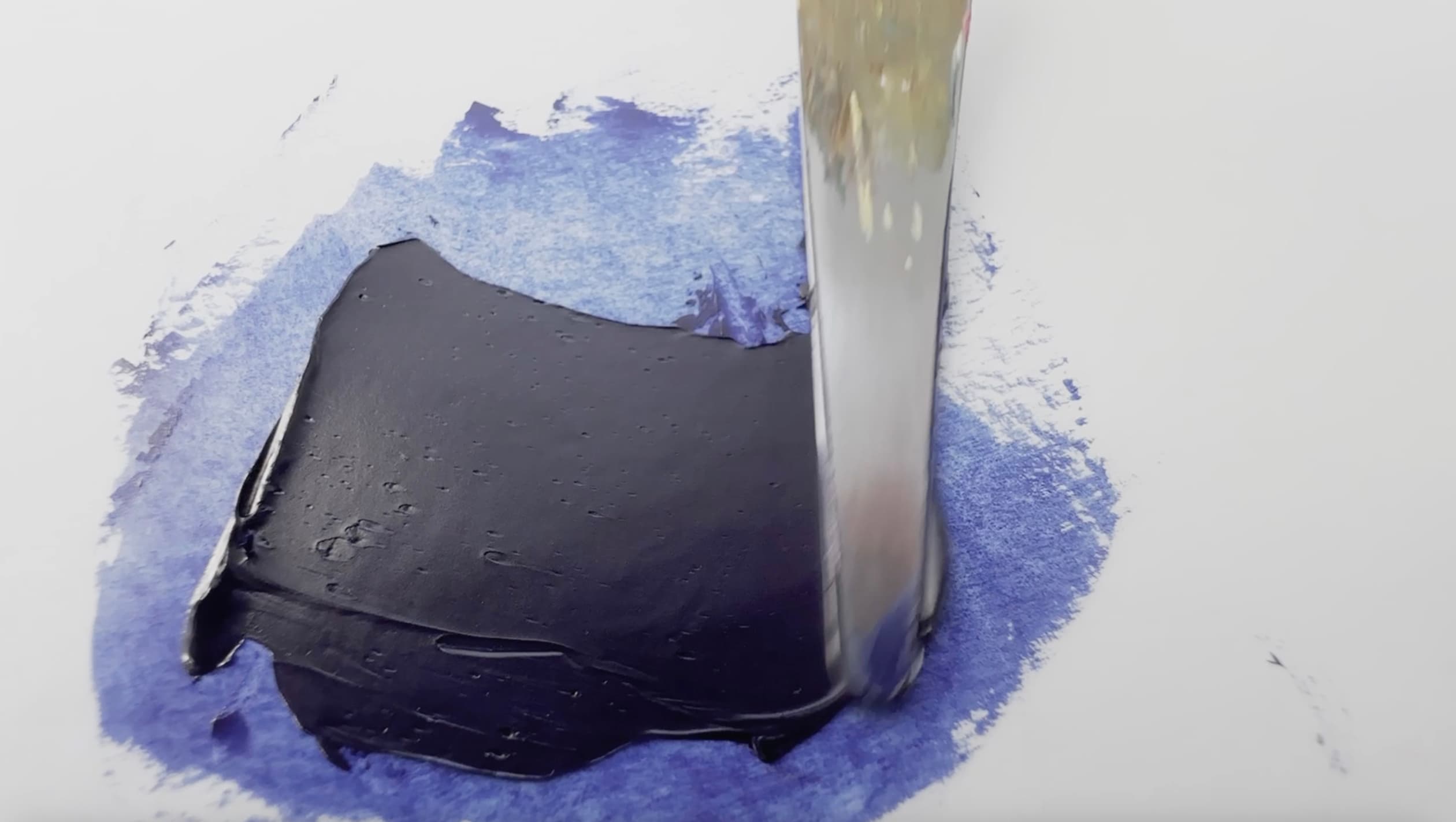
Gamblin Indanthrone Blue, PB60
We were very surprised to learn that Indanthrone Blue may actually be carcinogenic. Sometimes called Anthraquinone Blue, this color has not been specifically tested for toxicity, but it bears a chemical similarity to other anthraquinones which are believed to be carcinogenic. Please refer to Monona Rossol's research research for more information.
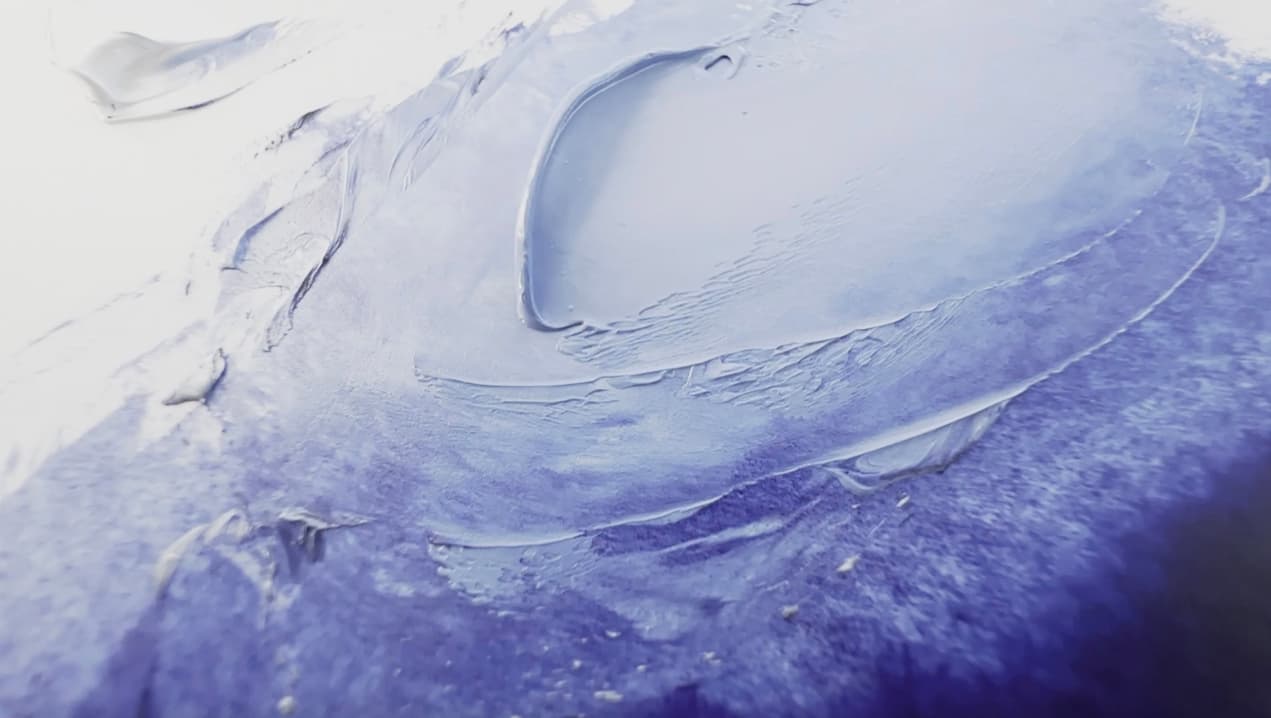
A tint of Gamblin's Indanthrone Blue, PB60. Please note this is their older version of the pigment which has a slightly different undertone than their most current Indanthrone Blue
There are several sub-varieties of Indanthrone blue with different undertones. The version shown here was made by Gamblin, and unfortunately the pigment supplier who made the PB60 with that exact undertone is no longer used to make their Indanthrone Blue. However other forms of PB60 are still available.
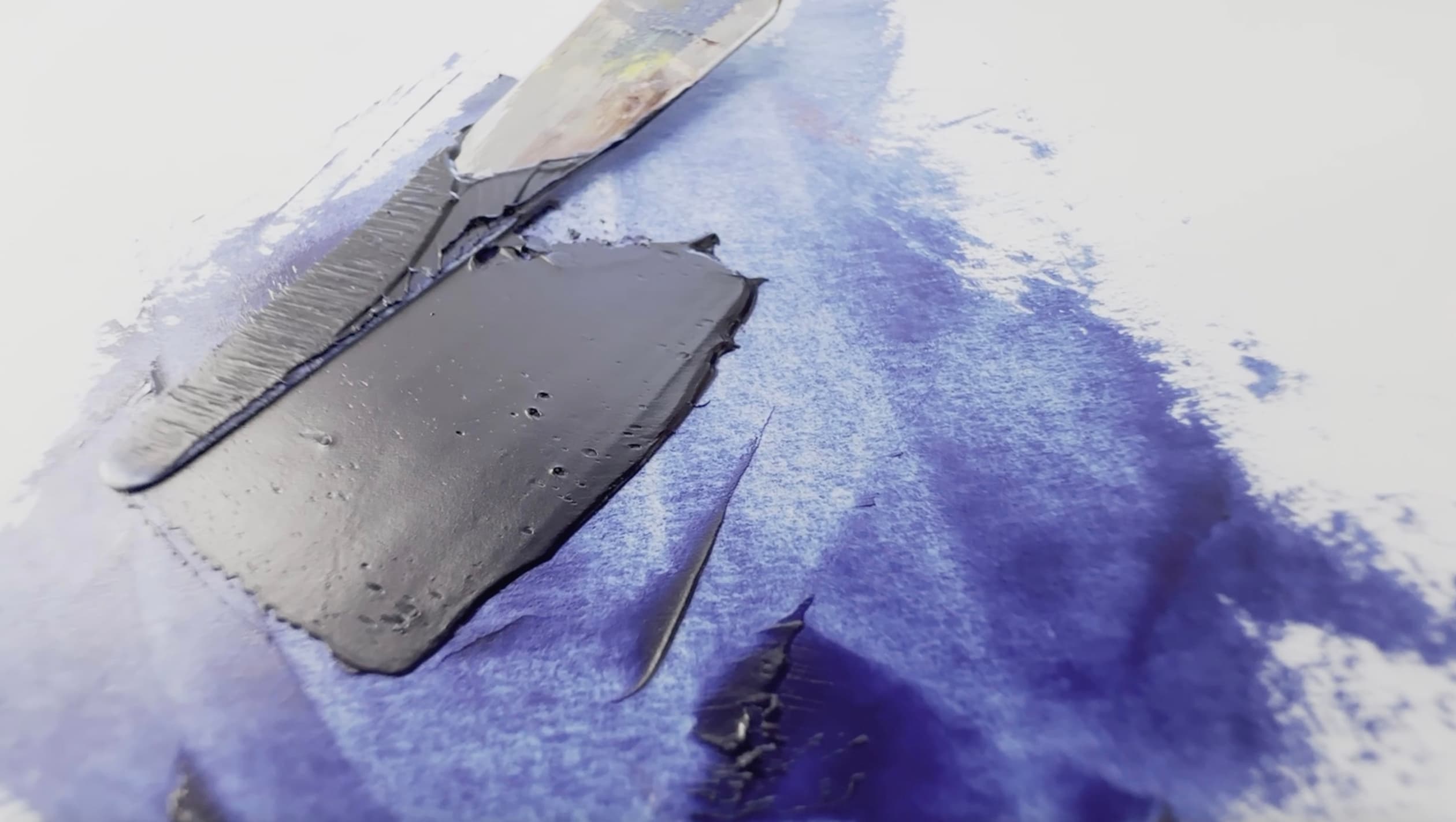
Gamblin Indanthrone Blue, PB60
This color leans more toward violet than phthalo blue and is well suited to moody marine landscapes-- overall a gorgeous color, but handle with appropriate studio safety.
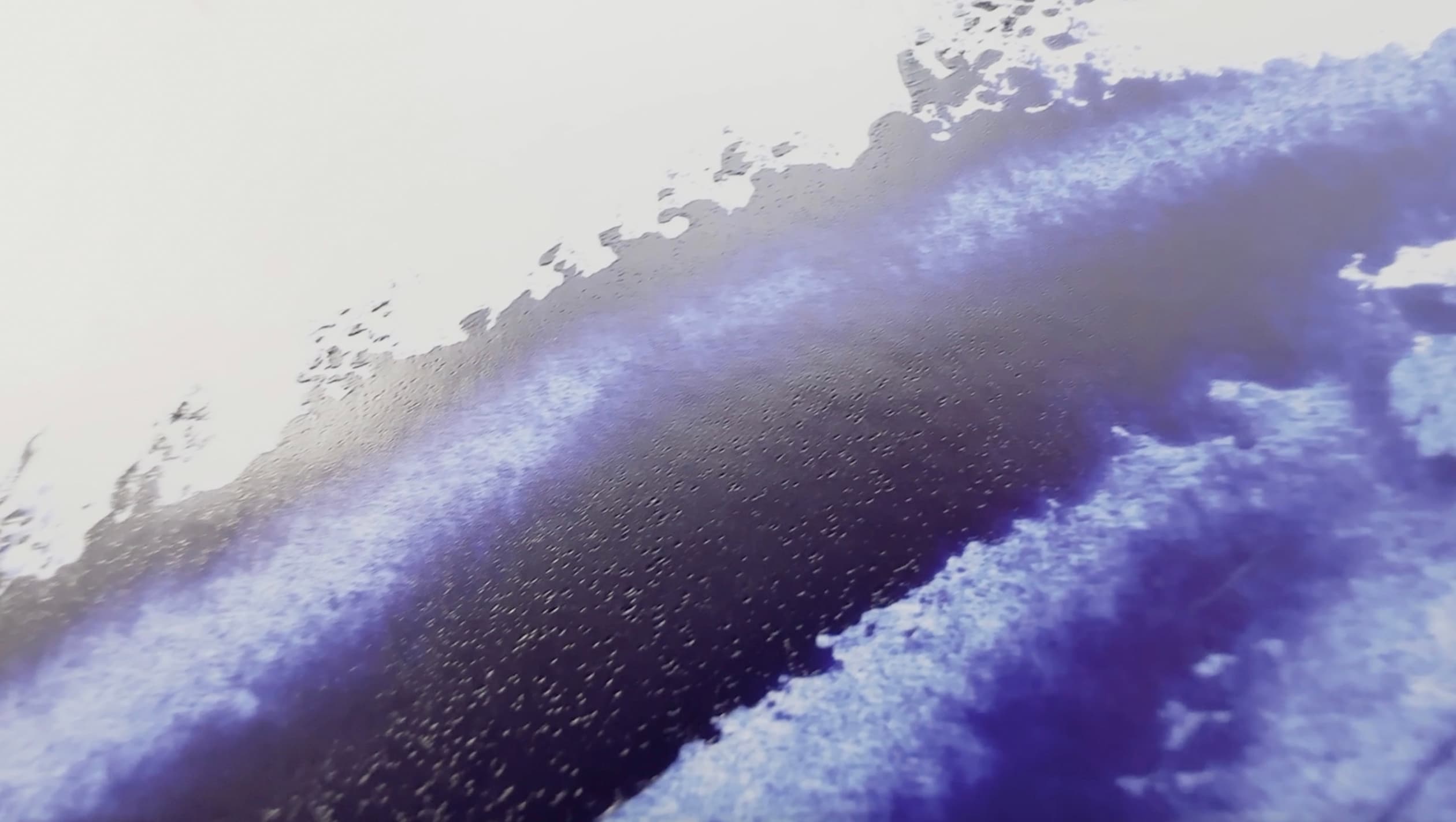
A run of Indanthrone Blue by Gamblin, pulled thinly with a palette knife
Resources
PB60 pigment data from David G. Myers, The Color of Art Pigment Database, Artiscreation.com
Information about PB60 from Bruce MacEvoy, Handprint Guide to Watercolors, General information about this class of pigments from Handprint,
Rossol, Monona. The Artist's Complete Health and Safety Guide. New York, NY : Allworth Press, 2001. The book is rather dated, updated information is available from her website.
Stats
Lightfastness
Excellent, refer to notes
Often performs as excellent (all 8’s on the BWS) with on variety that threw a 7 amid the 8’s. According to Golden’s research on lightfastness there may be variability depending on the mixing white. This color has some variation depending on the mixing white used in oils. It tanked in Lead White made with linseed, though this may vary a bit depending on the brand. It slid to an ASTM II in pure zinc. In most other mixing whites it performed at ASTM I - Excellent.
Transparency
Transparent, Semi-Opaque
Oil paints may range from transparent to opaque depending on the formulation. Most however are transparent.
Toxicity
Previously thought to be in the category of Low Concern, new research suggests it may be carcinogenic
Shocked to see that “acute toxicity varies.” Similar to other anthraquinones which are believed to be carcinogenic. Please see Monona Rossol's research research for more information. Treat all pigments and paints with studio safety protocols.
Tinting
Moderate
Dry Time
Slow to Very Slow
Some oil paints take 10-21+ days to dry. Others from 14-21. Paints which dry a great deal faster may contain driers.
Particle Size
Fine
Chemical Name
anthraquinone, indanthrone
C₂₈-H₁₄-N₂-O₄
DISCLAIMER: Please note that we are not experts in health and safety and we are not toxicologists, please consult the proper experts. We are not liable for any issues that may arise from the use of our website or its contents. The information contained in this site is provided without warranty or guarantee of any kind. We do not necessarily endorse any other website that are linked from our site. For any important pigment specs, please reference the manufacturer details. If you discover errors or omissions, please reach out through our contact form. Thank you.
